methodatlas
Session Builder

Plan my session

Plan a concrete work block with agenda, roles, preparation, and a copyable result artifact.

Method session3-4 hWorkshopImpact Map

Session: Impact Mapping

The plan translates the method into a concrete facilitated work block. Your inputs flow directly into the session brief and work artifact.

Derived automatically

Method session with 3-8. The plan uses the existing method logic and the runsheet.

Runsheet
Participation logic
Team round, shared work and alignment

Use the session for shared understanding. Contributions are collected visibly, assumptions are aligned, and open differences remain traceable in the artifact.

Outcome logic
Finish artifact

The session works directly toward Impact Map. After the session, the artifact should be shareable, reviewable, or reusable.

  1. 1

    Phase 1: Sharpen goal

    30 min

    Phrase the goal so achievement is testable (SMART). Define main metric, baseline, target, time frame. Derive initial success criteria directly from the goal. Hint: If the goal is ambiguous, the rest of the map fails. One sentence, one number, one date.

    FacilitatorImpact Map
  2. 2

    Phase 2: Identify actors

    30 min

    Which people or groups can influence the goal? Capture primary actors (direct leverage) and secondary actors (indirect). Keep primary actors to 5-7. Hint: If 15 actors emerge, the map is overextended. Focus on primaries. Keep secondaries as notes, not as main tree nodes.

    FacilitatorOutcome Hypotheses
  3. 3

    Phase 3: Impacts per actor

    45 min

    For each actor, define the behavior change that produces impact on the goal. Impact is a verb, for example "registers faster" or "recommends more actively". Add 2-4 impacts per actor. Hint: Impacts are not features. "Shortens onboarding" is output; "user activates within 5 min" is impact. Actor verb should lead.

    FacilitatorDelivery Options
  4. 4

    Phase 4: Deliverables per impact

    60 min

    List possible deliverables per impact (features, content, interventions). Include multiple options per impact and rough effort. Hint: Multiple deliverables per impact are desirable, not one fixed plan. The map helps select options.

    FacilitatorImpact Map
  5. 5

    Phase 5: Prioritization and hypotheses

    30 min

    Vote on impacts (highest leverage first). Select one or more deliverables per top impact with hypothesis, owner, and deadline. Keep the map as a living document. Hint: Prioritize on impact level first, then on deliverable. Otherwise favorite features are selected before impact is validated.

    OwnerOutcome Hypotheses
  6. 6

    Publish artifact

    10 min

    Check the artifact for completeness, define location, set version or status, and name review recipients.

    OwnerImpact Map
Usable artifact

Session Brief

For invitations, boards, tickets, PR descriptions, or workshop notes.

session-brief.md

Session Brief: Impact Mapping

Goal

Artifact: Impact Map

Working Question

Which actors must change behavior for the business goal to be reached, and which actions support that?

Context

Goal and measurement; existing customer-journey insights; user segments and behaviors; existing measures and their effect; constraints.

Setup

  • Format: Method session
  • Duration: 3-4 h
  • Mode: Workshop
  • Participants: One facilitator; a Product Owner with mandate for the goal; 3-6 team members from product, engineering, marketing; a scribe; ideally a stakeholder with business perspective.
  • Owner: One facilitator
  • Participation mode: Team round, shared work and alignment
  • Outcome logic: Finish artifact

Participation Logic

Use the session for shared understanding. Contributions are collected visibly, assumptions are aligned, and open differences remain traceable in the artifact.

Outcome Logic

The session works directly toward Impact Map. After the session, the artifact should be shareable, reviewable, or reusable.

Input

Whiteboard or Miro board with four columns or a tree layout (Goal, Actors, Impacts, Deliverables); stickies in four colors; template per column; voting tokens for prioritization.

Preparation

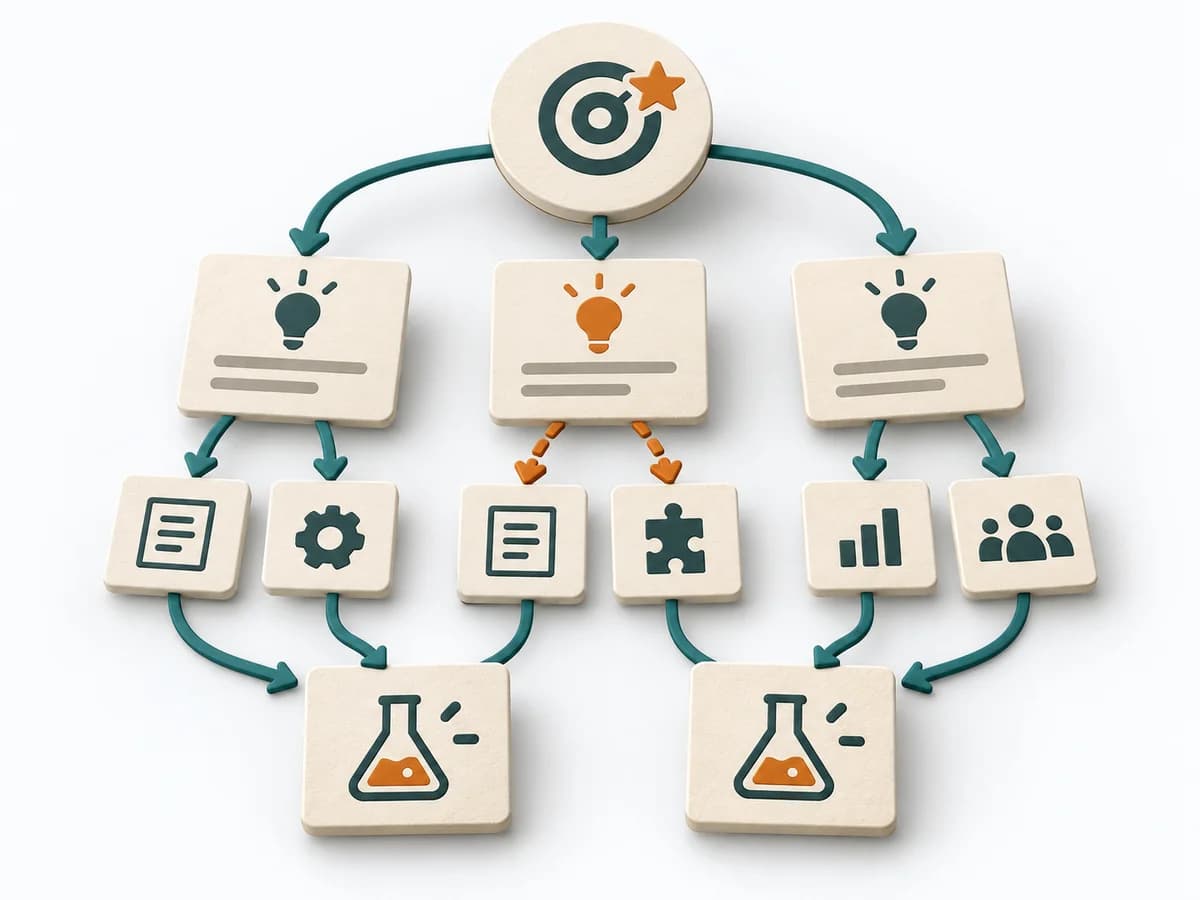
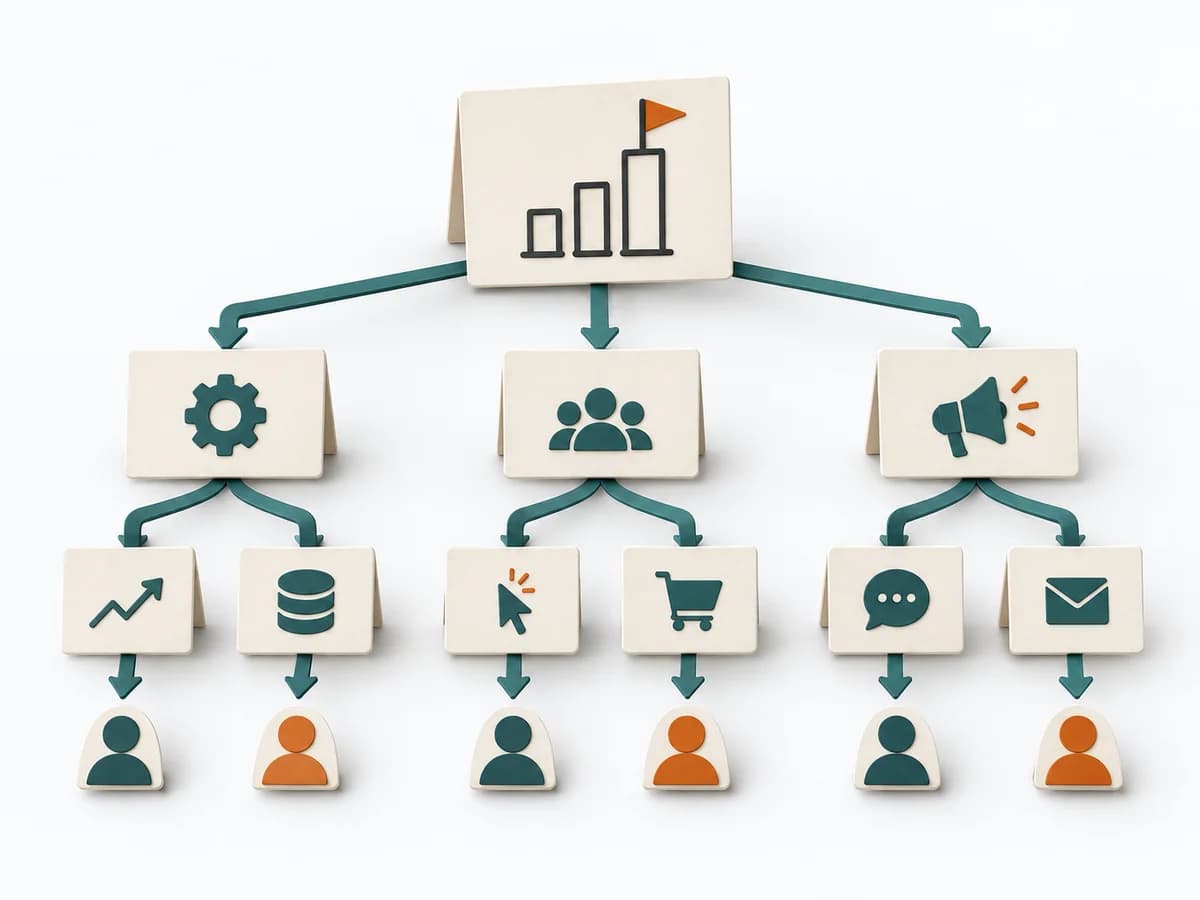
Four columns or tree: Why (Goal), Who (Actors), How (Impacts), What (Deliverables). Goal clearly visible at the top. Rule: do not jump to Deliverables without Actor and Impact.

Agenda

  1. Phase 1: Sharpen goal (30 min) Owner: Facilitator Action: Phrase the goal so achievement is testable (SMART). Define main metric, baseline, target, time frame. Derive initial success criteria directly from the goal. Hint: If the goal is ambiguous, the rest of the map fails. One sentence, one number, one date. Output: Impact Map

  2. Phase 2: Identify actors (30 min) Owner: Facilitator Action: Which people or groups can influence the goal? Capture primary actors (direct leverage) and secondary actors (indirect). Keep primary actors to 5-7. Hint: If 15 actors emerge, the map is overextended. Focus on primaries. Keep secondaries as notes, not as main tree nodes. Output: Outcome Hypotheses

  3. Phase 3: Impacts per actor (45 min) Owner: Facilitator Action: For each actor, define the behavior change that produces impact on the goal. Impact is a verb, for example "registers faster" or "recommends more actively". Add 2-4 impacts per actor. Hint: Impacts are not features. "Shortens onboarding" is output; "user activates within 5 min" is impact. Actor verb should lead. Output: Delivery Options

  4. Phase 4: Deliverables per impact (60 min) Owner: Facilitator Action: List possible deliverables per impact (features, content, interventions). Include multiple options per impact and rough effort. Hint: Multiple deliverables per impact are desirable, not one fixed plan. The map helps select options. Output: Impact Map

  5. Phase 5: Prioritization and hypotheses (30 min) Owner: Owner Action: Vote on impacts (highest leverage first). Select one or more deliverables per top impact with hypothesis, owner, and deadline. Keep the map as a living document. Hint: Prioritize on impact level first, then on deliverable. Otherwise favorite features are selected before impact is validated. Output: Outcome Hypotheses

  6. Publish artifact (10 min) Owner: Owner Action: Check the artifact for completeness, define location, set version or status, and name review recipients. Output: Impact Map

Closeout

  • Update result artifact: Impact Map
  • Define location, version, and review recipients.
  • Define owner, next step, and review date.
Usable artifact

Work artifact

Pre-filled starting point based on the matching template.

work-artifact.md

Impact Map: Impact Mapping

Working Question

Which actors must change behavior for the business goal to be reached, and which actions support that?

Context

Goal and measurement; existing customer-journey insights; user segments and behaviors; existing measures and their effect; constraints.

Participants

  • Owner: One facilitator
  • Participants: One facilitator; a Product Owner with mandate for the goal; 3-6 team members from product, engineering, marketing; a scribe; ideally a stakeholder with business perspective.

Input

Whiteboard or Miro board with four columns or a tree layout (Goal, Actors, Impacts, Deliverables); stickies in four colors; template per column; voting tokens for prioritization.

Template

Impact Mapping Canvas

Context

What is this method used for?

Core question

Which question should be answered at the end?

Input

Which data, observations, or materials are available?

Working area

  • Area 1:
  • Area 2:
  • Area 3:
  • Relationships / patterns:

Output artifacts

  • Impact Map:
  • Outcome Hypotheses:
  • Delivery Options:

Open questions

  • ...

Next step

Owner, date, success signal.

Completion Check

  • Impact Map is complete enough for review:
  • Location:
  • Version / status:
  • Review by:
  • Next step:

Next Step

  • Review result
  • Mark open questions
  • Schedule review or decision
Template base

Impact Mapping Working Template

View templateCompact working template for Impact Mapping with context, input, output artifacts, and next step.
canvas

impact-mapping-working-template.md

Compact working template for Impact Mapping with context, input, output artifacts, and next step.

Impact Mapping Canvas

Context

What is this method used for?

Core question

Which question should be answered at the end?

Input

Which data, observations, or materials are available?

Working area

  • Area 1:
  • Area 2:
  • Area 3:
  • Relationships / patterns:

Output artifacts

  • Impact Map:
  • Outcome Hypotheses:
  • Delivery Options:

Open questions

  • ...

Next step

Owner, date, success signal.

Ready to use when
  • Working question, owner, and target artifact are visible.
  • The result fits Impact Map.
  • Living document with date. Version impacts (for example new hypotheses, validated effects) whenever they change. Add outcome tracking directly at the goal node over time.
  • Open questions are noted as follow-ups.
  • The next review or decision point is scheduled.