View methods side by side.
Choose up to four methods. Add them using the search and share the comparison by copying its link.
| Criterion |  Product Discovery Working Backwards |  Systems Thinking Iceberg Model | 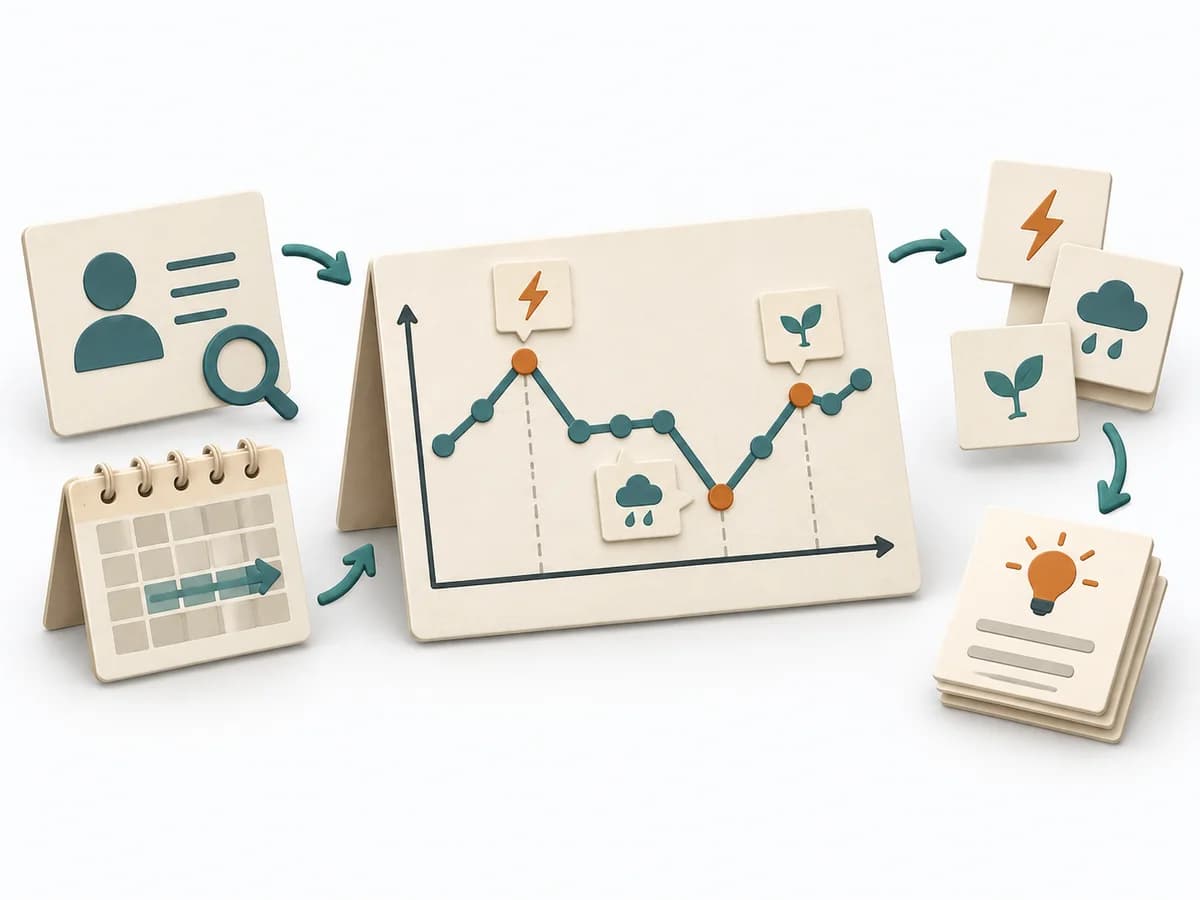 Systems Thinking Behavior Over Time Graph |
|---|---|---|---|
Purposedifferent | When the target state and benefit need to be clear first, it thinks backward from the desired outcome into the product logic. It sharpens vision, objections, and value proposition before elaboration. | The Iceberg Model separates visible events from patterns, structures, and mental models. This turns a single observation into a deeper understanding of why a problem keeps recurring. | A Behavior Over Time Graph shows how a metric or observation develops over time. The method makes trends, breaks, and recurring patterns visible that get lost in snapshots. |
Complexitydifferent | Medium | Low | Low |
Timedifferent | 4-8 h, mehrere Iterationen | 30-60 min | 20-45 min |
Participantsdifferent | 2-6 | 2-10 | 1-10 |
Formatsame | Workshop + async | Workshop + async | Workshop + async |
Outputdifferent | Future Press Release, FAQ, Vision Statement | Iceberg Worksheet, Pattern Notes, Intervention Ideas | Behavior Over Time Graph, Trend Hypotheses, Key Events |
Tagsno overlap | VisionNarrativeAlignment | Systems thinkingRoot causePatterns | Systems thinkingPatternsDynamics |
Often compared together
Methods with strong topical overlap with the current selection, not yet in the comparison.