View methods side by side.
Choose up to four methods. Add them using the search and share the comparison by copying its link.
| Criterion | 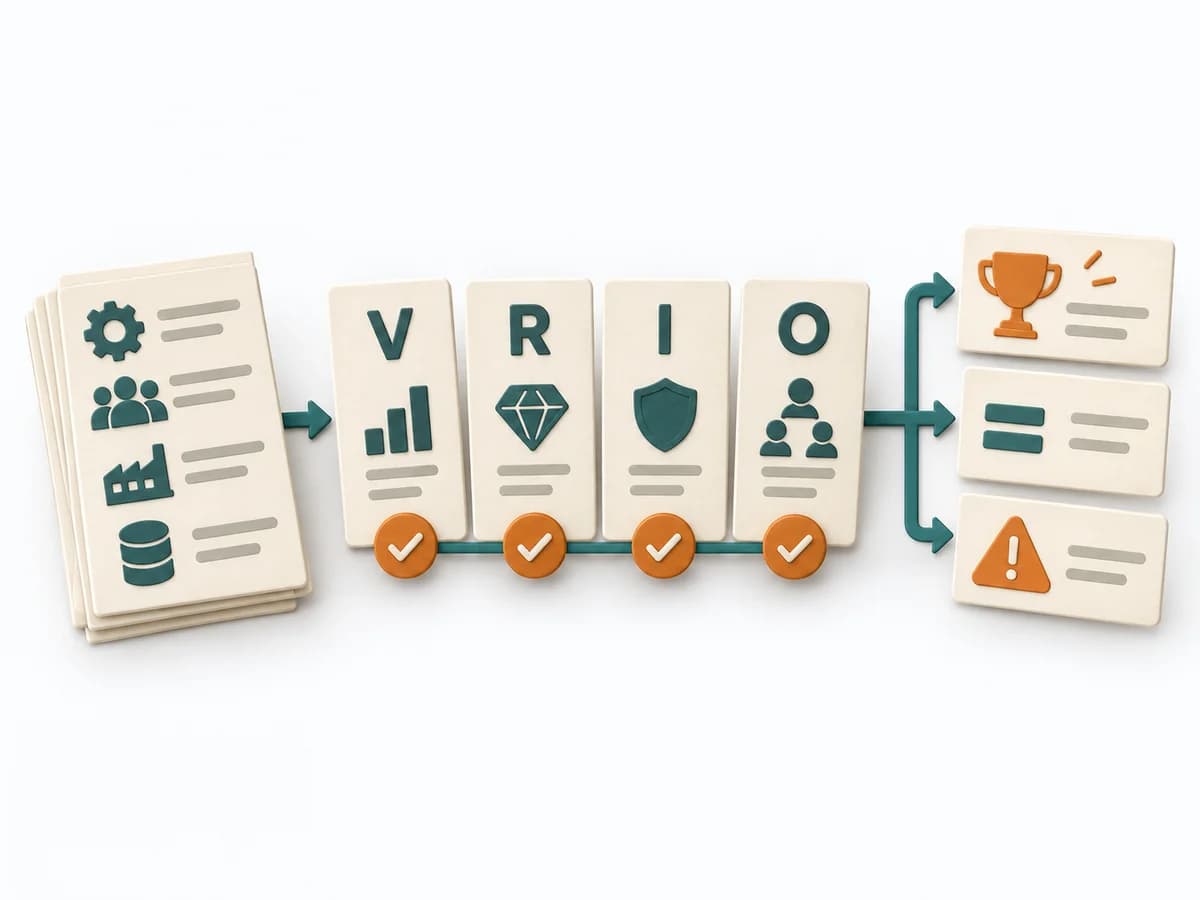 Business Strategy VRIO Framework |  Domain Modeling Bounded Context Canvas |  Architecture ATAM (Architecture Tradeoff Analysis Method) |
|---|---|---|---|
Purposedifferent | The VRIO Framework rates resources and capabilities on whether they are Valuable, Rare, Inimitable, and Organized. It compares strengths, risks, market logic, and courses of action. The result is captured as a VRIO table and strategic actions. | When a business context is still loosely outlined, it shapes language, responsibility, and integration space. It clarifies what belongs together and where a boundary needs to hold. | ATAM helps teams weigh architecture decisions when quality goals compete. The team considers business goals, stakeholder expectations, and technical decisions together. The evaluation shows which risks need further investigation. |
Complexitydifferent | Medium | Medium | High |
Timedifferent | 90-180 min | 1-3 h | Several meetings plus preparation and analysis; total effort depends on scope |
Participantsdifferent | 3-6 | 3-8 | Evaluation team, architects, and relevant stakeholders |
Formatdifferent | Workshop | Workshop + async | Workshop + async |
Outputdifferent | VRIO Table, Strategic Actions | Context Canvas, Glossary, Integration Notes | Prioritized quality scenarios in a utility tree, Architecture risks with reasoning and assumptions, Sensitivity and trade-off points, Findings report with open investigations |
Tagsno overlap | StrategyDiagnosisBusiness modelCapability | Domain-Driven DesignBoundariesModeling | ArchitectureQualityRiskTradeoffsStakeholders |
Often compared together
Methods with strong topical overlap with the current selection, not yet in the comparison.