View methods side by side.
Choose up to four methods. Add them using the search and share the comparison by copying its link.
| Criterion | 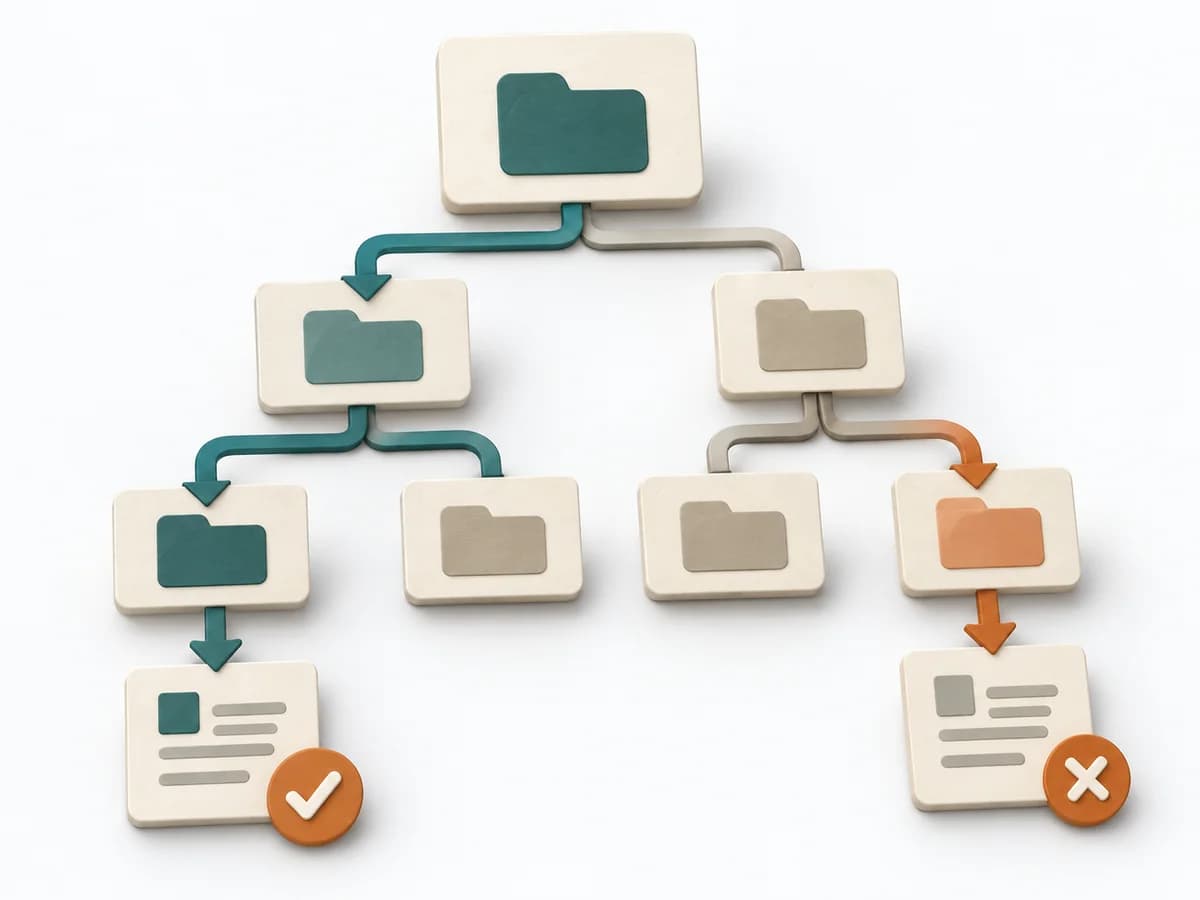 UX Research Tree Testing |  UX Research Personas |  UX Research Usability Testing |
|---|---|---|---|
Purposedifferent | When a navigation exists but search paths still fail, tree testing checks findability without visual distraction. The method shows whether labels, levels, and paths really lead to the intended destination. | When target groups stay too vague and teams talk about the same people differently, personas create a shared, solid picture of usage. Condensed profiles make needs, contexts, and differences tangible enough for decisions. | When a product is built but people get stuck on tasks, usability testing shows the friction at concrete points. Observed use instead of self-report makes visible where orientation, understanding, or interaction breaks down. |
Complexitysame | Medium | Medium | Medium |
Timedifferent | 1-2 Tage | 1-3 Tage | 1-2 h je Session |
Participantsdifferent | Based on research question | Internes Team | Based on research question |
Formatdifferent | Async | Workshop + async | Workshop + async |
Outputdifferent | Findability Metrics, Path Analysis, Revised IA | Persona Profiles, Needs Summary, Scenario Notes | Usability Issues, Severity List, Recommendations |
Tagsno overlap | Information architectureNavigationFindability | ResearchCustomerSynthesis | ValidationUXPrototype |
Often compared together
Methods with strong topical overlap with the current selection, not yet in the comparison.