View methods side by side.
Choose up to four methods. Add them using the search and share the comparison by copying its link.
| Criterion | 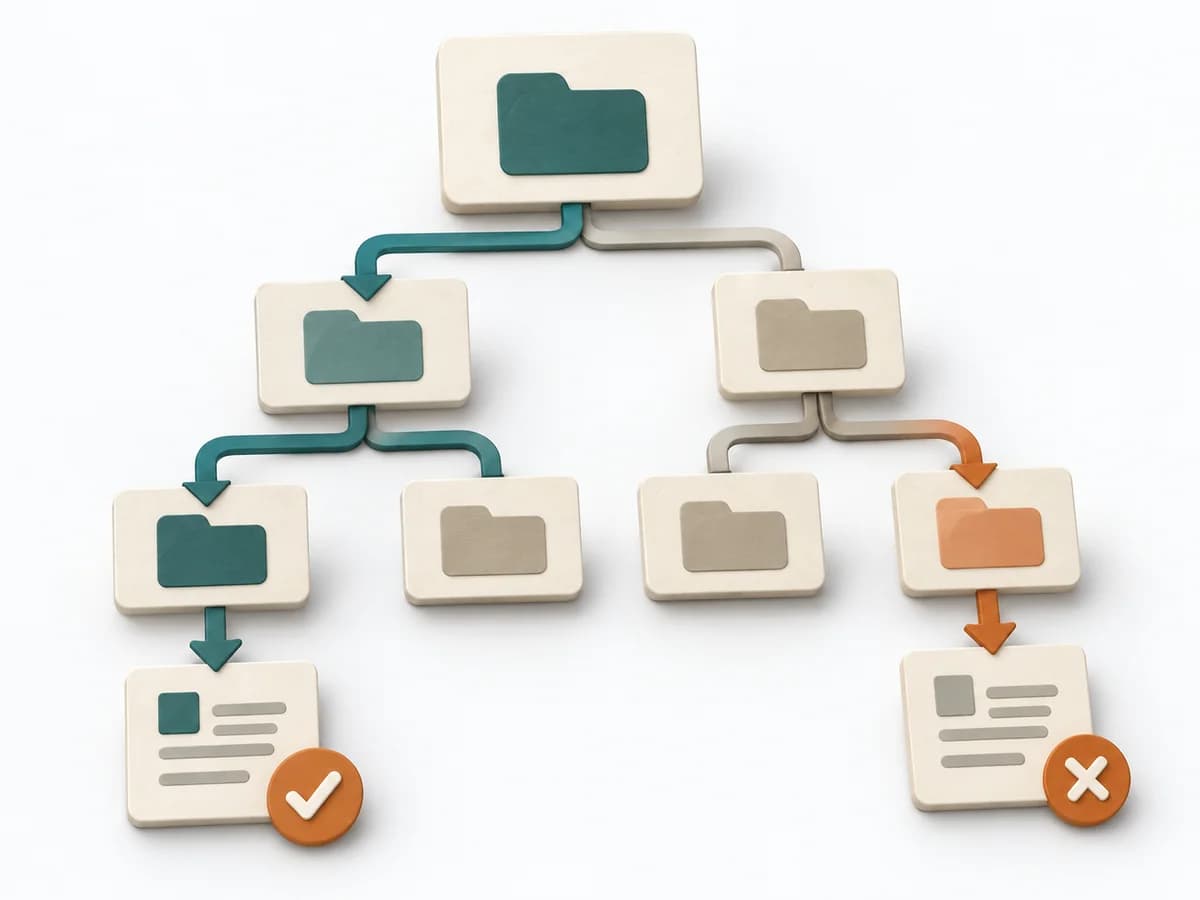 UX Research Tree Testing |  Operations PDCA Cycle | 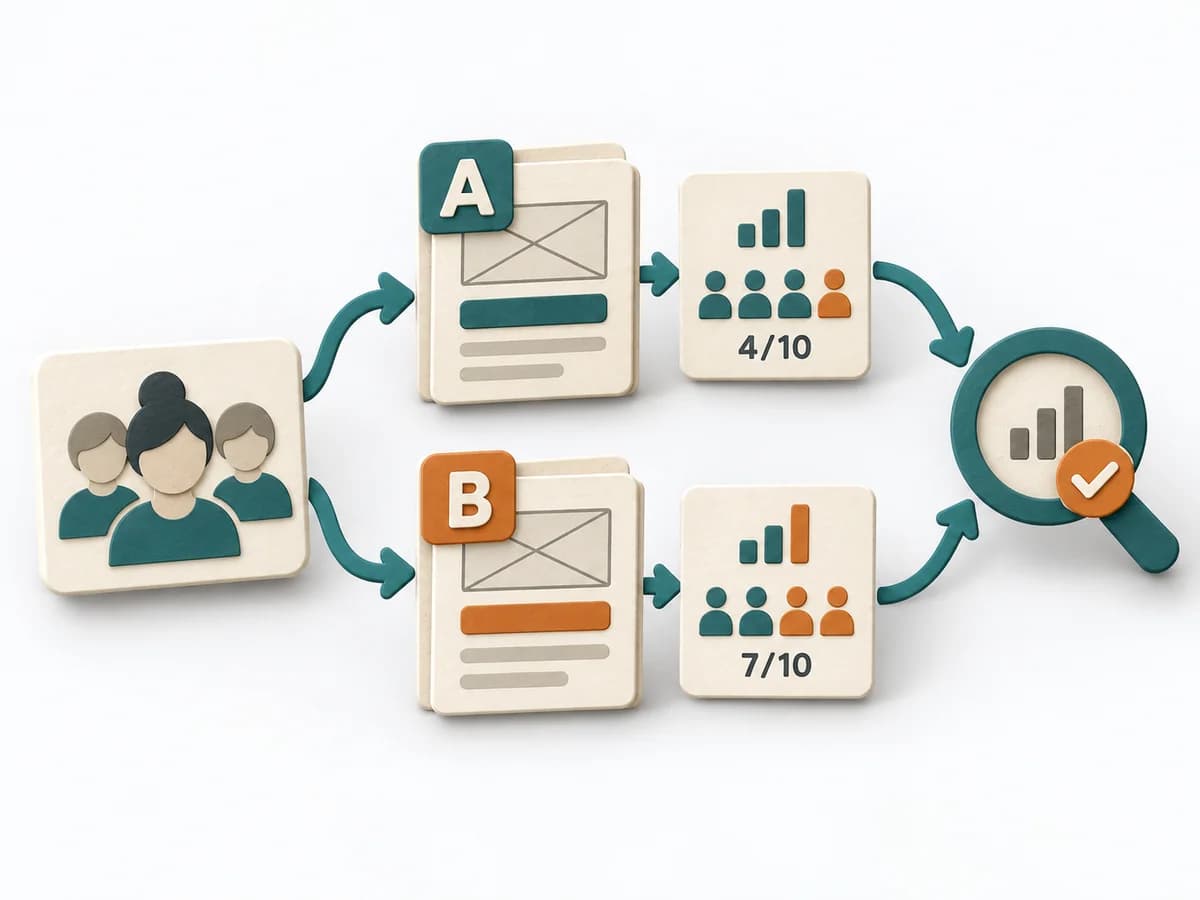 Growth A/B Testing |
|---|---|---|---|
Purposedifferent | When a navigation exists but search paths still fail, tree testing checks findability without visual distraction. The method shows whether labels, levels, and paths really lead to the intended destination. | For an improvement that still has to prove itself in everyday work, the method runs it through small learning loops. It connects planning, checking, and standardization into a repeatable learning mode. | When two variants compete, discussions quickly decide by taste rather than effect. A/B Testing checks behavior under controlled conditions and separates real improvement from chance or expectation effects. |
Complexitydifferent | Medium | Low | High |
Timedifferent | 1-2 Tage | 1 h bis mehrere Wochen | 1-4 Wochen |
Participantsdifferent | Based on research question | 1-8 | 1-6 |
Formatdifferent | Async | Workshop + async | Async |
Outputdifferent | Findability Metrics, Path Analysis, Revised IA | PDCA Log, Experiment Plan, Learning Outcome, Standard Change | Experiment results, Decision log, Learning summary |
Tagsno overlap | Information architectureNavigationFindability | Continuous improvementLeanExperiments | ExperimentsGrowthAnalyticsValidation |
Often compared together
Methods with strong topical overlap with the current selection, not yet in the comparison.