View methods side by side.
Choose up to four methods. Add them using the search and share the comparison by copying its link.
| Criterion | 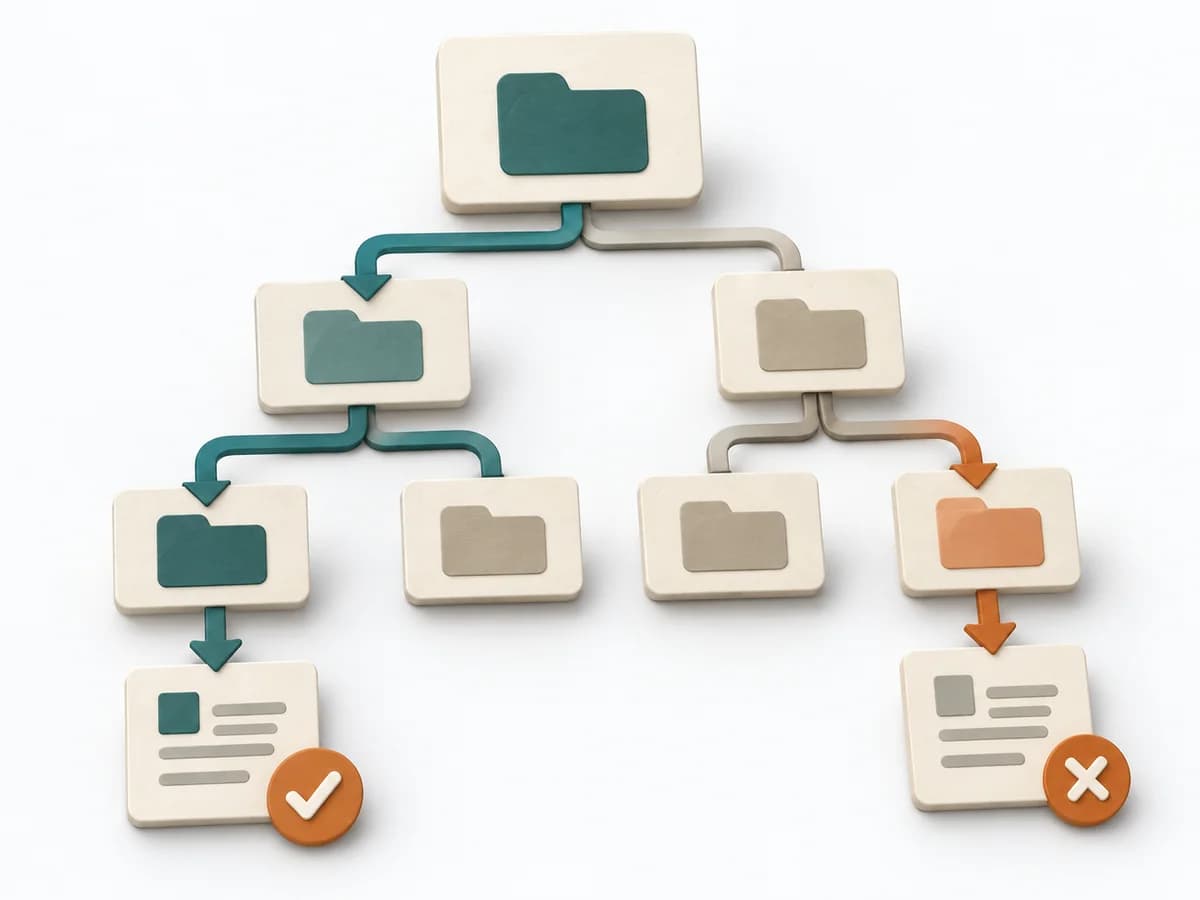 UX Research Tree Testing | 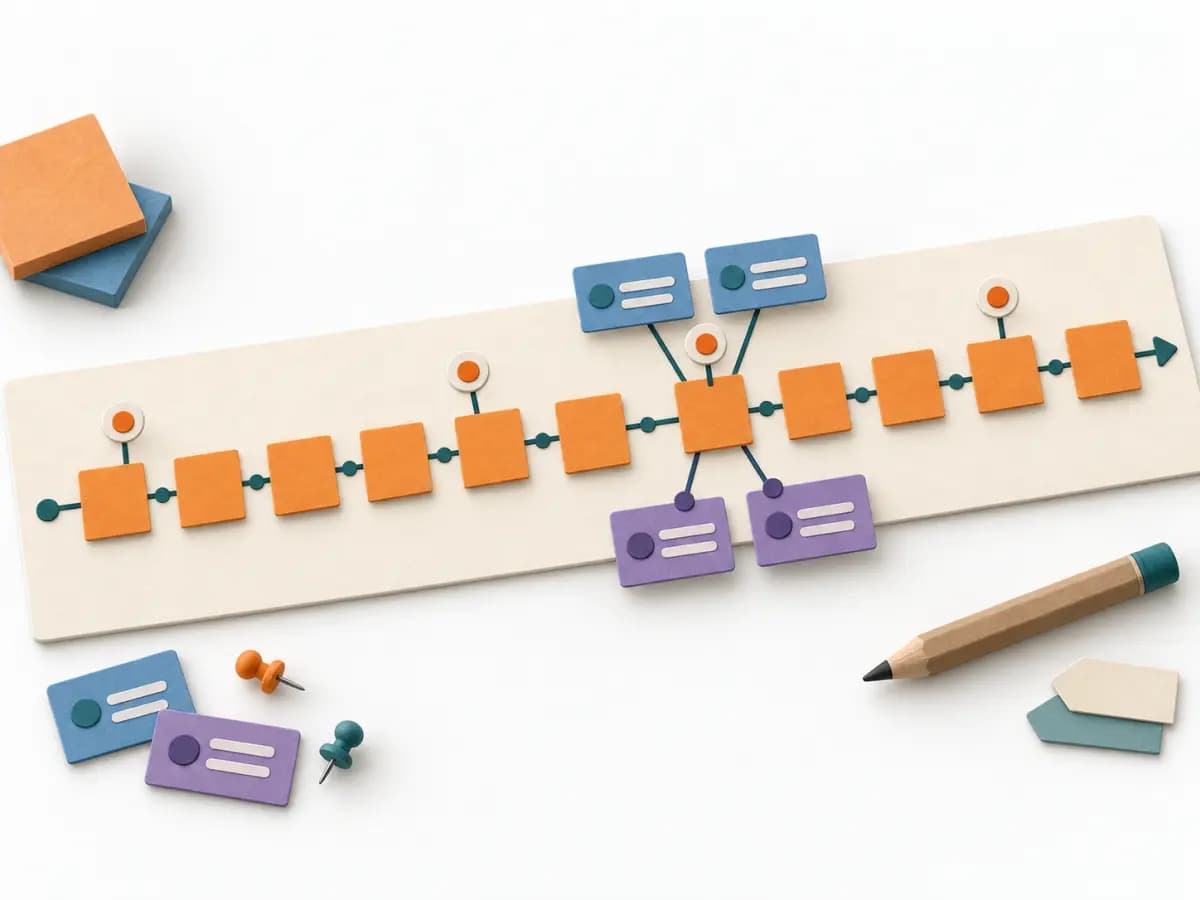 Domain Modeling EventStorming |  UX Research First-click Testing |
|---|---|---|---|
Purposedifferent | When a navigation exists but search paths still fail, tree testing checks findability without visual distraction. The method shows whether labels, levels, and paths really lead to the intended destination. | When a domain consists of many events, rules, and states, it creates a shared modeling space for the team. It bundles language, flows, and boundaries before domain knowledge fragments into siloed views. | When users immediately turn the wrong way on a screen or wireframe, first click testing checks initial orientation at high speed. The first click shows early whether expectation, labeling, and wayfinding fit together. |
Complexitydifferent | Medium | Medium | Low |
Timedifferent | 1-2 Tage | 2-8 h | 1-2 Tage |
Participantsdifferent | Based on research question | 5-12 | 10-30 |
Formatdifferent | Async | Workshop | Async |
Outputdifferent | Findability Metrics, Path Analysis, Revised IA | Event Timeline, Ubiquitous Language, Boundaries, Open Questions | Click Heatmap, Success Rate, Design Recommendations |
Tagsno overlap | Information architectureNavigationFindability | Domain-Driven DesignEventsDiscoveryWorkshop | UXNavigationFindabilityValidation |
Often compared together
Methods with strong topical overlap with the current selection, not yet in the comparison.