View methods side by side.
Choose up to four methods. Add them using the search and share the comparison by copying its link.
| Criterion | 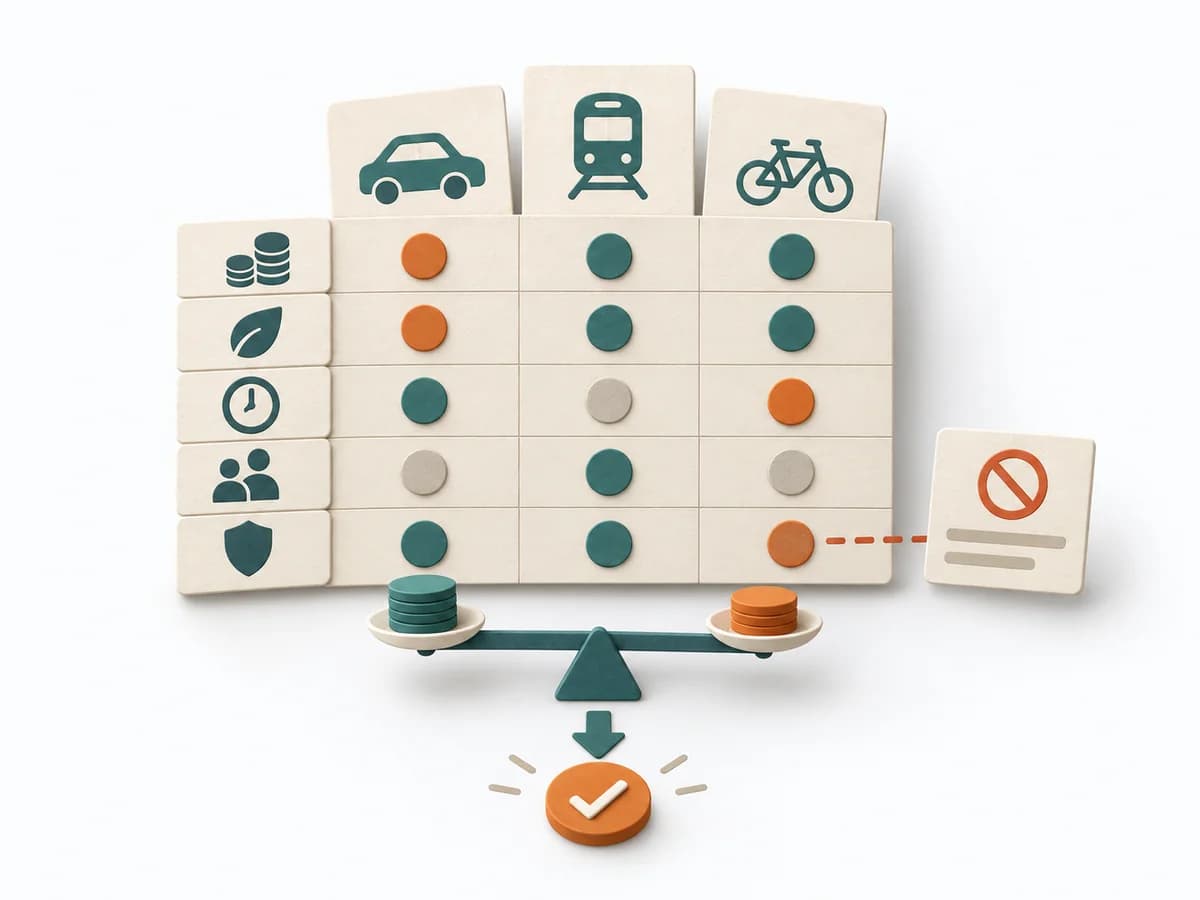 Decision Making Trade-off Analysis |  Innovation Design Sprint | 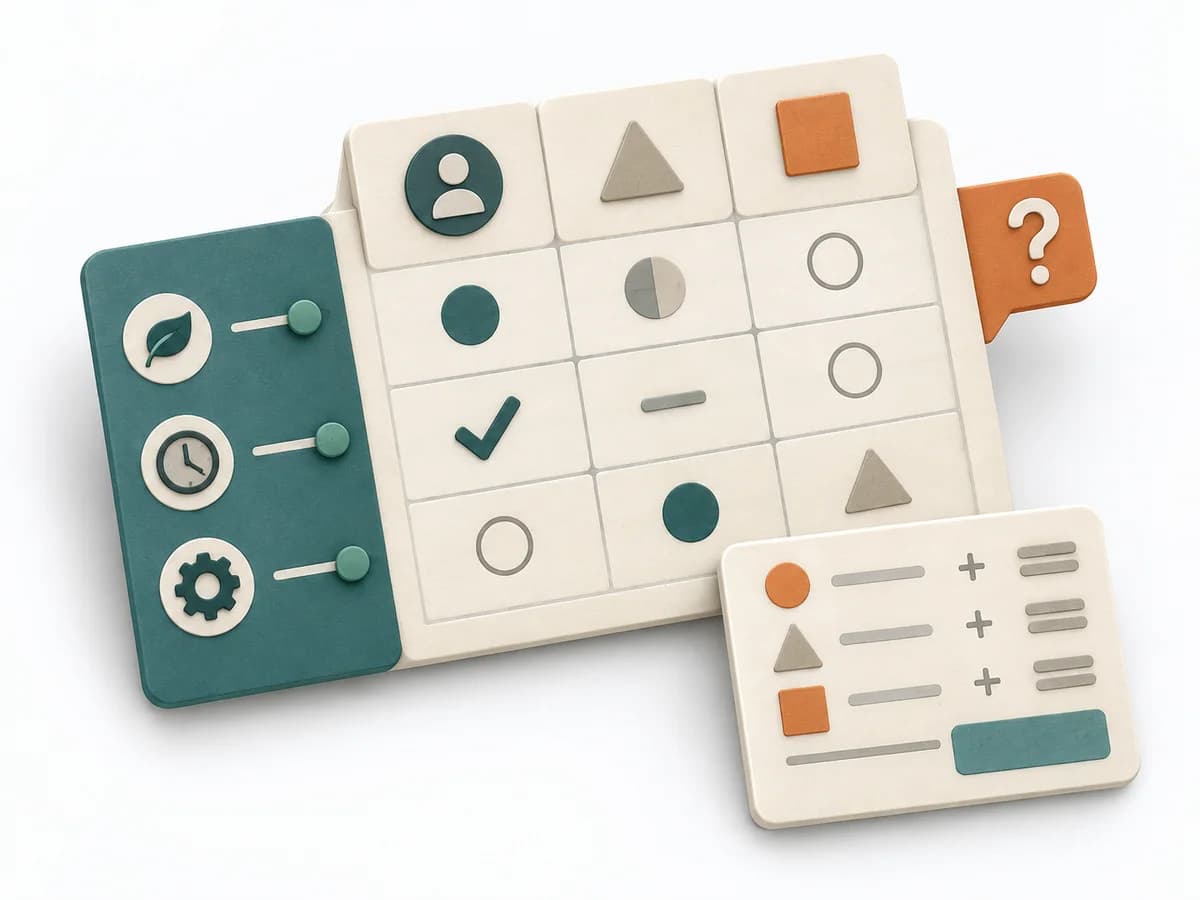 Decision Making Decision Matrix |
|---|---|---|---|
Purposedifferent | With limited resources, quality, speed, cost, and risk almost always compete with each other. Trade-off Analysis makes these tensions explicit and prevents decisions from producing hidden side effects. | When the product question is unclear and time pressure is high, the method takes a team from an open idea to a testable solution. It connects problem understanding, decision, and learning in one compact format, lowering the risk of spending a lot of energy on a mere guess. | When several options collide with several criteria, comparison quickly becomes subjective. A Decision Matrix makes the trade-off visible and brings weighting, criteria, and options into a shared logic. |
Complexitydifferent | Medium | High | Medium |
Timedifferent | 45-120 min | 4-5 Tage | 45-90 min |
Participantsdifferent | 2-8 | 5-8 | 2-8 |
Formatdifferent | Workshop + async | Workshop | Workshop + async |
Outputdifferent | Trade-off Matrix, Criteria List, Decision Rationale, Accepted Downsides | Prototype, Test Findings, Decision Rationale | Decision Matrix, Scoring Rationale, Selected Option |
Tagsno overlap | TradeoffsDecisionCriteriaOptions | Design sprintPrototypeValidationInnovation | DecisionCriteriaScoringTradeoffs |
Often compared together
Methods with strong topical overlap with the current selection, not yet in the comparison.