View methods side by side.
Choose up to four methods. Add them using the search and share the comparison by copying its link.
Selected:Strategic, Tactical and Operational PlanningStakeholder Salience ModelStrategy Execution Loop
| Criterion | 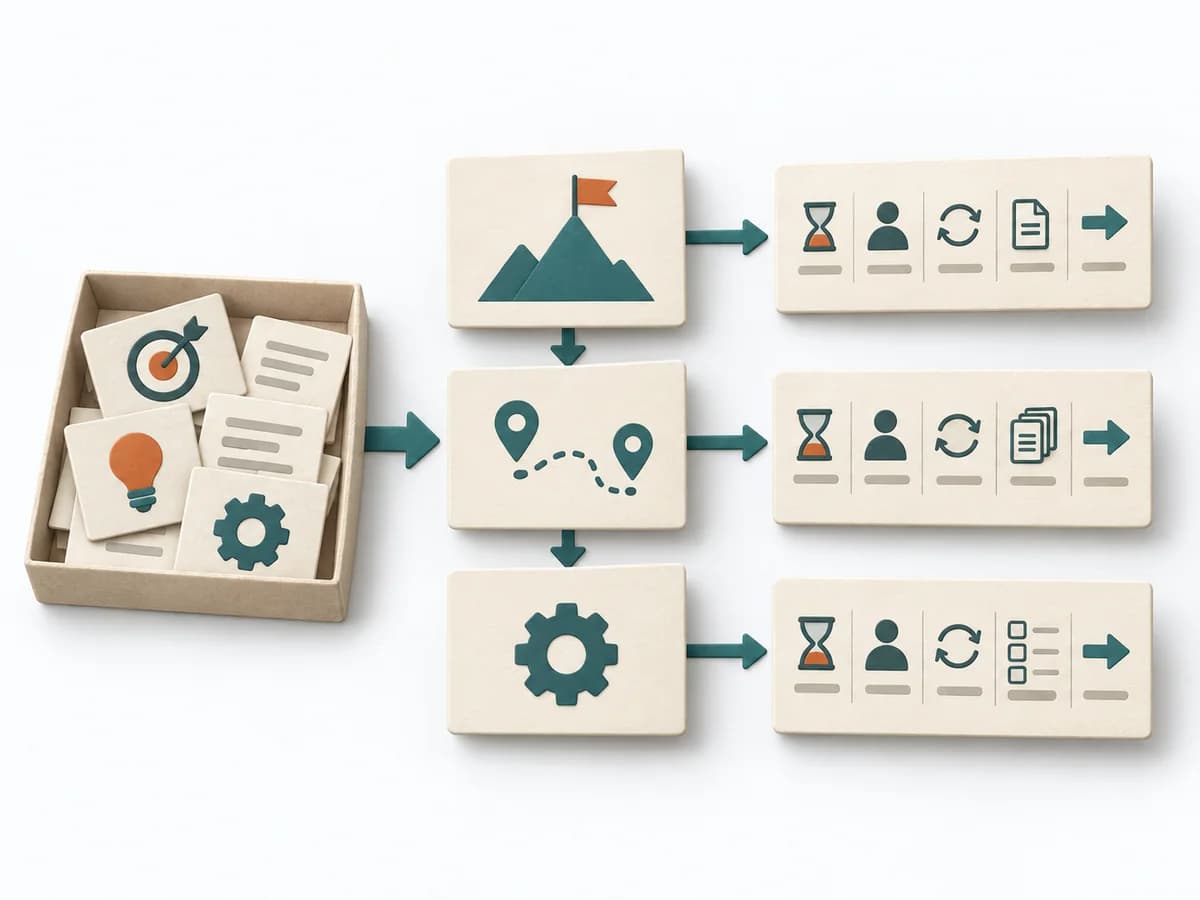 Business Strategy Strategic, Tactical and Operational Planning |  Facilitation Stakeholder Salience Model |  Business Strategy Strategy Execution Loop |
|---|---|---|---|
Purposedifferent | It places decisions and artifacts at the right level. Strategic planning clarifies direction, tactical planning translates it into programs, and operational planning steers concrete processes. | When stakeholders appear to matter very differently, the Stakeholder Salience Model rates their actual priority through power, legitimacy, and urgency. It turns individual contributions into a visible selection. The result is captured as a Salience diagram and a class-based strategy. | The Strategy Execution Loop helps avoid treating strategy as a one-off document. It makes visible how strategic decisions are turned into objectives, initiatives, operational work, measurement, and learning. |
Complexitydifferent | Medium | Medium | High |
Timedifferent | 90-180 min | 60-90 min | Initial 3-6 h, then monthly or quarterly reviews |
Participantsdifferent | 4-12 | 3-6 | 5-12 |
Formatdifferent | Workshop | Workshop | Workshop + async |
Outputdifferent | Planning Levels Map, Cadence Model, Planning Artifact Inventory | Salience Diagram, Strategy per Class | Execution Loop, Review Cadence, Strategic Learning Log |
Tags1 shared | CadenceGovernanceExecution | StakeholdersFacilitationAlignmentGovernance | ExecutionCadenceLearningGovernance |
Often compared together
Methods with strong topical overlap with the current selection, not yet in the comparison.