View methods side by side.
Choose up to four methods. Add them using the search and share the comparison by copying its link.
Selected:Strategic, Tactical and Operational PlanningATAM (Architecture Tradeoff Analysis Method)Architecture Decision Record
| Criterion | 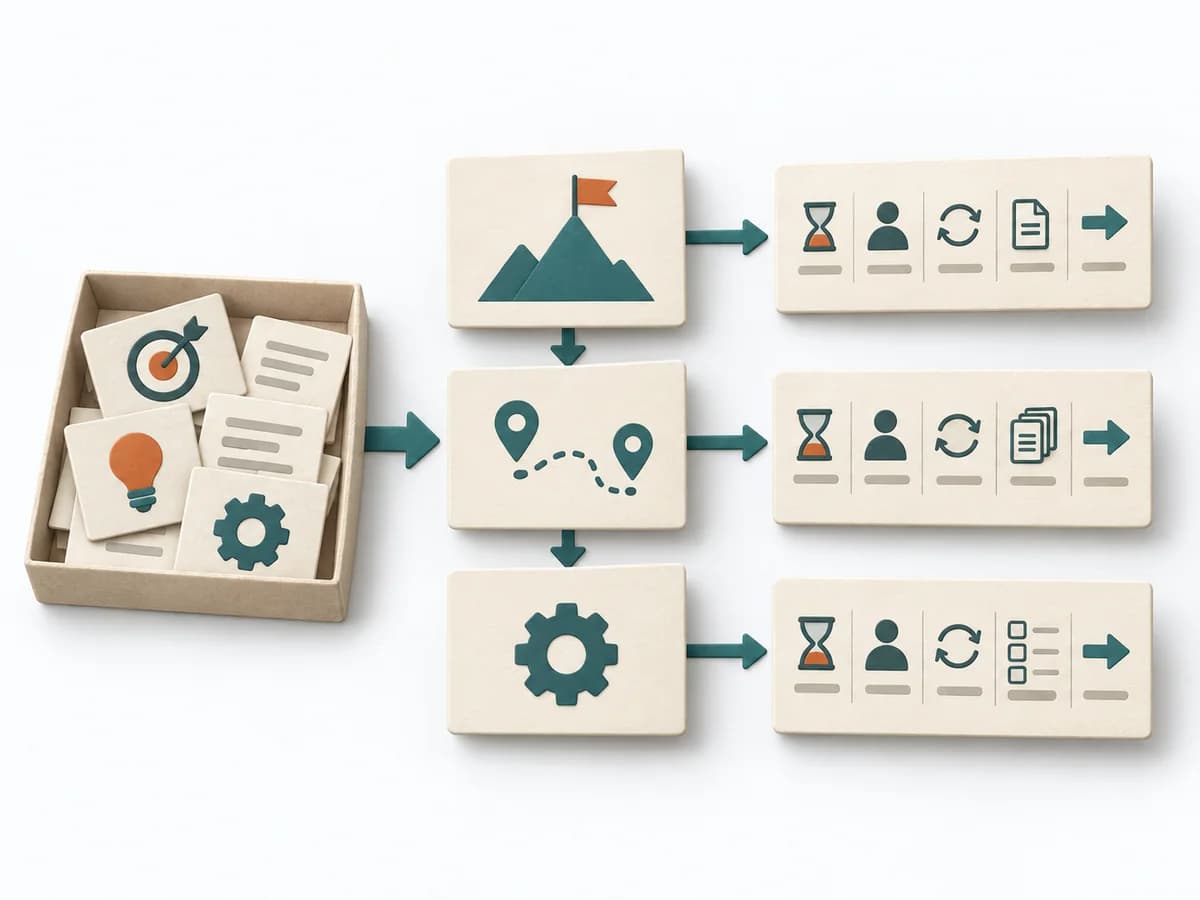 Business Strategy Strategic, Tactical and Operational Planning |  Architecture ATAM (Architecture Tradeoff Analysis Method) |  Architecture Architecture Decision Record |
|---|---|---|---|
Purposedifferent | It places decisions and artifacts at the right level. Strategic planning clarifies direction, tactical planning translates it into programs, and operational planning steers concrete processes. | ATAM helps teams weigh architecture decisions when quality goals compete. The team considers business goals, stakeholder expectations, and technical decisions together. The evaluation shows which risks need further investigation. | An ADR permanently records an architecture decision with context, trade-offs, and consequence. It creates continuity for later changes because the decision path stays traceable. |
Complexitydifferent | Medium | High | Low |
Timedifferent | 90-180 min | Several meetings plus preparation and analysis; total effort depends on scope | 15-45 min |
Participantsdifferent | 4-12 | Evaluation team, architects, and relevant stakeholders | 1-3 |
Formatdifferent | Workshop | Workshop + async | Async |
Outputdifferent | Planning Levels Map, Cadence Model, Planning Artifact Inventory | Prioritized quality scenarios in a utility tree, Architecture risks with reasoning and assumptions, Sensitivity and trade-off points, Findings report with open investigations | ADR File, Decision Log, Rationale |
Tagsno overlap | CadenceGovernanceExecution | ArchitectureQualityRiskTradeoffsStakeholders | ArchitectureRationaleDocumentationGovernance |
Often compared together
Methods with strong topical overlap with the current selection, not yet in the comparison.