View methods side by side.
Choose up to four methods. Add them using the search and share the comparison by copying its link.
Selected:SAAM (Software Architecture Analysis Method)Customer Journey MappingRoot Cause Tree Analysis
| Criterion |  Architecture SAAM (Software Architecture Analysis Method) |  UX Research Customer Journey Mapping | 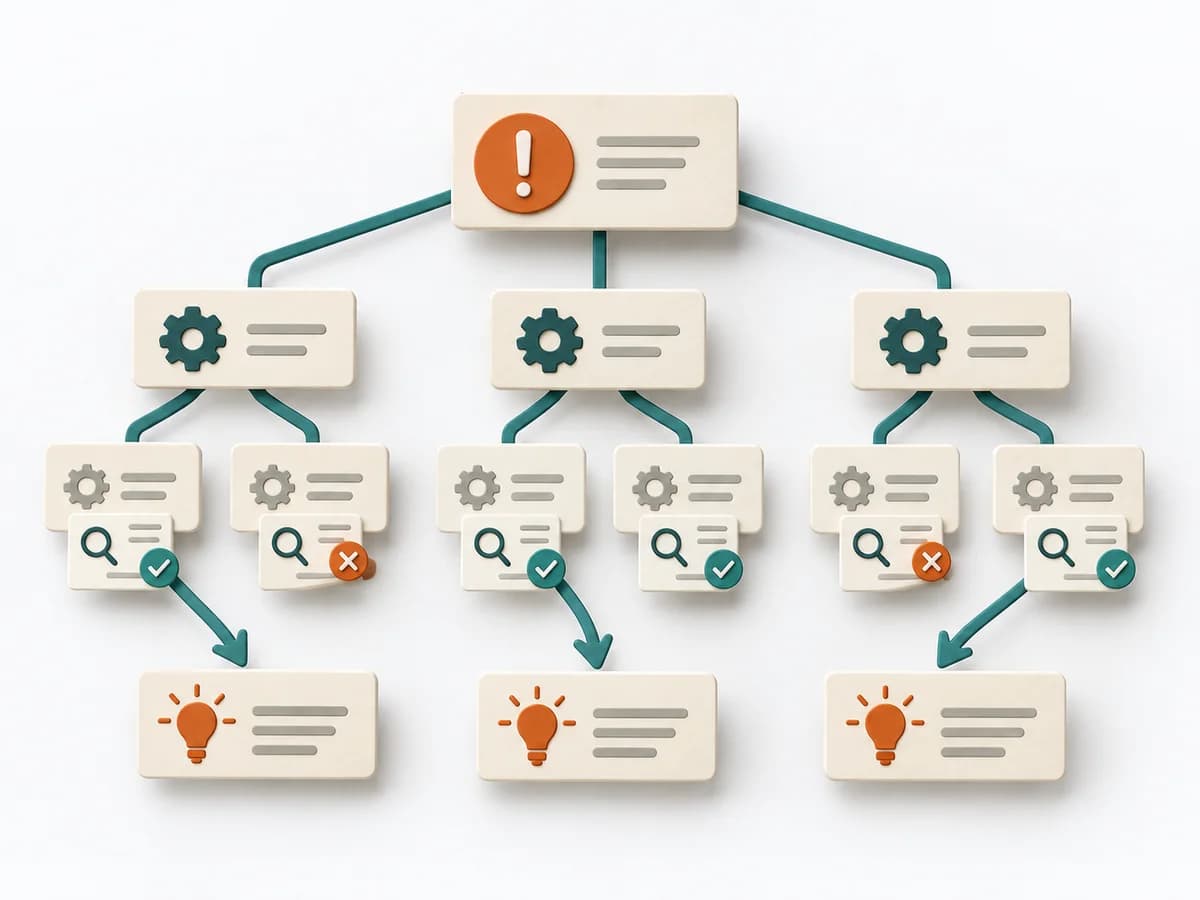 Operations Root Cause Tree Analysis |
|---|---|---|---|
Purposedifferent | SAAM helps teams judge an architecture’s suitability for selected tasks and changes. It is particularly useful for examining modifiability and comparing architecture alternatives with clear reasoning. | When a user journey falls apart across many touchpoints, customer journey mapping makes the experience visible as a coherent arc. Phases, emotions, and breaks become legible enough to prioritize critical moments deliberately. | For a problem with several suspected causes, the method builds a causal structure instead of a mere list. It makes visible how causes connect and where the strongest points of leverage lie. |
Complexitydifferent | High | Medium | Medium |
Timedifferent | Preparation, scenario analysis, and findings review; effort depends on scope | 2-4 h | 1-3 h |
Participantsdifferent | Architecture experts and stakeholders for scenarios and weighting | 4-10 | 2-8 |
Formatdifferent | Workshop + async | Workshop | Workshop |
Outputdifferent | Domain functions mapped to components and connections, Quality attributes and evaluation criteria, Typical tasks and their effects on the architecture, Reasoned evaluation or comparison of alternatives | Journey Map, Pain-point List, Opportunity Backlog | Cause Tree, Evidence Notes, Countermeasures |
Tagsno overlap | ArchitectureChangeAnalysisComparisonQuality | JourneyServiceService design | Root causeTreeIncidentQuality |
Often compared together
Methods with strong topical overlap with the current selection, not yet in the comparison.