View methods side by side.
Choose up to four methods. Add them using the search and share the comparison by copying its link.
| Criterion | 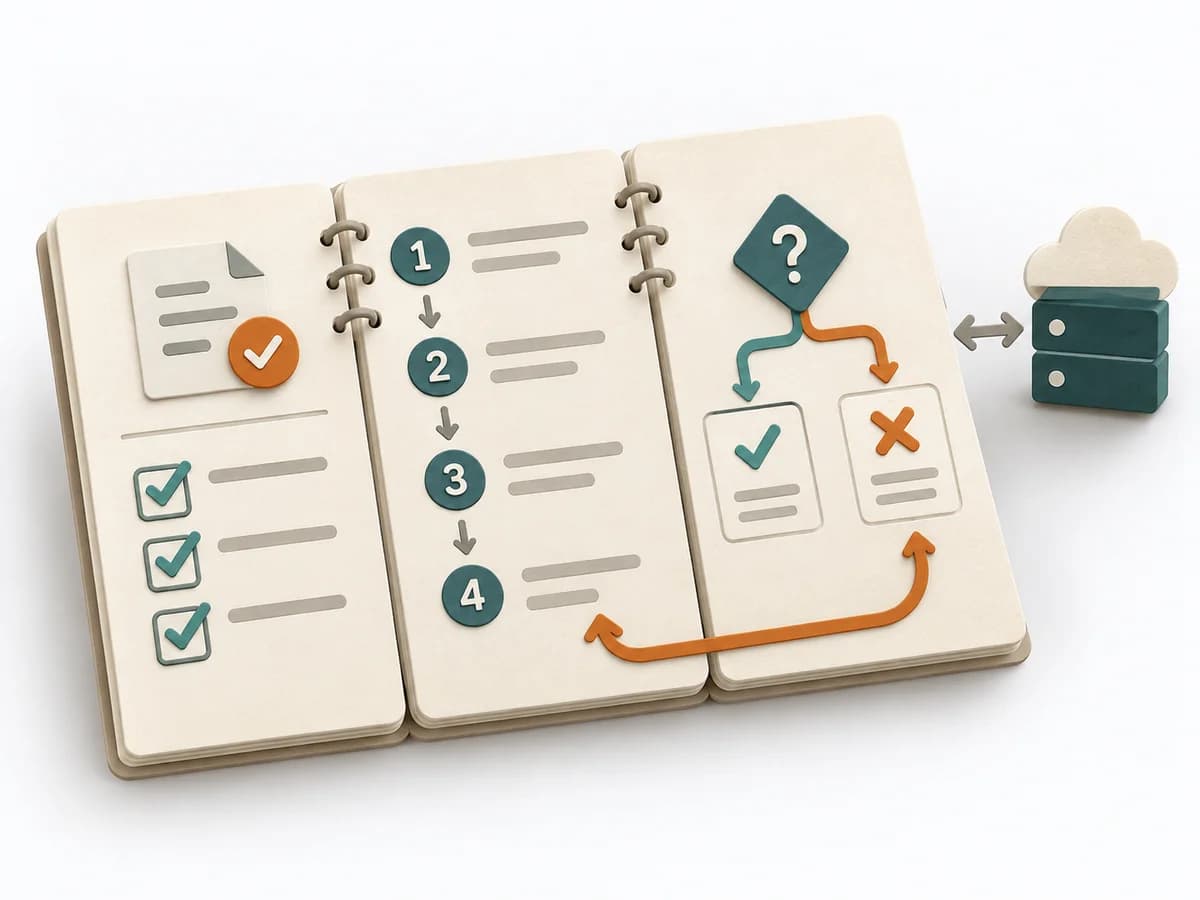 Operations Runbook |  Decision Making OODA Loop |  Decision Making Trade-off Analysis |
|---|---|---|---|
Purposedifferent | For recurring operational tasks or incidents, the method keeps solid action logic ready. It reduces uncertainty when time pressure, role changes, or rare situations demand fast access. | In dynamic situations, decisions become outdated faster than they can be prepared. The OODA Loop holds observing, orienting, deciding, and acting together as a recurring rhythm so reaction does not slide into inertia. | With limited resources, quality, speed, cost, and risk almost always compete with each other. Trade-off Analysis makes these tensions explicit and prevents decisions from producing hidden side effects. |
Complexitydifferent | Low | Medium | Medium |
Timedifferent | 20-60 min | 15-60 min je Zyklus | 45-120 min |
Participantsdifferent | 1-4 | 1-8 | 2-8 |
Formatdifferent | Async | Workshop + async | Workshop + async |
Outputdifferent | Runbook, Checklist, Escalation Path | Situation Assessment, Decision Loop, Action Updates | Trade-off Matrix, Criteria List, Decision Rationale, Accepted Downsides |
Tagsno overlap | OperationsReliabilityDocumentation | DecisionChangeLearningStrategy | TradeoffsDecisionCriteriaOptions |
Often compared together
Methods with strong topical overlap with the current selection, not yet in the comparison.