View methods side by side.
Choose up to four methods. Add them using the search and share the comparison by copying its link.
| Criterion | 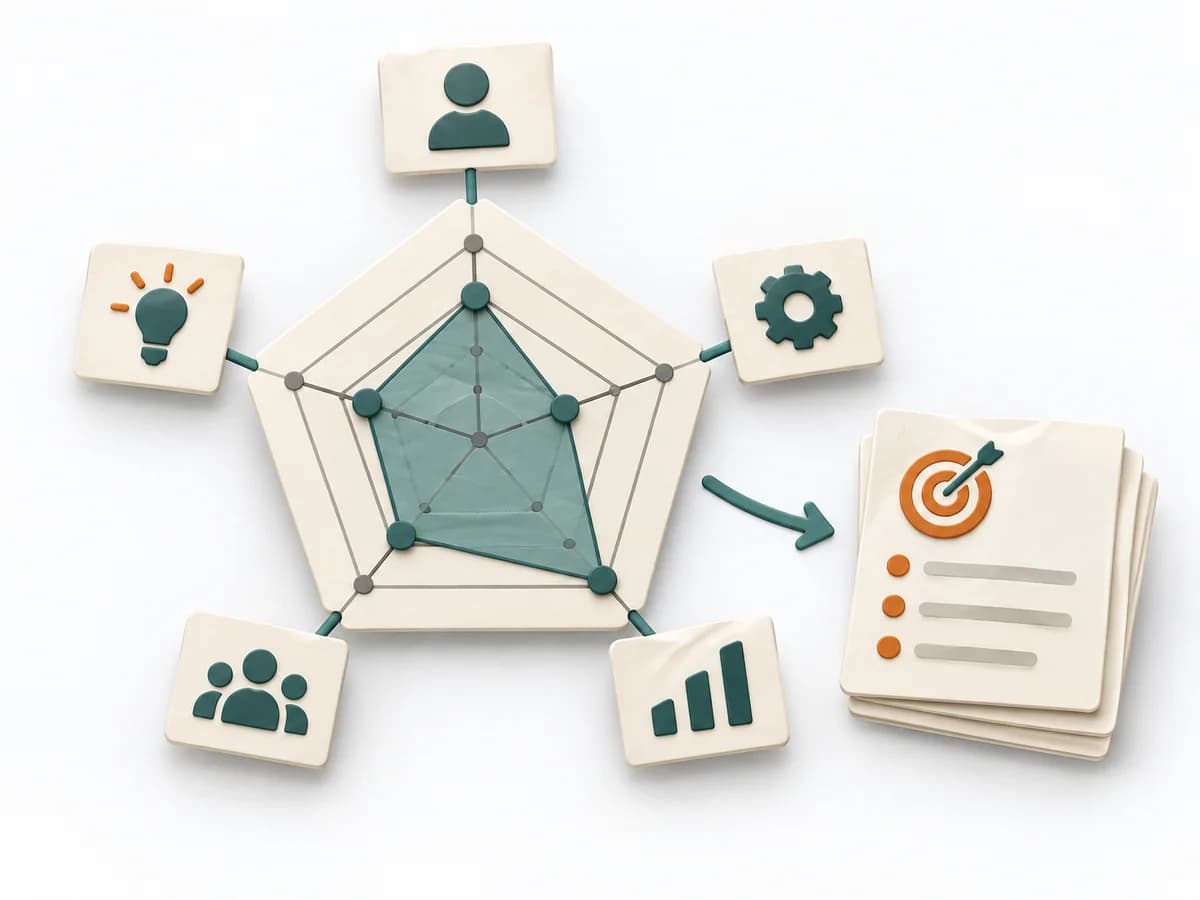 Decision Making Radar |  Facilitation Alignment Mapping |  Business Strategy PESTLE Analysis |
|---|---|---|---|
Purposedifferent | When capabilities, maturity levels, or market positions need to be compared across several dimensions, overview is easily lost. Radar brings different characteristics into a shared picture and shows patterns faster than tables do. | When several people work toward one goal but hold different mental maps, Alignment Mapping makes the discrepancies visible. It arranges goals, assumptions, and priorities so shared direction becomes verifiable. | PESTLE Analysis makes political, economic, social, technological, legal, and environmental influences visible. The environment of an initiative is thereby read systematically instead of through isolated trends. |
Complexitysame | Medium | Medium | Medium |
Timedifferent | 1-2 h | 1-2 h | 1-3 h |
Participantsdifferent | 2-10 | 4-12 | 2-10 |
Formatdifferent | Workshop + async | Workshop | Workshop + async |
Outputdifferent | Radar Map, Capability Scores, Action Areas | Alignment Map, Open Issues, Decision Questions | PESTLE Map, External Risks, Strategic Questions |
Tagsno overlap | AssessmentPortfolioCapability | AlignmentStakeholdersStrategyFacilitation | StrategyMarketAnalysis |
Often compared together
Methods with strong topical overlap with the current selection, not yet in the comparison.