View methods side by side.
Choose up to four methods. Add them using the search and share the comparison by copying its link.
| Criterion |  Facilitation Power Interest Grid | 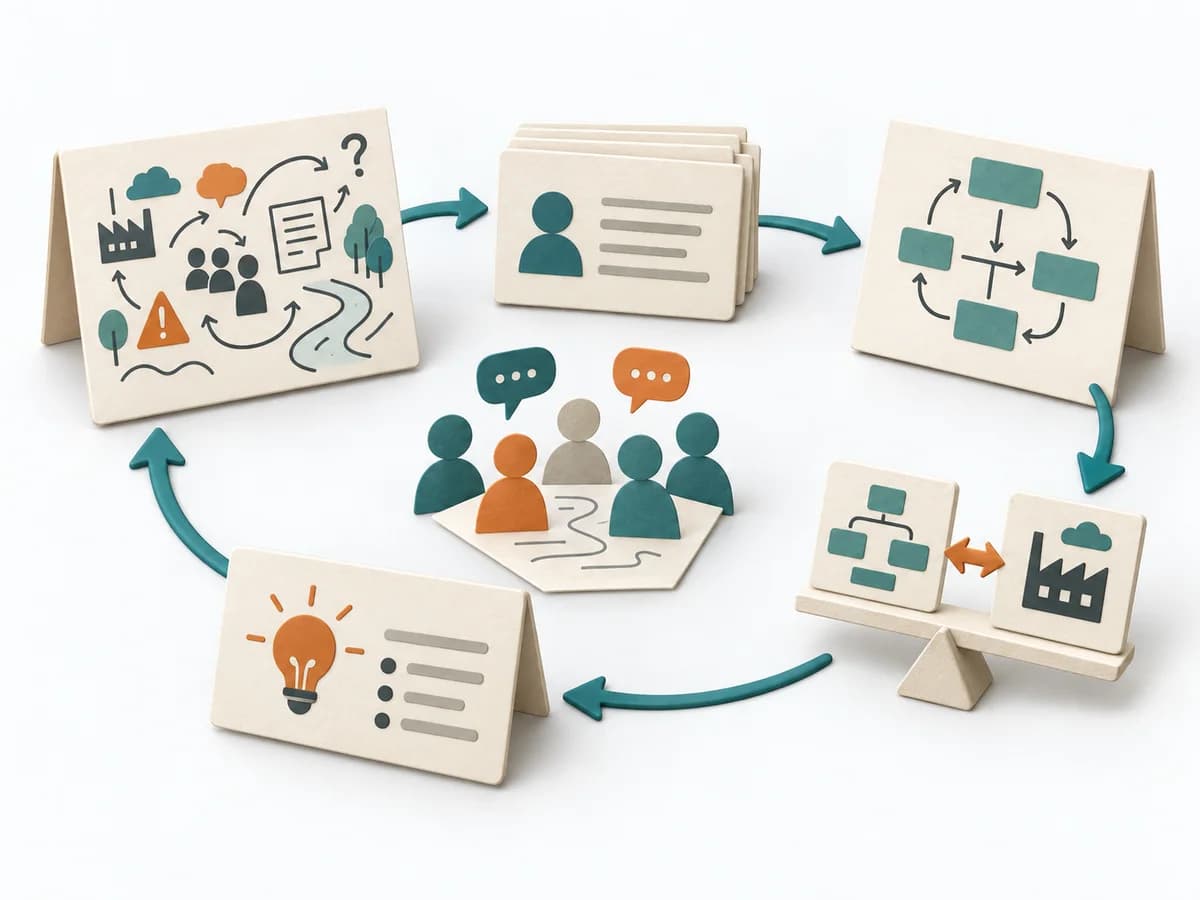 Systems Thinking Soft Systems Methodology |  Facilitation Stakeholder Salience Model |
|---|---|---|---|
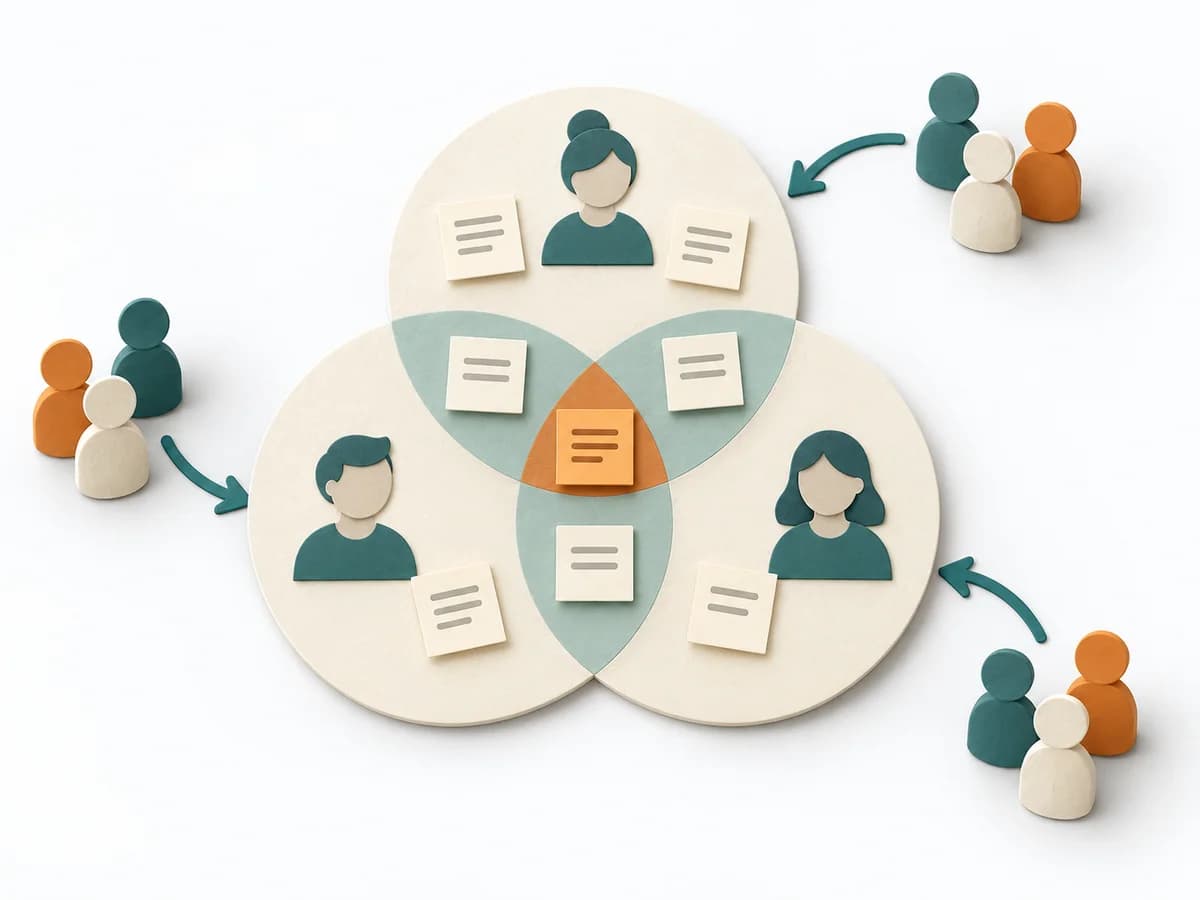
Purposedifferent | When many stakeholders compete for attention at once, the Power Interest Grid sorts them by influence and stake. It turns individual contributions into a visible selection. The result is captured as a Power Interest Grid and a stakeholder-specific strategy. | Soft Systems Methodology helps explore unclear or politically charged problems systematically. Instead of forcing a quick answer, the method builds a shared understanding of perspectives and room for action. | When stakeholders appear to matter very differently, the Stakeholder Salience Model rates their actual priority through power, legitimacy, and urgency. It turns individual contributions into a visible selection. The result is captured as a Salience diagram and a class-based strategy. |
Complexitydifferent | Low | High | Medium |
Timedifferent | 30-60 min | 0.5-3 Tage | 60-90 min |
Participantsdifferent | 2-8 | 5-15 | 3-6 |
Formatsame | Workshop | Workshop | Workshop |
Outputdifferent | Power Interest Grid, Strategy per Stakeholder | Rich Picture, Root Definitions, Conceptual Models, Change Agenda | Salience Diagram, Strategy per Class |
Tagsno overlap | StakeholdersFacilitationAlignmentPlanning | Soft systemsComplexitySensemakingSystems thinking | StakeholdersFacilitationAlignmentGovernance |
Often compared together
Methods with strong topical overlap with the current selection, not yet in the comparison.