View methods side by side.
Choose up to four methods. Add them using the search and share the comparison by copying its link.
| Criterion | 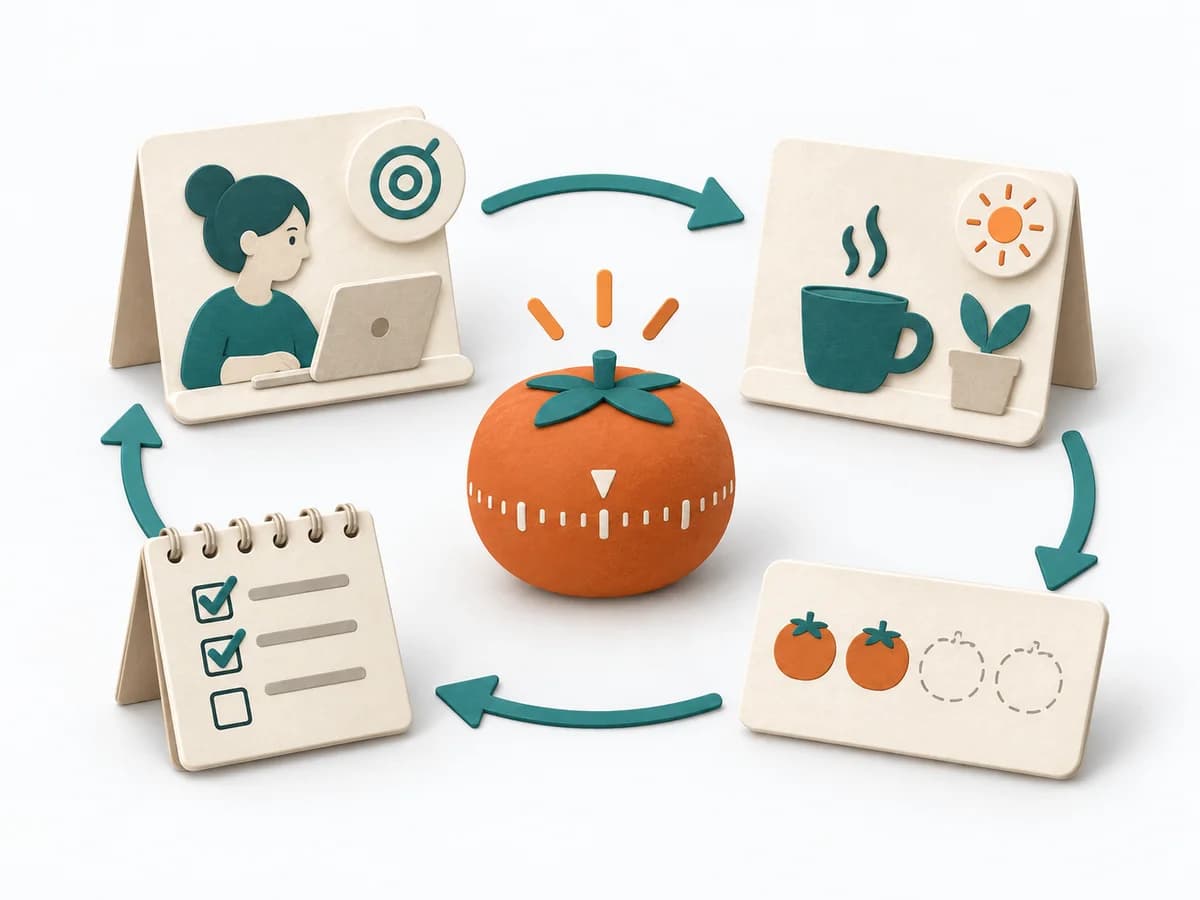 Operations Pomodoro Technique |  Innovation Design Sprint |  UX Research First-click Testing |
|---|---|---|---|
Purposedifferent | For easily distracted solo work, the method sets clear time boundaries for concentrated work. It protects attention when large tasks would otherwise fall apart into small avoidance moves. | When the product question is unclear and time pressure is high, the method takes a team from an open idea to a testable solution. It connects problem understanding, decision, and learning in one compact format, lowering the risk of spending a lot of energy on a mere guess. | When users immediately turn the wrong way on a screen or wireframe, first click testing checks initial orientation at high speed. The first click shows early whether expectation, labeling, and wayfinding fit together. |
Complexitydifferent | Low | High | Low |
Timedifferent | 25 min Zyklen | 4-5 Tage | 1-2 Tage |
Participantsdifferent | 1 | 5-8 | 10-30 |
Formatdifferent | Async | Workshop | Async |
Outputdifferent | Focus Sessions, Task Progress, Interruption Notes | Prototype, Test Findings, Decision Rationale | Click Heatmap, Success Rate, Design Recommendations |
Tagsno overlap | FocusTime managementProductivityExecution | Design sprintPrototypeValidationInnovation | UXNavigationFindabilityValidation |
Often compared together
Methods with strong topical overlap with the current selection, not yet in the comparison.