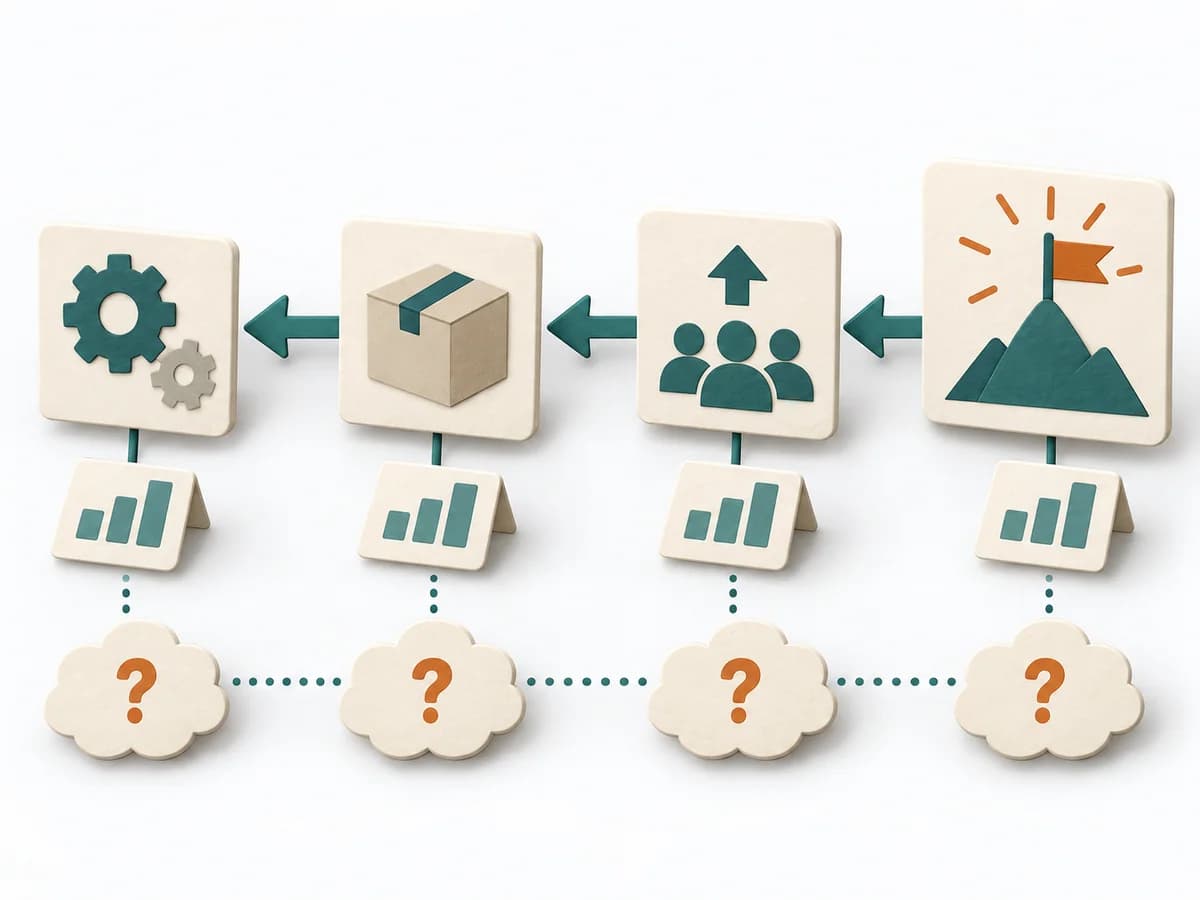
View methods side by side.
Choose up to four methods. Add them using the search and share the comparison by copying its link.
| Criterion |  Systems Thinking Polarity Mapping |  Product Strategy Impact Mapping | 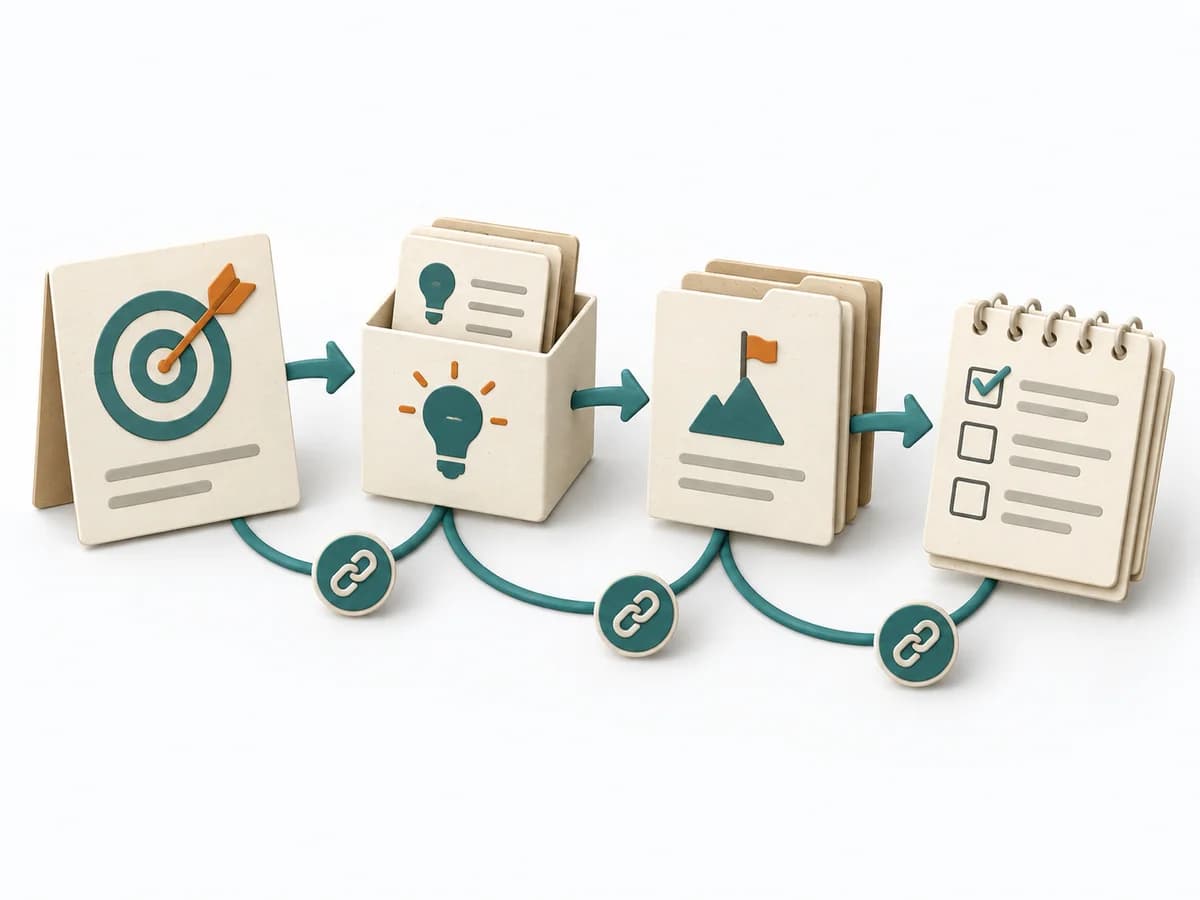 Product Strategy GIST Planning |
|---|---|---|---|
Purposedifferent | Polarity Mapping makes tensions between two opposing poles tangible, such as standardization and adaptation or control and autonomy. The method guards against making apparent either-or decisions prematurely. | When a goal needs to be connected to several possible paths, it shows chains of impact instead of feature lists. It connects business goal, behavior change, and measures. | GIST Planning helps clarify target groups, value, goals, and priorities. It links customer value, product logic, and decision priorities, and captures the result as goals, an idea bank, and a step-project list. |
Complexitysame | Medium | Medium | Medium |
Timedifferent | 1-2 h | 45-90 min | Wochen bis Monate je Goal |
Participantsdifferent | 3-12 | 3-8 | 3-10 |
Formatdifferent | Workshop | Workshop | Workshop + async |
Outputdifferent | Polarity Map, Warning Signs, Balance Actions | Impact Map, Outcome Hypotheses, Delivery Options | Goals, Idea bank, Step-project list, Tasks, Learning reports |
Tagsno overlap | Systems thinkingTradeoffsLeadership | OutcomesStrategyBehaviorPlanning | RoadmapOutcomesPlanningExperiments |
Often compared together
Methods with strong topical overlap with the current selection, not yet in the comparison.