View methods side by side.
Choose up to four methods. Add them using the search and share the comparison by copying its link.
| Criterion | 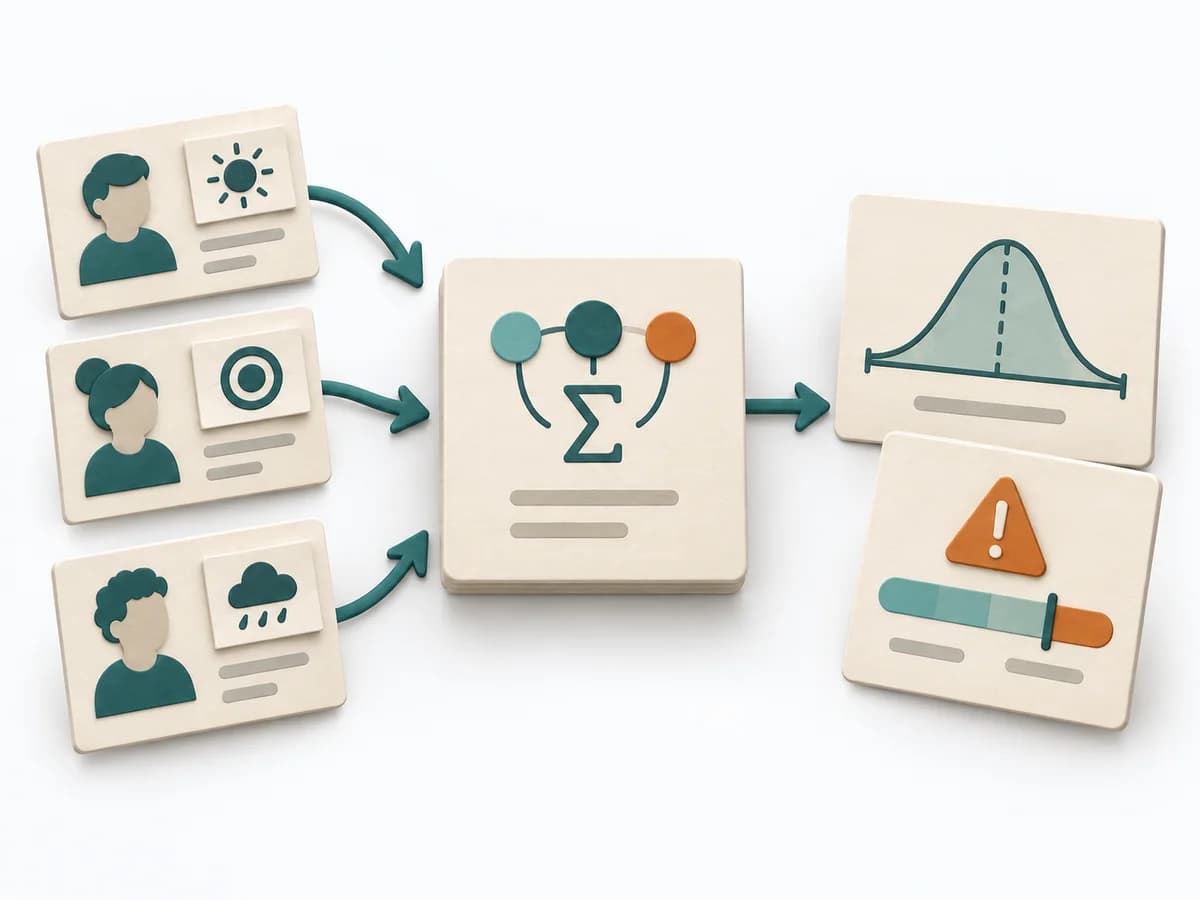 Decision Making PERT Estimation |  Agile ROAM Board |  Operations 5 Whys |
|---|---|---|---|
Purposedifferent | On complex initiatives, a plain average tends to understate just how uncertain the outcome really is. It separates options, evaluation criteria, and open risks. The result is captured as a PERT Estimate, Expected Value, and Risk Notes. | When work needs to move between different states or columns, it makes that movement and its handoffs legible. It sorts work by value, risk, and delivery ability. The result is captured as a ROAM Board and an Owner List. | For a single, hard-to-explain deviation, the method exposes the causal chain behind the visible symptom. It keeps the cause open until a controllable condition emerges instead of a mere description. |
Complexitydifferent | Medium | Low | Low |
Timedifferent | 15-45 min | 20-40 min initial, dann laufend | 15-30 min |
Participantsdifferent | 1-8 | 3-15 | 2-6 |
Formatdifferent | Workshop + async | Workshop + async | Workshop |
Outputdifferent | PERT Estimate, Expected Value, Risk Notes | ROAM Board, Owner List | Root cause notes, Countermeasures |
Tagsno overlap | EstimationUncertaintyRisk | RiskAgileTrackingAlignment | Root causeIncidentLeanProblem solving |
Often compared together
Methods with strong topical overlap with the current selection, not yet in the comparison.



