View methods side by side.
Choose up to four methods. Add them using the search and share the comparison by copying its link.
| Criterion |  Knowledge Modeling PARA Method | 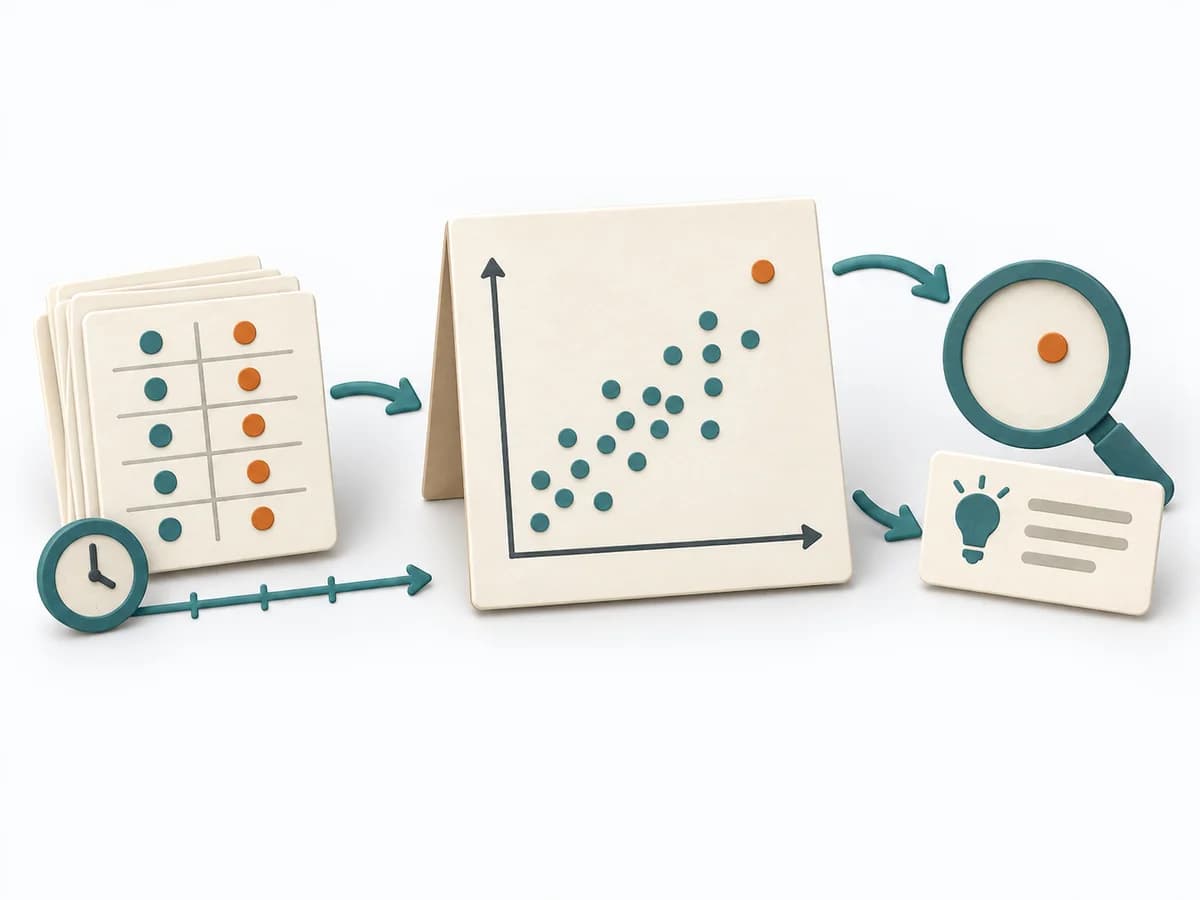 Operations Scatter Diagram |  Operations Root Cause Analysis |
|---|---|---|---|
Purposedifferent | The PARA Method organizes knowledge into Projects, Areas, Resources, and Archives. It creates order when digital notes, files, and tasks no longer cleanly fit current work. | When the question is whether two measures are related, the method makes patterns in the data picture visible. It separates felt correlations from relationships that actually show up in the data. | When a problem keeps recurring and the cause stays unclear, the method exposes the underlying mechanism. It separates symptom, guess, and robust explanation from one another. |
Complexitydifferent | Medium | Low | Medium |
Timedifferent | 1-3 h Setup, laufend | 30-90 min | 1-4 h |
Participantsdifferent | 1 | 1-4 | 3-8 |
Formatdifferent | Async | Workshop + async | Workshop + async |
Outputdifferent | PARA Structure, Project Notes, Knowledge Archive | Scatter Plot, Korrelationsnotiz, Hypothesenliste | Problem Statement, Cause Hypotheses, Confirmed Causes, Action Plan |
Tagsno overlap | KnowledgeProductivityOrganization | Root causeQualityVisualization | Root causeProblem solvingQualityIncident |
Often compared together
Methods with strong topical overlap with the current selection, not yet in the comparison.