View methods side by side.
Choose up to four methods. Add them using the search and share the comparison by copying its link.
| Criterion |  Knowledge Modeling PARA Method |  Operations PDCA Cycle | 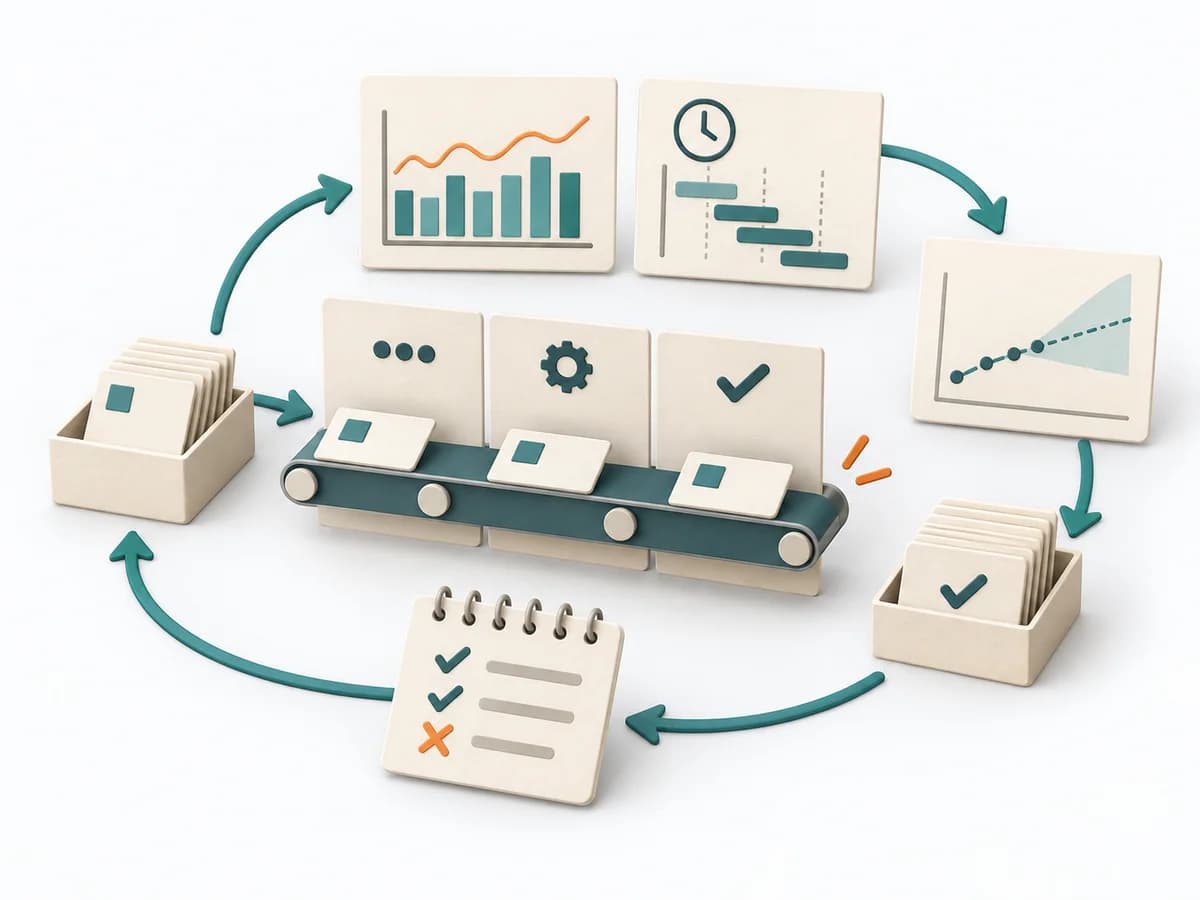 Agile NoEstimates |
|---|---|---|---|
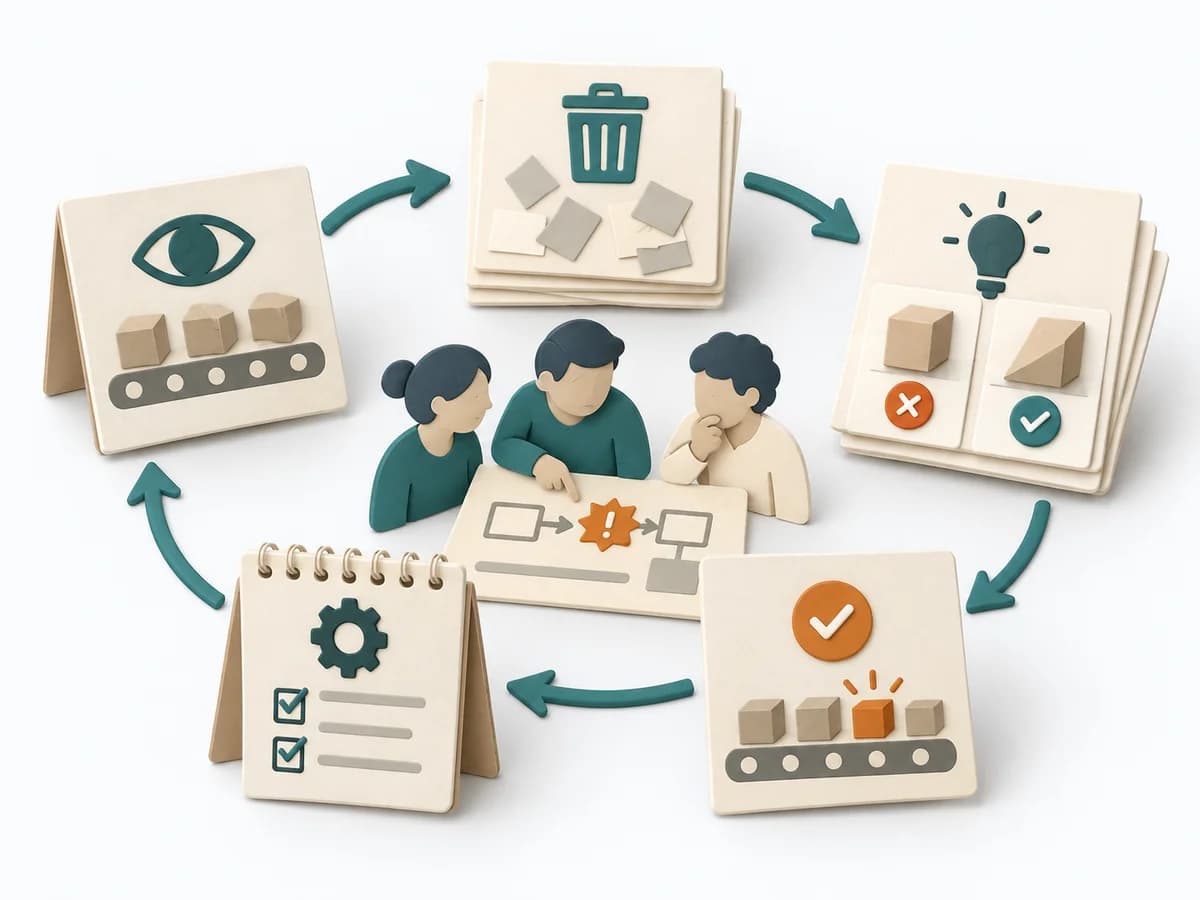
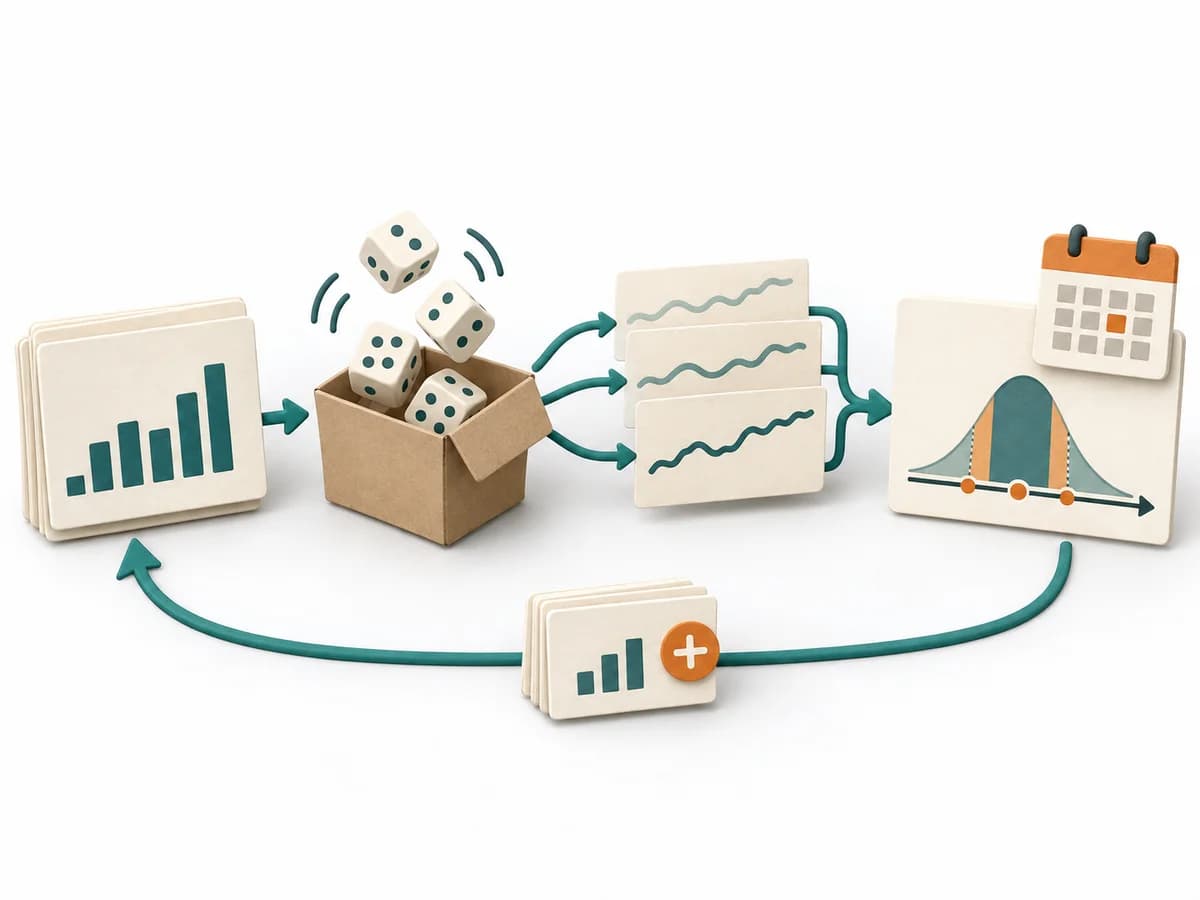
Purposedifferent | The PARA Method organizes knowledge into Projects, Areas, Resources, and Archives. It creates order when digital notes, files, and tasks no longer cleanly fit current work. | For an improvement that still has to prove itself in everyday work, the method runs it through small learning loops. It connects planning, checking, and standardization into a repeatable learning mode. | When estimating slows a team down more than it helps, it shifts the focus to flow, small slices, and real lead time. It sorts work by value, risk, and delivery ability. The result is captured as Throughput Data, Flow Forecast, and Slicing Rules. |
Complexitydifferent | Medium | Low | Medium |
Timedifferent | 1-3 h Setup, laufend | 1 h bis mehrere Wochen | laufend |
Participantsdifferent | 1 | 1-8 | 2-12 |
Formatdifferent | Async | Workshop + async | Workshop + async |
Outputdifferent | PARA Structure, Project Notes, Knowledge Archive | PDCA Log, Experiment Plan, Learning Outcome, Standard Change | Throughput Data, Flow Forecast, Slicing Rules |
Tagsno overlap | KnowledgeProductivityOrganization | Continuous improvementLeanExperiments | EstimationForecastingFlow |
Often compared together
Methods with strong topical overlap with the current selection, not yet in the comparison.