View methods side by side.
Choose up to four methods. Add them using the search and share the comparison by copying its link.
| Criterion |  Facilitation Open Space Technology |  Facilitation Alignment Mapping | 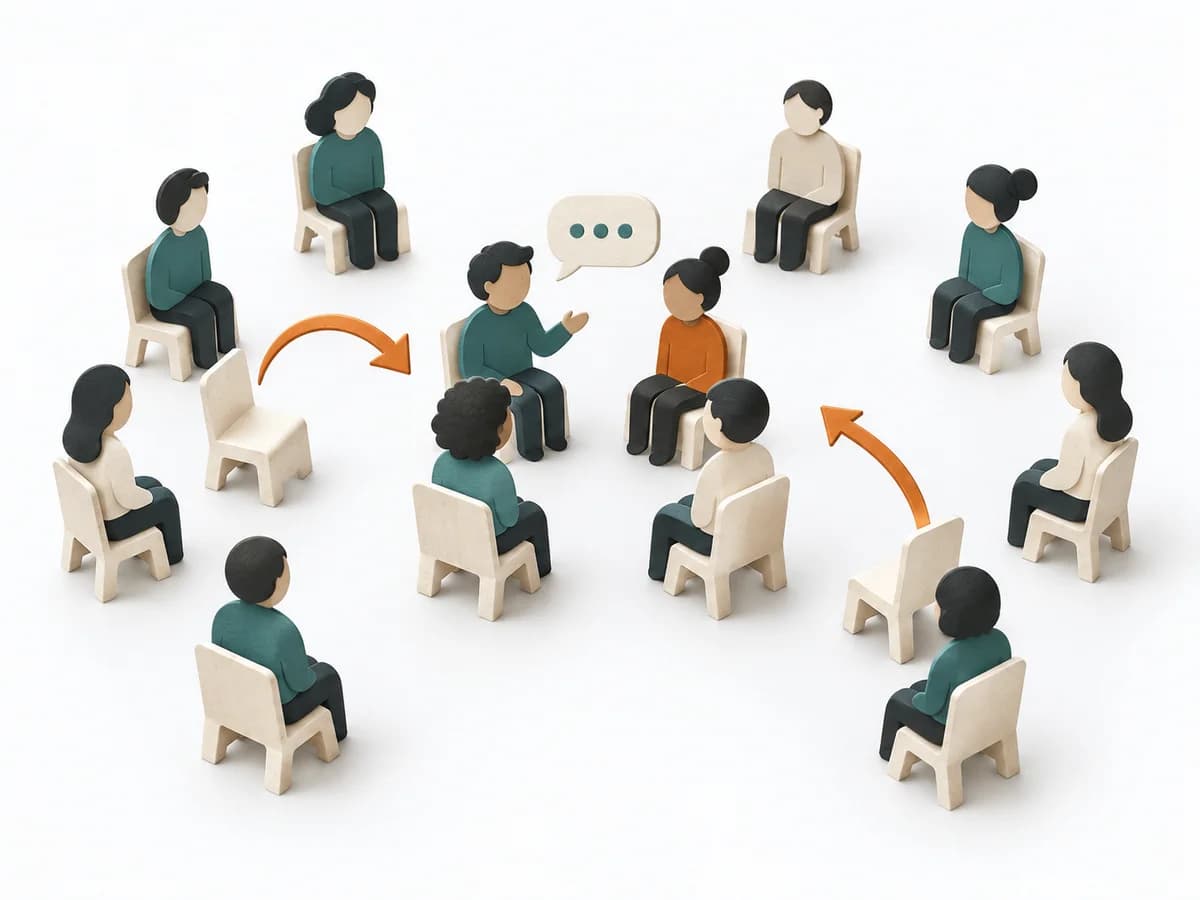 Facilitation Fishbowl Discussion |
|---|---|---|---|
Purposedifferent | When a complex topic does not yet have a fitting agenda, Open Space Technology hands topic ownership back to the participants. The format suits questions that only move forward when real interest determines the order. | When several people work toward one goal but hold different mental maps, Alignment Mapping makes the discrepancies visible. It arranges goals, assumptions, and priorities so shared direction becomes verifiable. | When a controversial topic needs depth and discipline at the same time, Fishbowl Discussion makes the structure of the conversation transparent. The format keeps the core small enough for real dialogue and open enough for controlled turnover. |
Complexitydifferent | High | Medium | Medium |
Timedifferent | 0.5-2 Tage | 1-2 h | 45-90 min |
Participantsdifferent | 20-500+ | 4-12 | 8-80 |
Formatsame | Workshop | Workshop | Workshop |
Outputdifferent | Session Marketplace, Proceedings, Action Topics | Alignment Map, Open Issues, Decision Questions | Discussion Insights, Observed Tensions, Follow-up Questions |
Tags1 shared | FacilitationLarge groupAutonomy | AlignmentStakeholdersStrategyFacilitation | FacilitationDialogueLarge group |
Often compared together
Methods with strong topical overlap with the current selection, not yet in the comparison.