View methods side by side.
Choose up to four methods. Add them using the search and share the comparison by copying its link.
| Criterion |  Product Discovery Outcome-Driven Innovation | 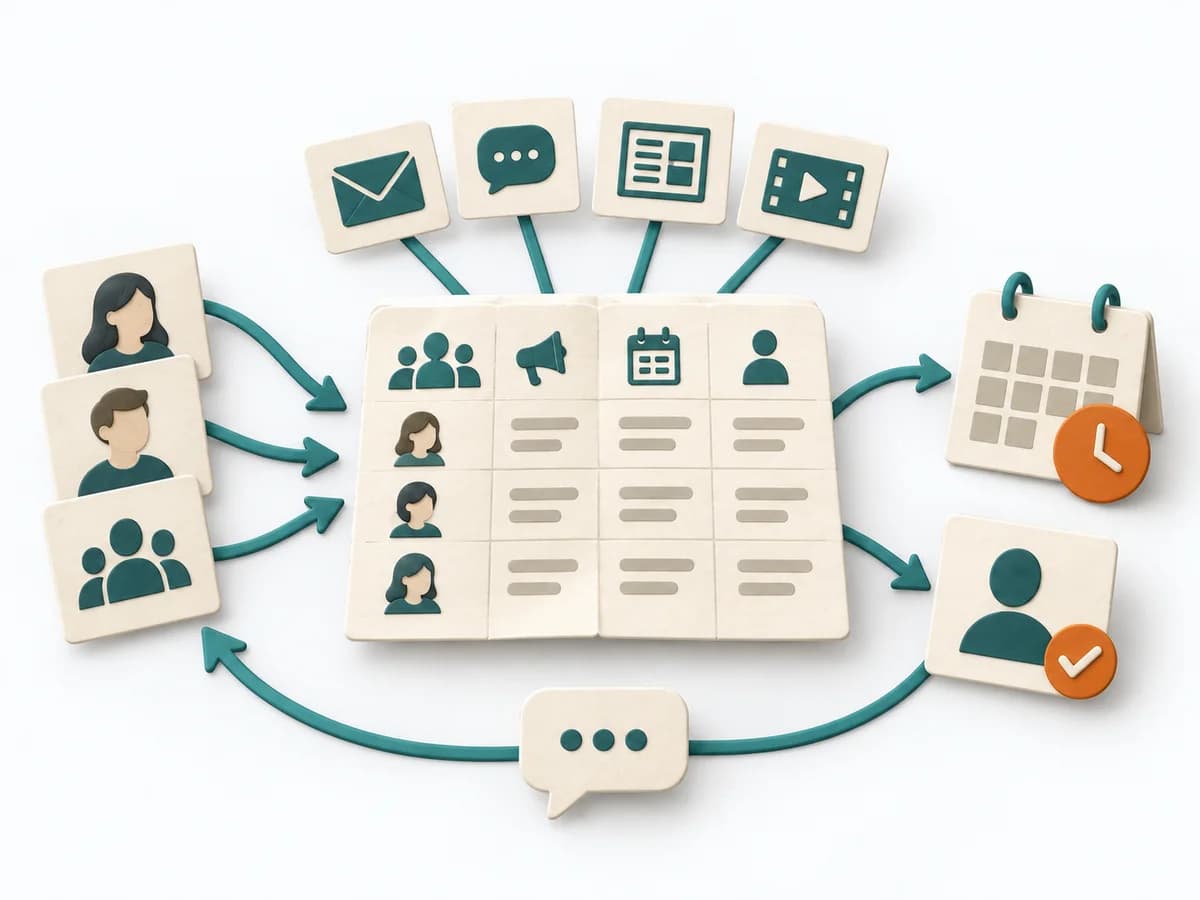 Delivery Communication Plan |  Facilitation Stakeholder Salience Model |
|---|---|---|---|
Purposedifferent | Outcome-Driven Innovation clarifies customer problems, solution opportunities, and evidence. It separates jobs, desired outcomes, importance, satisfaction, and opportunity, and captures results as desired outcome statements, an opportunity landscape, and segments by underserved needs. | When many people need to be informed in parallel and messages would otherwise arrive unevenly or too late, a Communication Plan orders communication reliably. Channels, audiences, and cadences interlock so important information doesn't get lost. | When stakeholders appear to matter very differently, the Stakeholder Salience Model rates their actual priority through power, legitimacy, and urgency. It turns individual contributions into a visible selection. The result is captured as a Salience diagram and a class-based strategy. |
Complexitydifferent | High | Low | Medium |
Timedifferent | Mehrere Wochen | 45-90 min | 60-90 min |
Participantsdifferent | 2-6 researchers plus sample | 2-6 | 3-6 |
Formatdifferent | Workshop + async | Workshop + async | Workshop |
Outputdifferent | Desired outcome statements, Opportunity landscape, Segmentation by underserved needs, Innovation hypotheses | Communication Plan, Channel Matrix, Message Cadence | Salience Diagram, Strategy per Class |
Tagsno overlap | OutcomesInnovationResearchQuantitative | CommunicationStakeholdersDeliveryPlanning | StakeholdersFacilitationAlignmentGovernance |
Often compared together
Methods with strong topical overlap with the current selection, not yet in the comparison.