View methods side by side.
Choose up to four methods. Add them using the search and share the comparison by copying its link.
| Criterion | 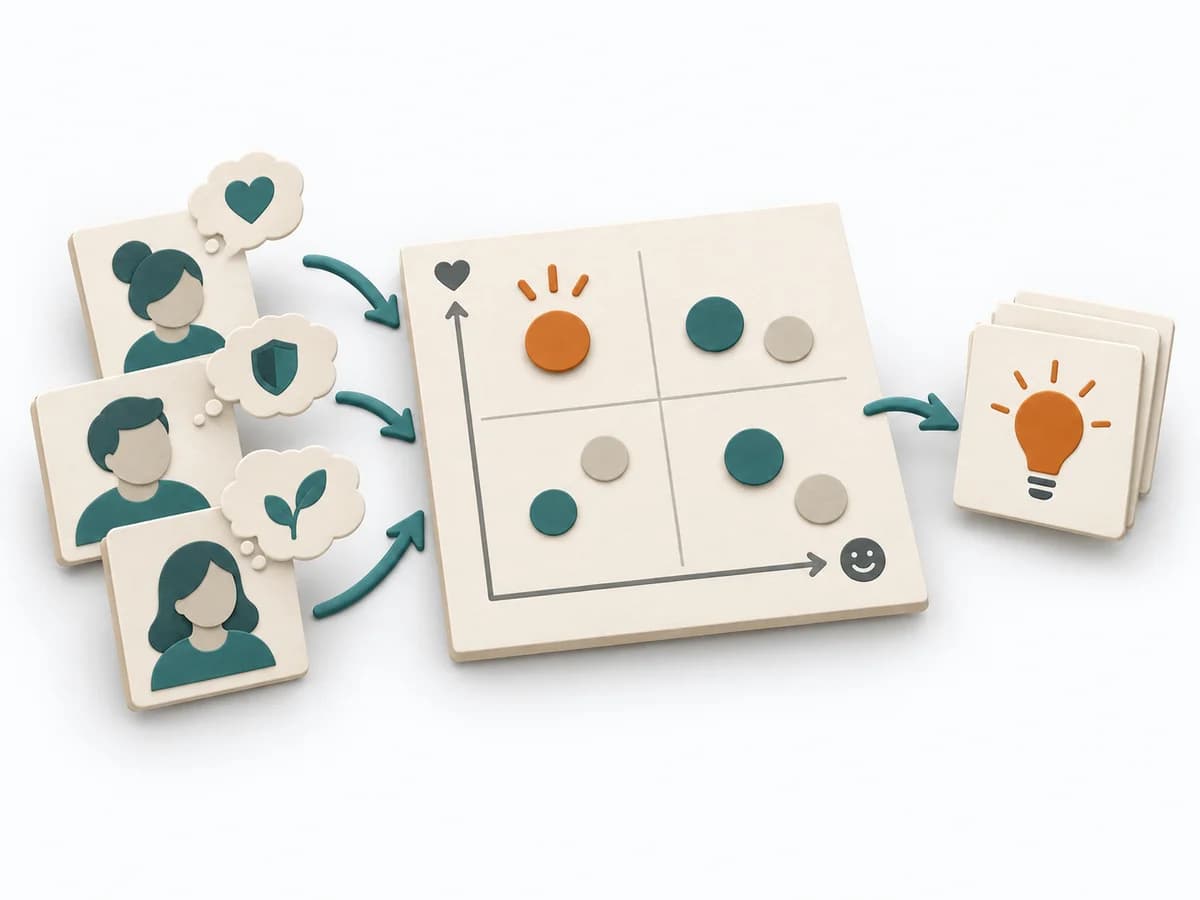 Product Discovery Outcome-Driven Innovation | 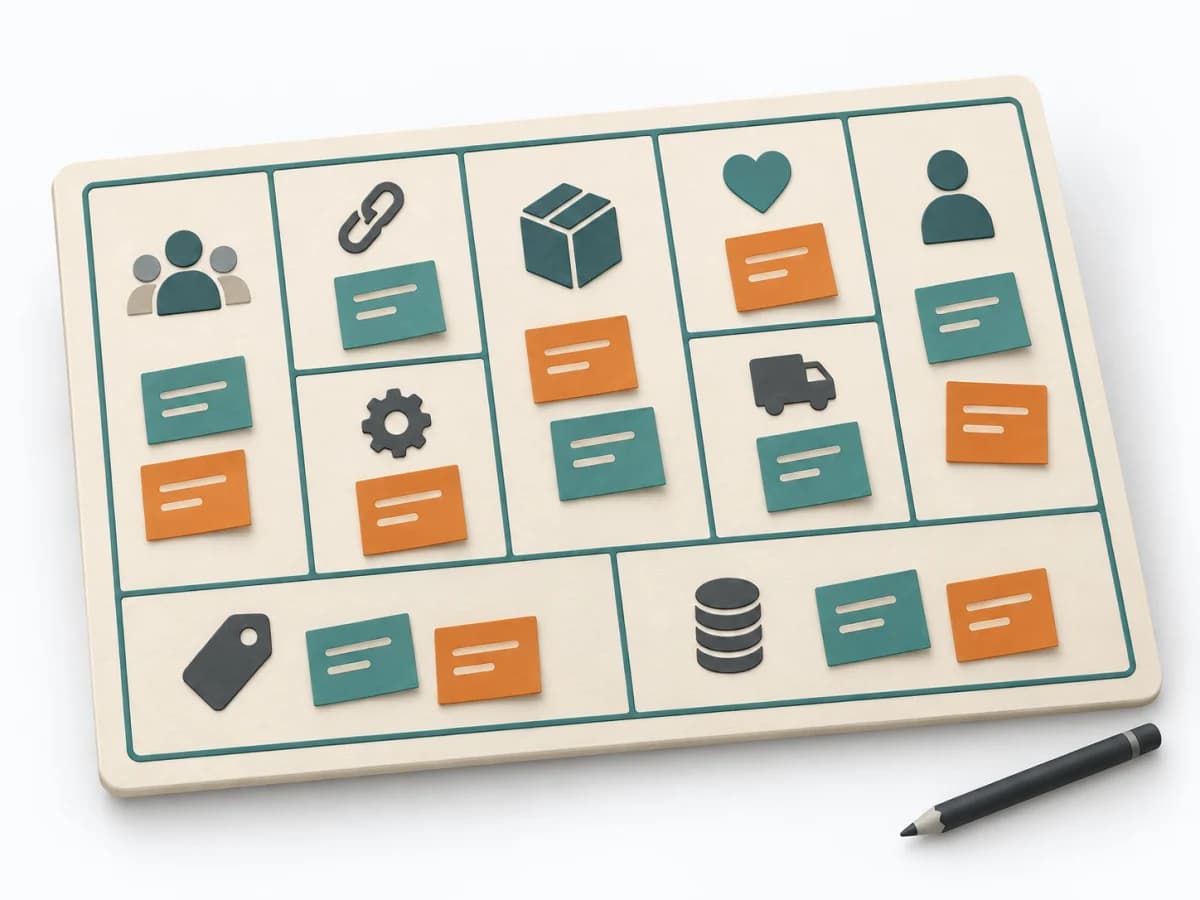 Business Strategy Business Model Canvas |  Product Strategy DIBB |
|---|---|---|---|
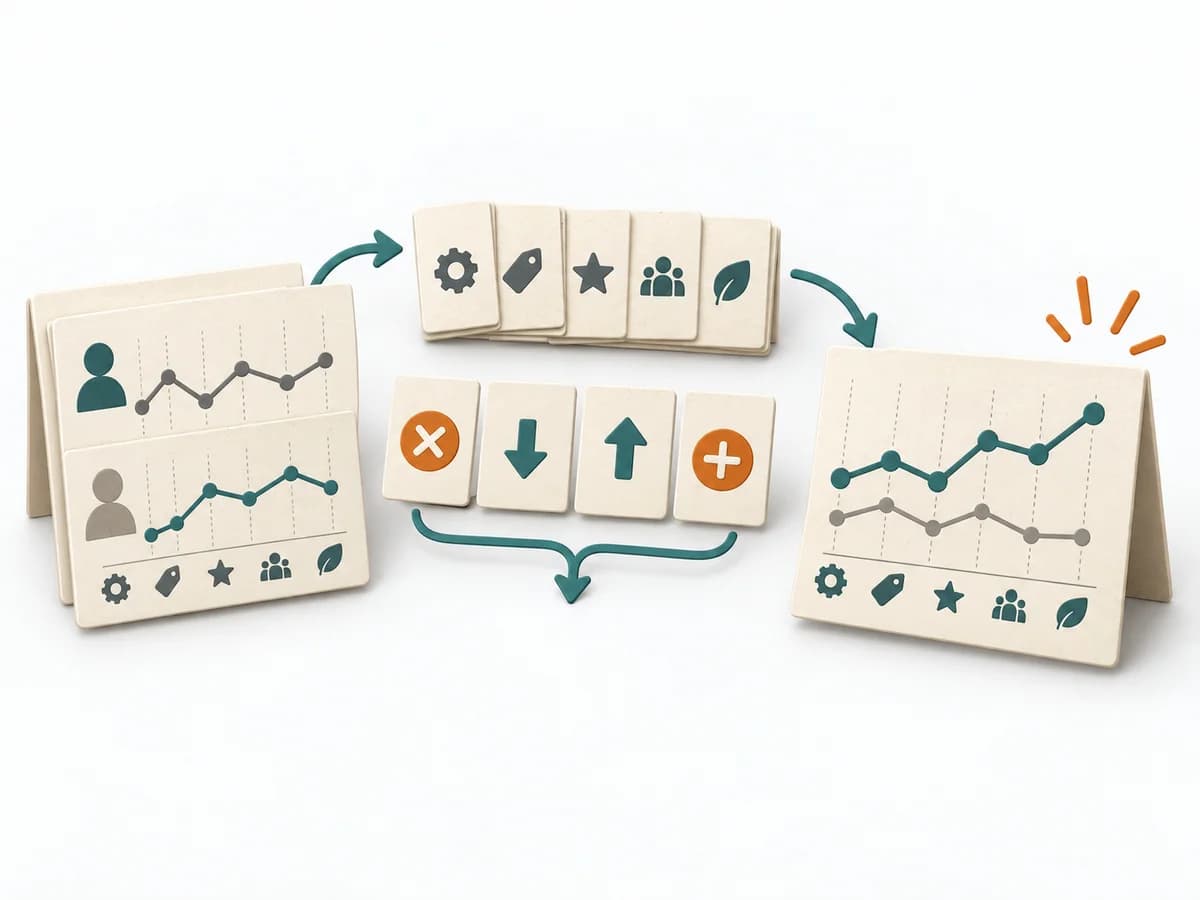
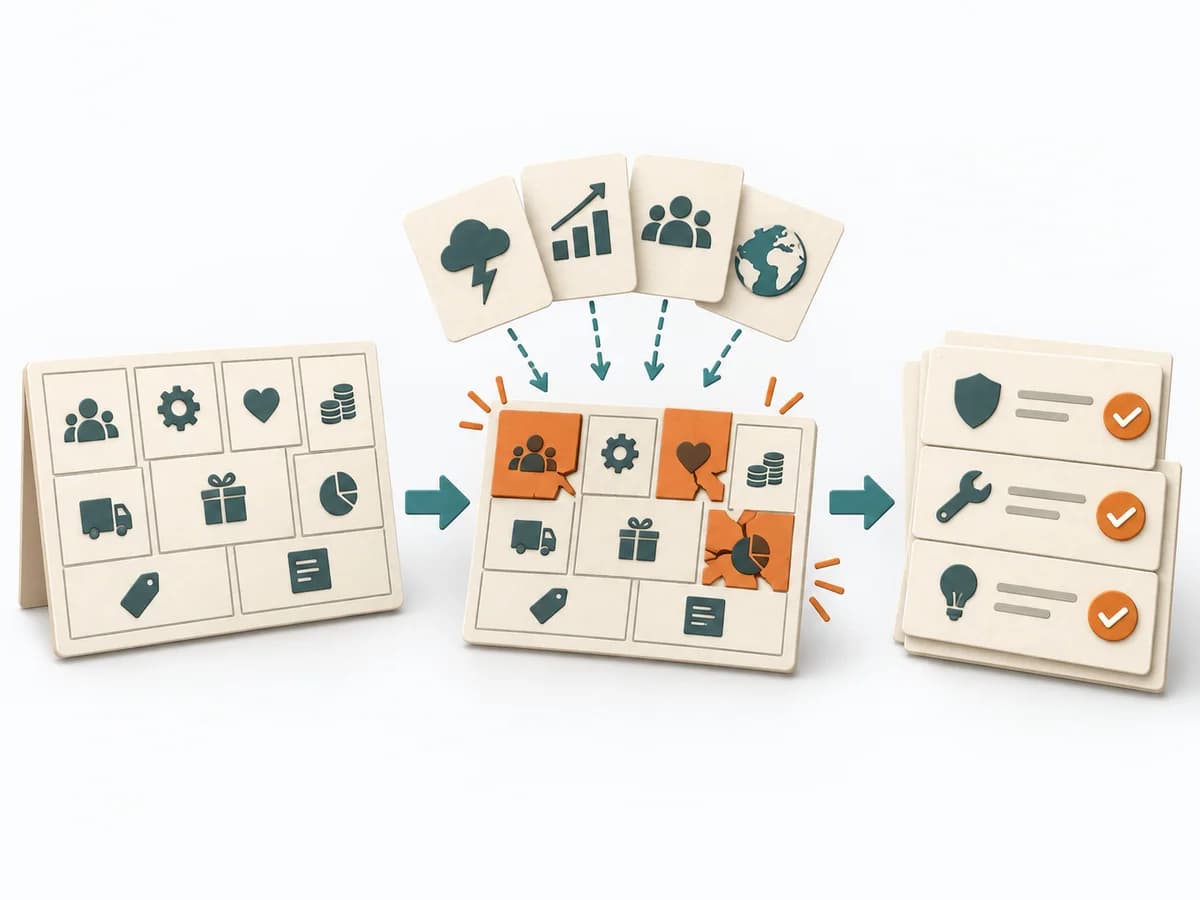
Purposedifferent | Outcome-Driven Innovation clarifies customer problems, solution opportunities, and evidence. It separates jobs, desired outcomes, importance, satisfaction, and opportunity, and captures results as desired outcome statements, an opportunity landscape, and segments by underserved needs. | The Business Model Canvas condenses a business model to its key building blocks and assumptions. It makes variants quickly comparable and reveals gaps before validation or implementation begins. | DIBB helps clarify target groups, value, goals, and priorities by making the logic behind a decision explicit. It captures results as a DIBB document, belief list, bet list, and learning report. |
Complexitydifferent | High | Medium | Low |
Timedifferent | Mehrere Wochen | 1-2 h | 1-2 h |
Participantsdifferent | 2-6 researchers plus sample | 2-8 | 2-8 |
Formatsame | Workshop + async | Workshop + async | Workshop + async |
Outputdifferent | Desired outcome statements, Opportunity landscape, Segmentation by underserved needs, Innovation hypotheses | Business Model Canvas, Assumption List, Business Hypotheses | DIBB document, Belief list, Bet list, Learning report |
Tagsno overlap | OutcomesInnovationResearchQuantitative | Business modelStrategyValueInnovation | StrategyDecisionAssumptionsHypothesis |
Often compared together
Methods with strong topical overlap with the current selection, not yet in the comparison.