View methods side by side.
Choose up to four methods. Add them using the search and share the comparison by copying its link.
| Criterion |  Systems Thinking Leverage Points | 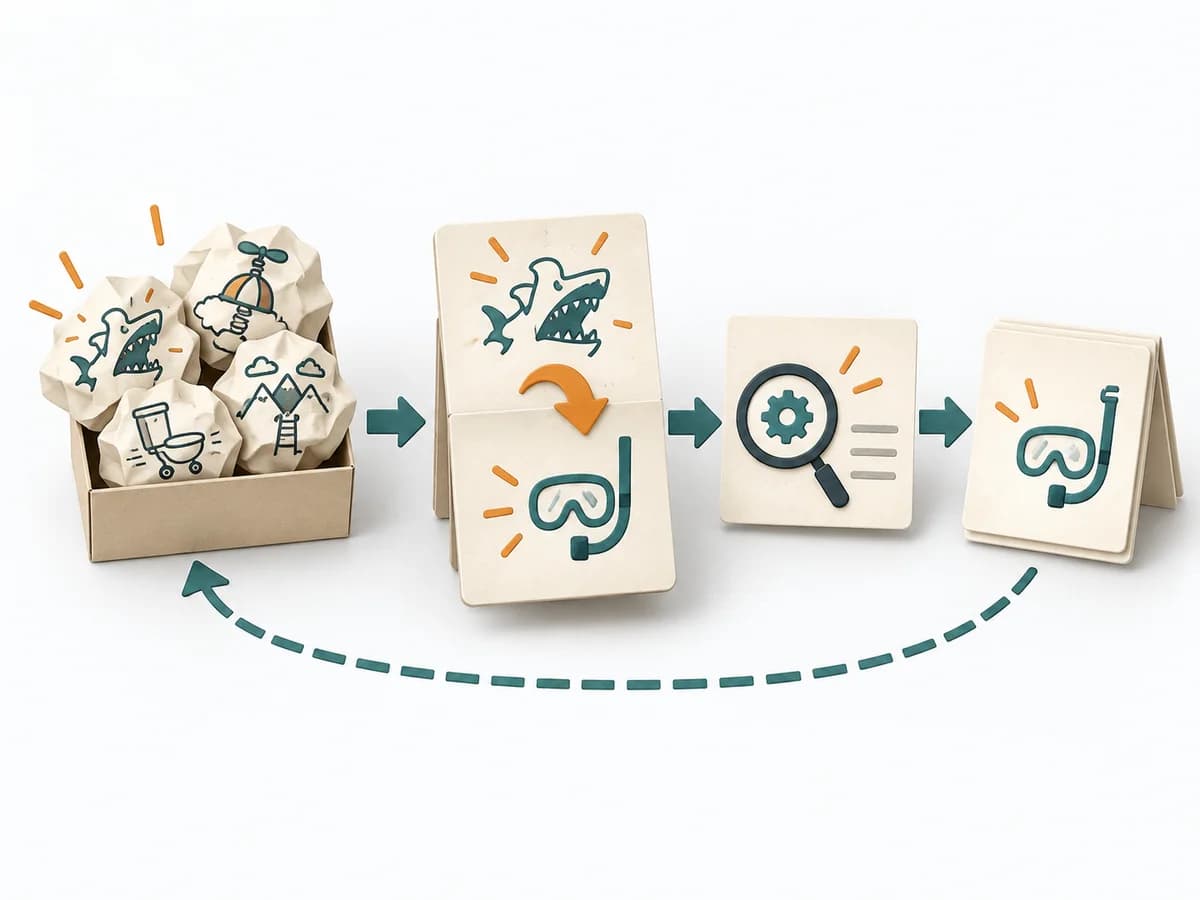 Innovation Worst Possible Idea |  Decision Making Force Field Analysis |
|---|---|---|---|
Purposedifferent | Leverage Points show exactly where interventions in a system produce a disproportionate effect. It draws relationships, patterns, and feedback loops. The result is captured as a leverage map and action strategy. | For a seemingly familiar problem with paralyzing seriousness, the method dissolves pressure and fear of judgment. It deliberately makes failure pictures extreme, so hidden assumptions become visible faster. This clarifies what a workable path should avoid. | In change initiatives, supporting and restraining forces sit at the table at the same time. Force Field Analysis makes these tensions explicit and shows where change can be pushed forward by strengthening or relieving. |
Complexitydifferent | High | Low | Low |
Timedifferent | Half day | 20-45 min | 45-90 min |
Participantssame | 3-12 | 3-12 | 3-12 |
Formatsame | Workshop | Workshop | Workshop |
Outputdifferent | Leverage Map, Action Strategy | Bad Idea List, Reframed Concepts, Idea Shortlist | Force Field Map, Change Levers, Risk Notes |
Tagsno overlap | Systems thinkingChangeStrategy | IdeationCreativityDivergence | ChangeDecisionStrategy |
Often compared together
Methods with strong topical overlap with the current selection, not yet in the comparison.



