View methods side by side.
Choose up to four methods. Add them using the search and share the comparison by copying its link.
| Criterion | 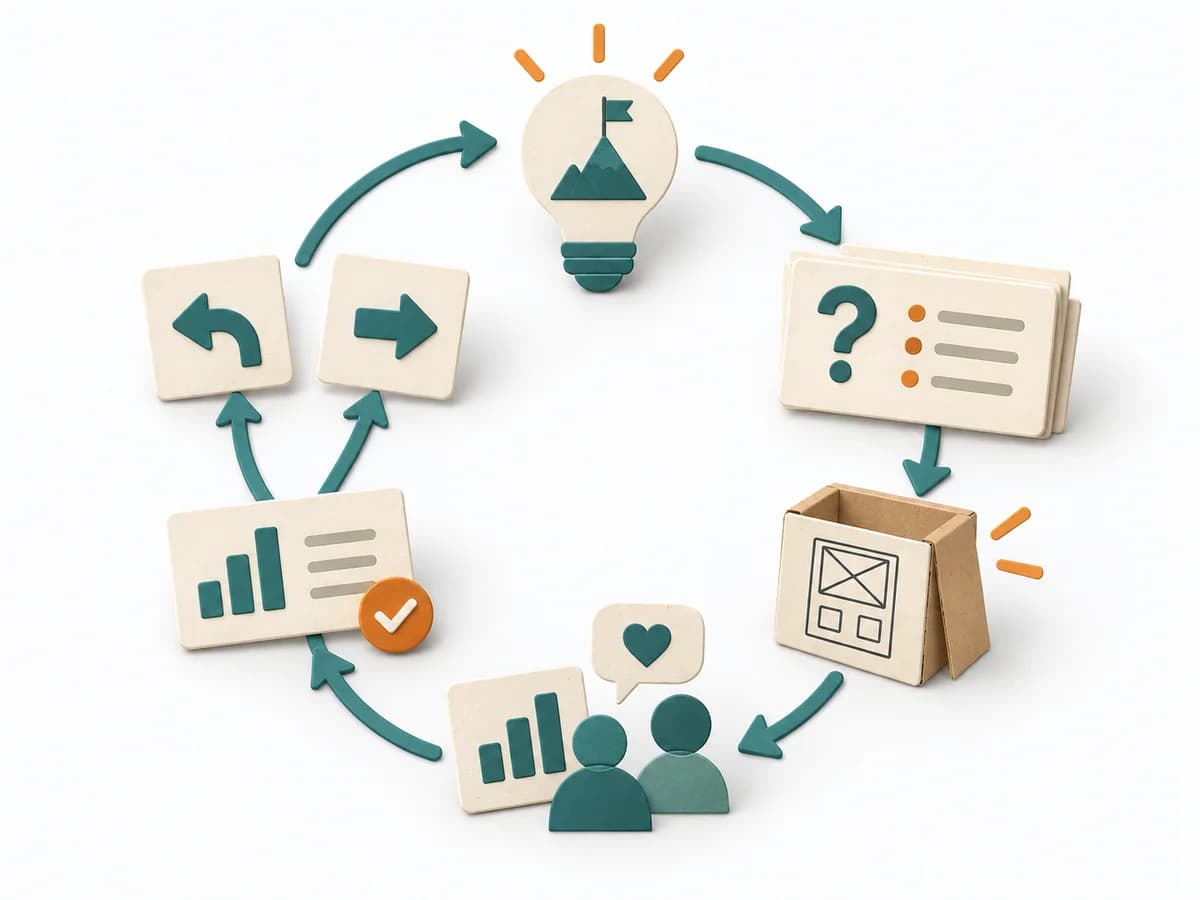 Innovation Lean Startup |  Product Strategy Lean Canvas |  Architecture ATAM (Architecture Tradeoff Analysis Method) |
|---|---|---|---|
Purposedifferent | For uncertain business assumptions, the method forces the idea into contact with real market reactions early. It separates wishful picture, assumption, and observable behavior, so that learning becomes faster than planning. This translates uncertainty into measurable insight. | When an early product bet still has too many open points, it brings target group, problem, and assumptions into a single view. It condenses the idea so core risks become nameable. | ATAM helps teams weigh architecture decisions when quality goals compete. The team considers business goals, stakeholder expectations, and technical decisions together. The evaluation shows which risks need further investigation. |
Complexitydifferent | Medium | Medium | High |
Timedifferent | Wochen bis Monate je Lernzyklus | 45-90 min | Several meetings plus preparation and analysis; total effort depends on scope |
Participantsdifferent | 2-8 | 1-6 | Evaluation team, architects, and relevant stakeholders |
Formatsame | Workshop + async | Workshop + async | Workshop + async |
Outputdifferent | Hypothesis list, MVPs, Learning reports, Pivot or persevere decision | Lean Canvas, Core Assumptions, Experiment Backlog | Prioritized quality scenarios in a utility tree, Architecture risks with reasoning and assumptions, Sensitivity and trade-off points, Findings report with open investigations |
Tagsno overlap | LeanStartupValidationMVP | StartupLeanAssumptionsBusiness model | ArchitectureQualityRiskTradeoffsStakeholders |
Often compared together
Methods with strong topical overlap with the current selection, not yet in the comparison.