View methods side by side.
Choose up to four methods. Add them using the search and share the comparison by copying its link.
| Criterion | 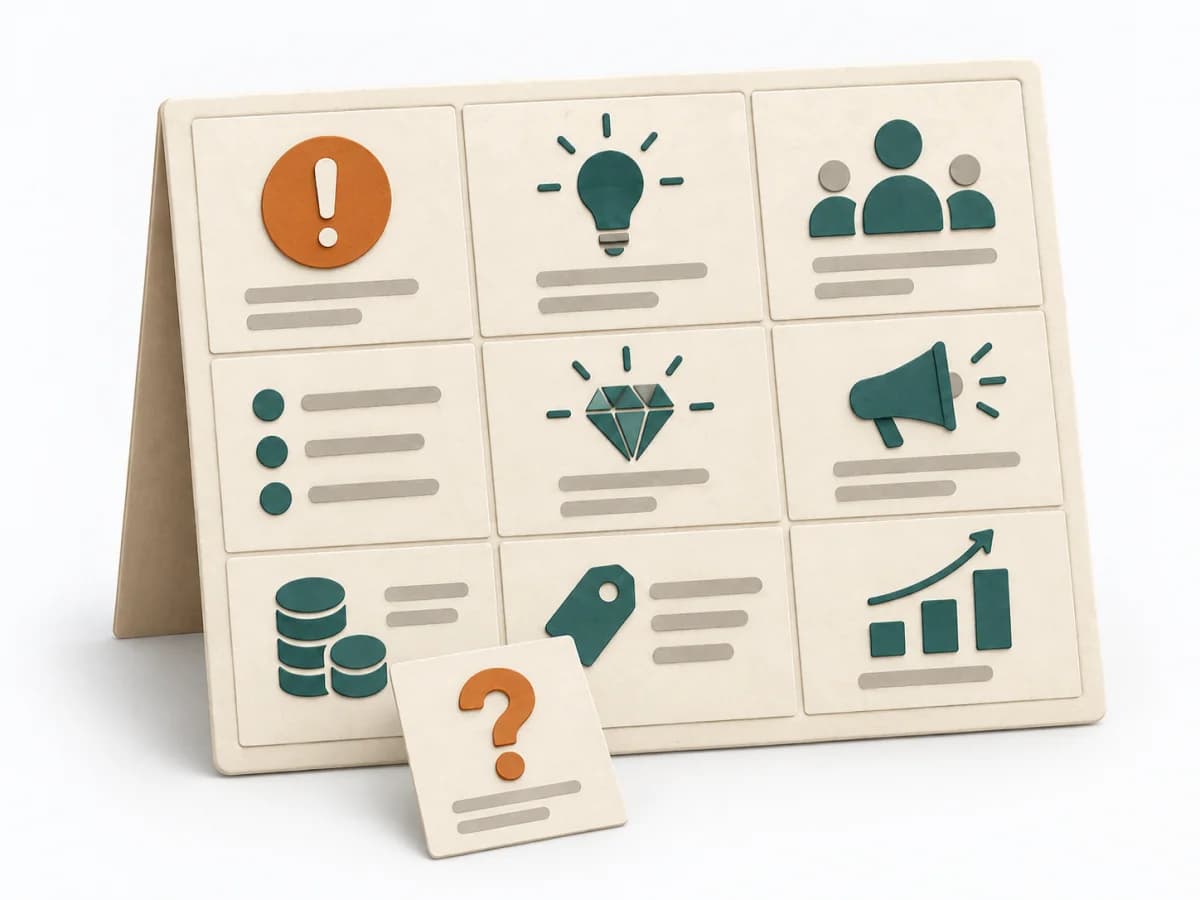 Product Strategy Lean Canvas | 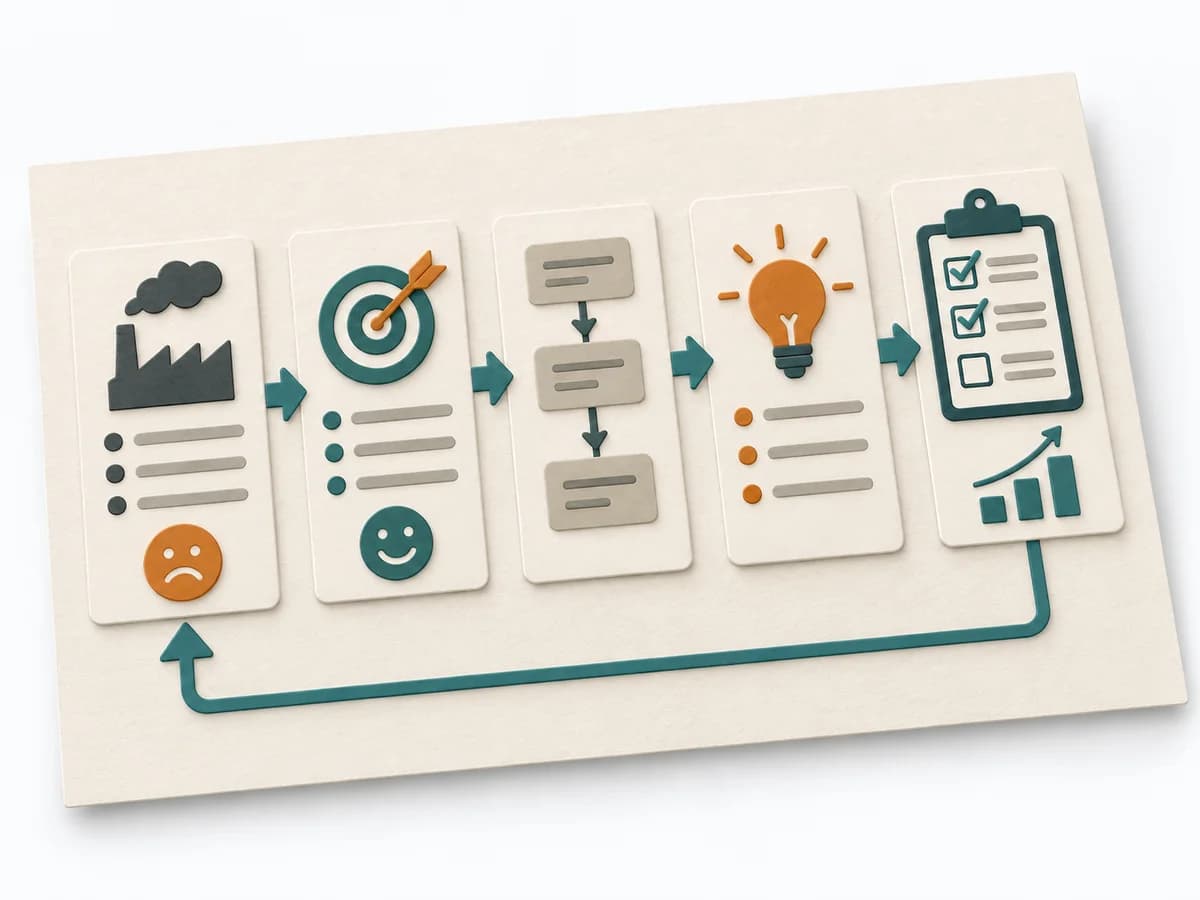 Operations A3 Problem Solving |  UX Research Card Sorting |
|---|---|---|---|
Purposedifferent | When an early product bet still has too many open points, it brings target group, problem, and assumptions into a single view. It condenses the idea so core risks become nameable. | For a complex deviation with several people involved, the method bundles problem, analysis, and decision onto one page. It creates a shared working space where causes, countermeasures, and follow-up fit together. | When content only makes sense internally and users can't find the structure again, card sorting exposes their mental order. Terms, groups, and naming are then aligned with the target group's expectations. |
Complexitydifferent | Medium | Medium | Low |
Timedifferent | 45-90 min | 45-90 min | 20-45 min |
Participantsdifferent | 1-6 | 2-5 | Based on research question |
Formatsame | Workshop + async | Workshop + async | Workshop + async |
Outputdifferent | Lean Canvas, Core Assumptions, Experiment Backlog | A3 Report, Action Plan, Root Cause Analysis | Content groups, Label set, IA hypotheses |
Tagsno overlap | StartupLeanAssumptionsBusiness model | LeanProblem solvingCoachingOperations | Information architectureNavigationStructure |
Often compared together
Methods with strong topical overlap with the current selection, not yet in the comparison.