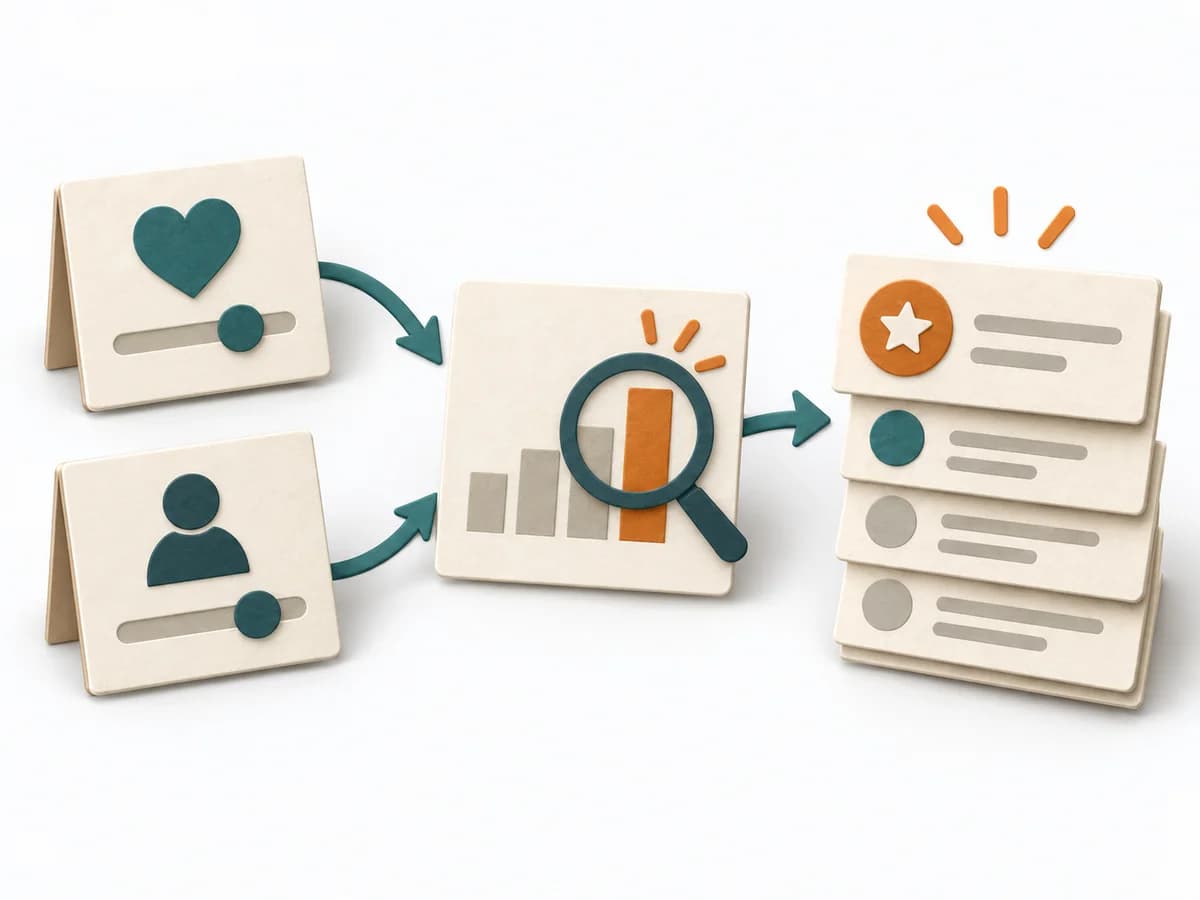
View methods side by side.
Choose up to four methods. Add them using the search and share the comparison by copying its link.
| Criterion | 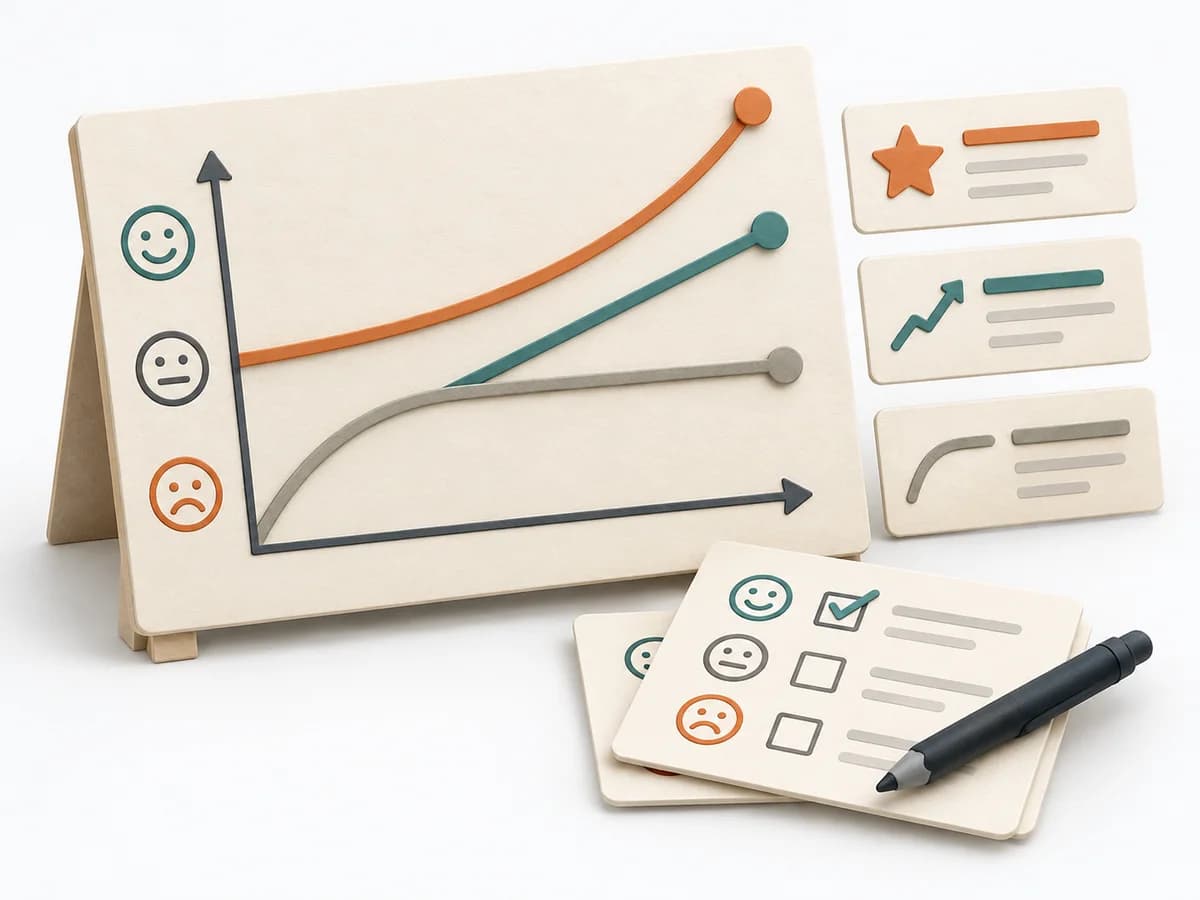 Product Discovery Kano Model | 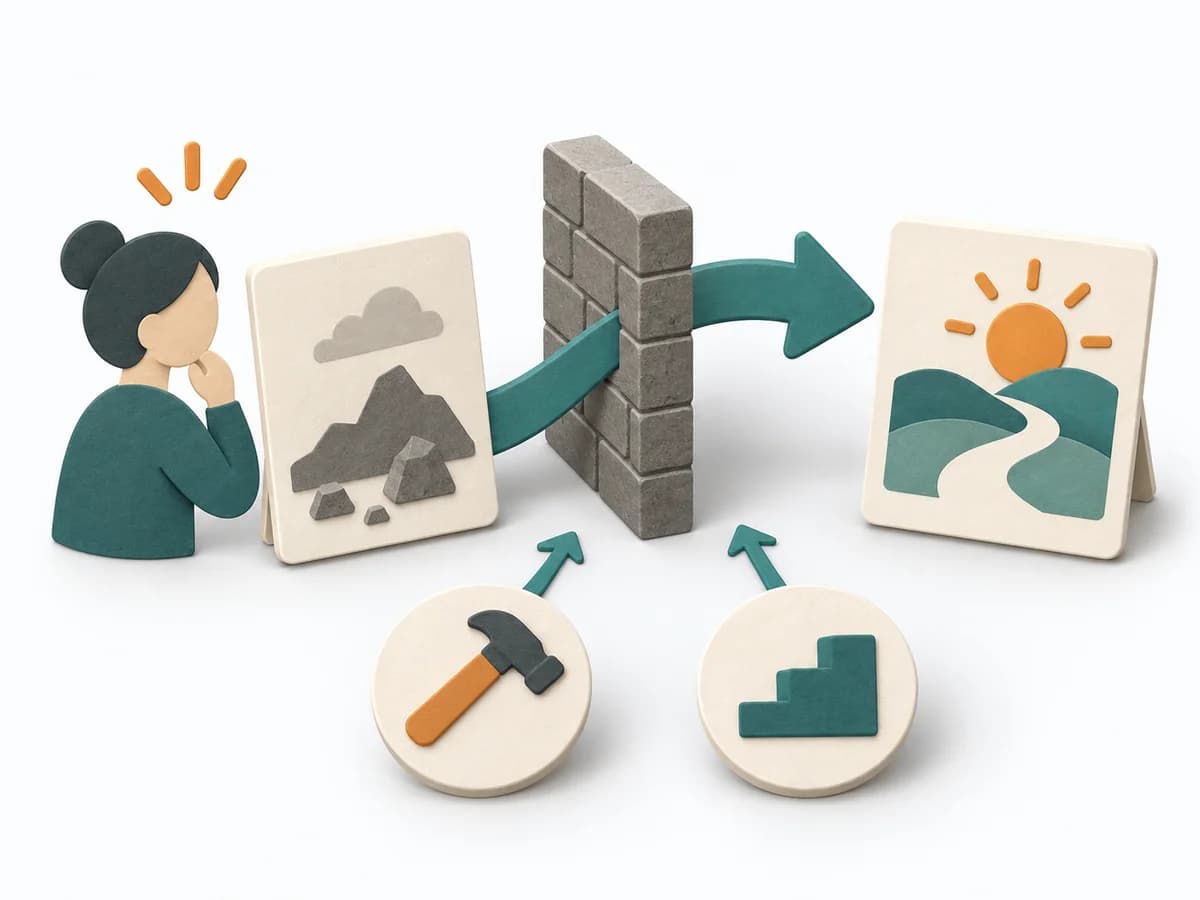 Product Discovery Jobs to Be Done |  Product Discovery Outcome-Driven Innovation |
|---|---|---|---|
Purposedifferent | When features need to be distinguished by their effect on satisfaction, it makes expectations and surprises comparable. It separates basic needs, performance contribution, and delight. | When switching motives and progress are unclear, it reconstructs the situation from real customer circumstances. It shows why a switch happens and what kind of progress is being sought. | Outcome-Driven Innovation clarifies customer problems, solution opportunities, and evidence. It separates jobs, desired outcomes, importance, satisfaction, and opportunity, and captures results as desired outcome statements, an opportunity landscape, and segments by underserved needs. |
Complexitydifferent | Medium | Medium | High |
Timedifferent | 1-2 Tage | 1-3 Wochen | Mehrere Wochen |
Participantsdifferent | 10-50 | 5-12 Interviews | 2-6 researchers plus sample |
Formatsame | Workshop + async | Workshop + async | Workshop + async |
Outputdifferent | Kano Matrix, Feature Classes, Priority Themes | Job Stories, Outcome Statements, Opportunity List | Desired outcome statements, Opportunity landscape, Segmentation by underserved needs, Innovation hypotheses |
Tagsno overlap | SatisfactionPrioritizationCustomer | CustomerOutcomesNeeds | OutcomesInnovationResearchQuantitative |
Often compared together
Methods with strong topical overlap with the current selection, not yet in the comparison.