View methods side by side.
Choose up to four methods. Add them using the search and share the comparison by copying its link.
| Criterion |  Systems Thinking Intervention Mapping | 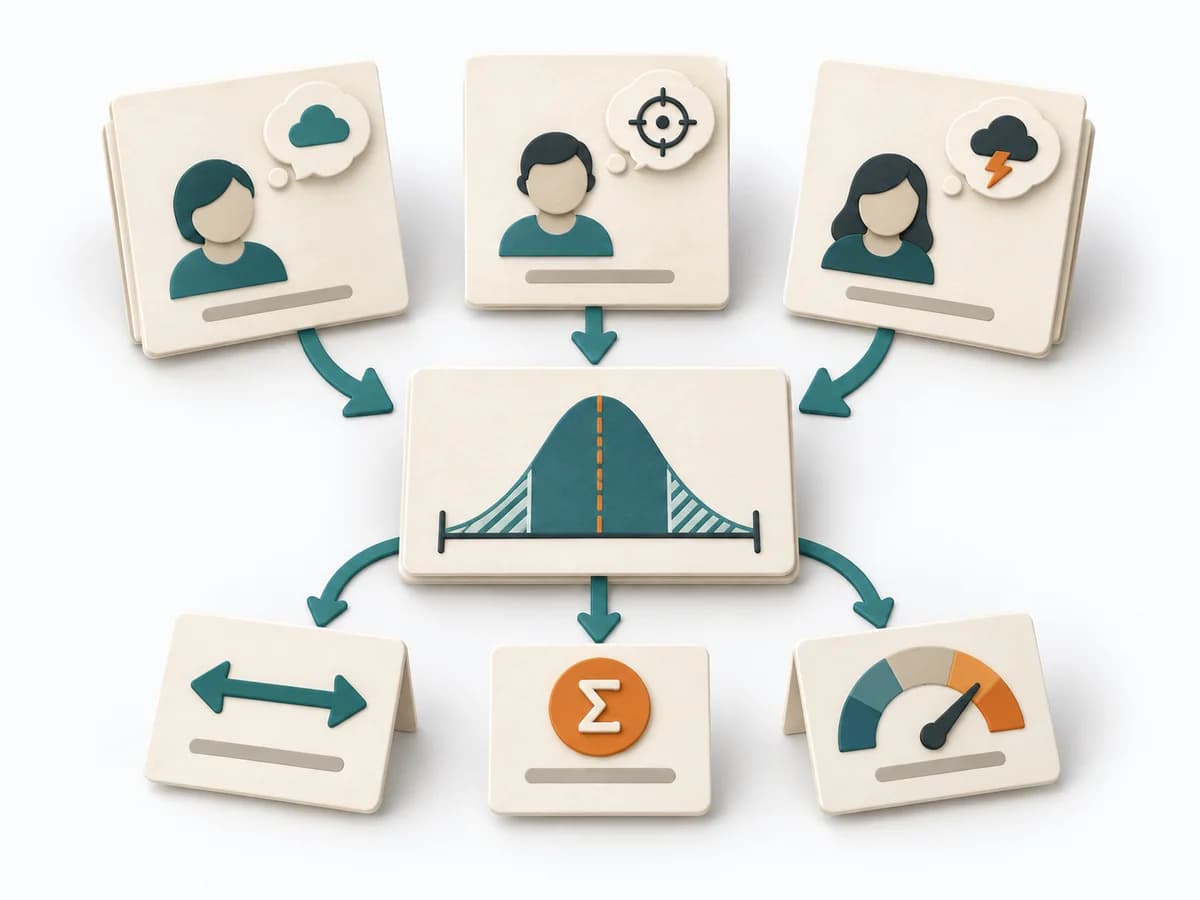 Decision Making Three-Point Estimation |  Facilitation Stakeholder Salience Model |
|---|---|---|---|
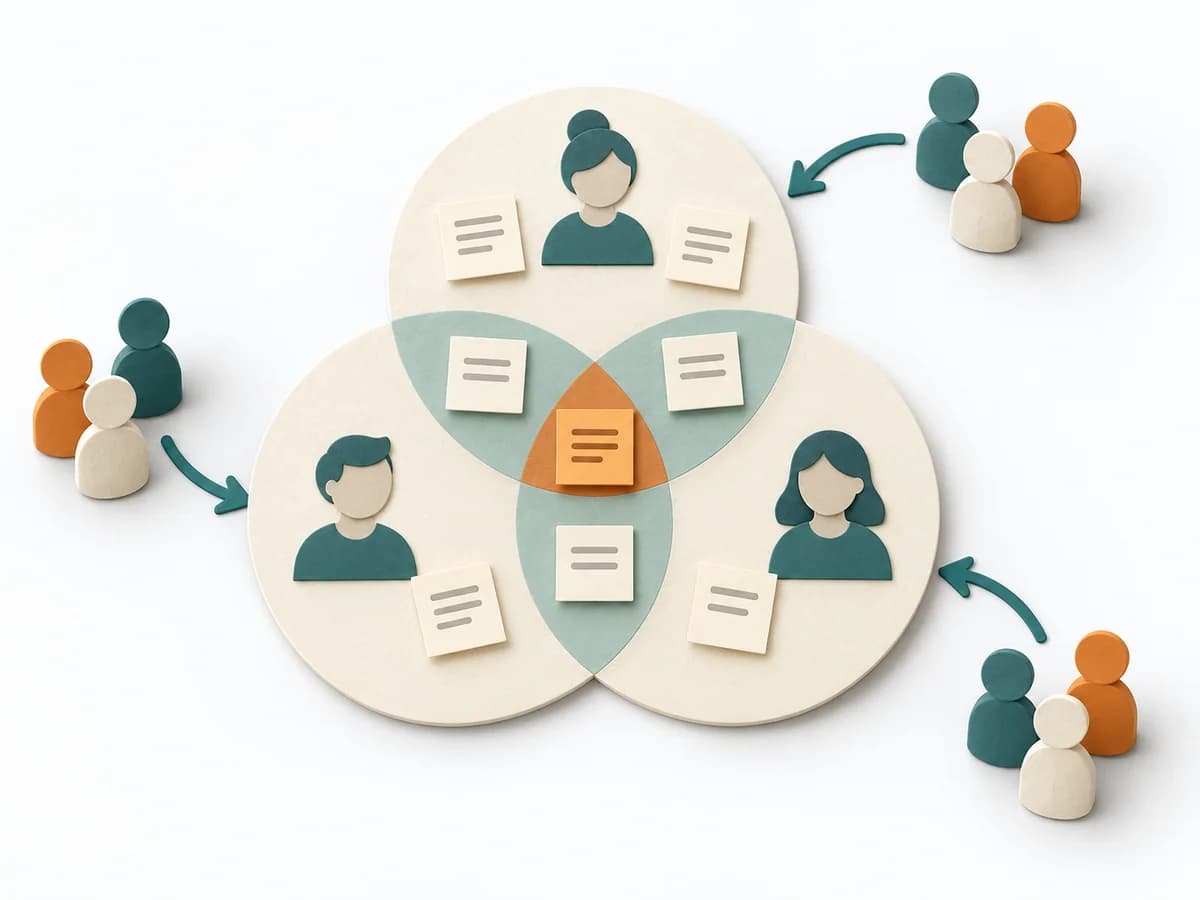
Purposedifferent | Intervention Mapping translates a need for change into a planned, evaluable program. The method connects target group, determinants, actions, and measurement into a traceable chain. | A single estimate for effort, time, or risk often looks too smooth for the real uncertainty behind it. It separates options, evaluation criteria, and open risks. The result is captured as a Three-Point Estimate, Risk Range, and Assumption Notes. | When stakeholders appear to matter very differently, the Stakeholder Salience Model rates their actual priority through power, legitimacy, and urgency. It turns individual contributions into a visible selection. The result is captured as a Salience diagram and a class-based strategy. |
Complexitydifferent | High | Medium | Medium |
Timedifferent | 1-5 Tage | 10-30 min je Item | 60-90 min |
Participantsdifferent | 4-12 | 1-8 | 3-6 |
Formatdifferent | Workshop + async | Workshop + async | Workshop |
Outputdifferent | Logic Model, Change Objectives, Intervention Components, Evaluation Plan | Three-Point Estimate, Risk Range, Assumption Notes | Salience Diagram, Strategy per Class |
Tagsno overlap | ChangeSystems thinkingCapability | EstimationUncertaintyForecasting | StakeholdersFacilitationAlignmentGovernance |
Often compared together
Methods with strong topical overlap with the current selection, not yet in the comparison.