View methods side by side.
Choose up to four methods. Add them using the search and share the comparison by copying its link.
| Criterion |  Engineering Failure Scenario Analysis | 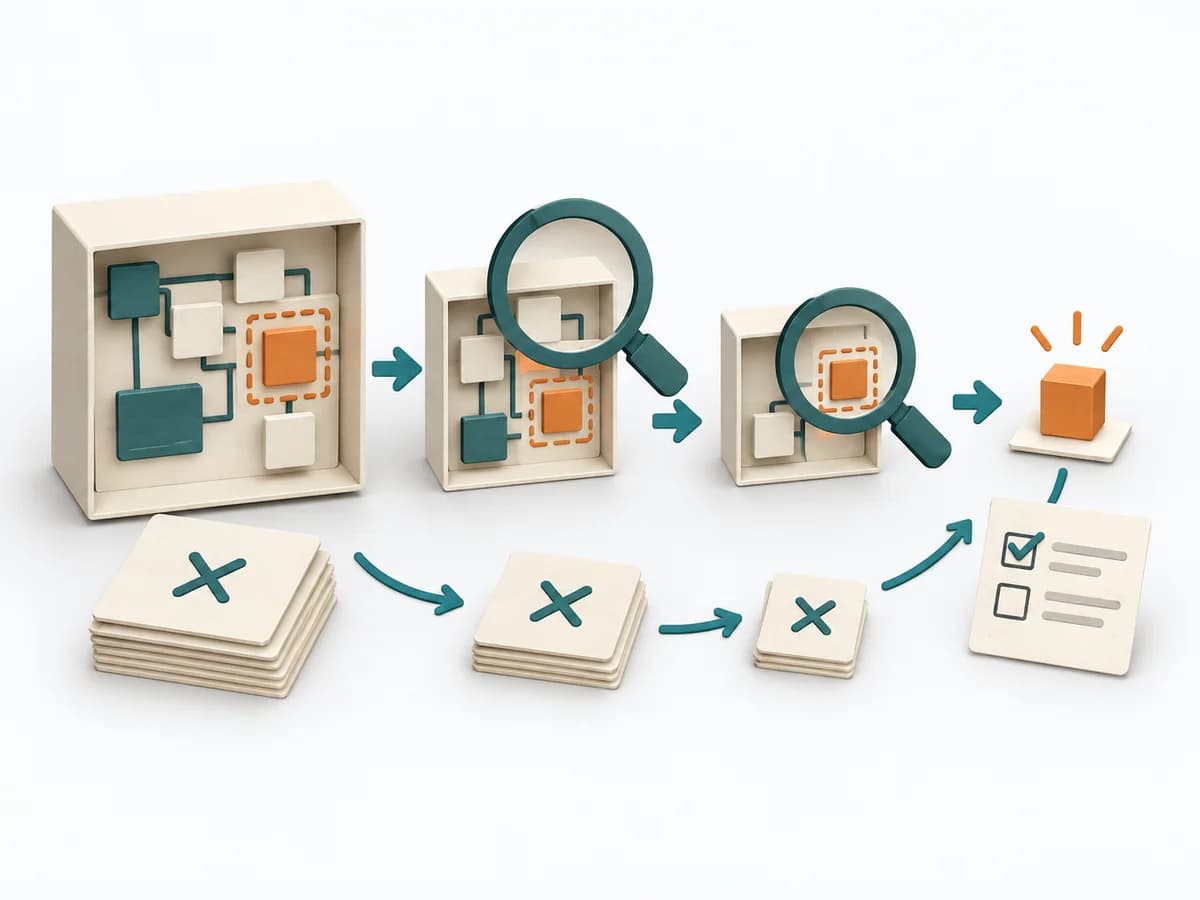 Engineering Fault Isolation |  Architecture ARID (Active Reviews for Intermediate Designs) |
|---|---|---|---|
Purposedifferent | In critical processes, it is not enough to plan only for the normal case. Failure Scenario Analysis looks at the path into failure and shows which failures, chains, and control gaps cause the most damage. | In technical failures, the visible symptom often gets mixed up with the actual cause. Fault Isolation narrows the fault space and progressively reduces which part of the system is truly affected. | ARID examines how well developers can work with a technical design. It focuses on a part of the system that can still be revised, between the architecture overview and the detailed specification. |
Complexitysame | Medium | Medium | Medium |
Timedifferent | 1-3 h | 30-180 min | 2–4 h review as a planning range; preparation and evaluation additional |
Participantsdifferent | 3-8 | 1-6 | Designers, developers as users, and facilitation |
Formatdifferent | Workshop | Workshop + async | Workshop + async |
Outputdifferent | Failure Scenarios, Risk Notes, Control Gaps, Test and Response Actions | Fault Isolation Map, Test Log, Excluded Hypotheses, Narrowed Fault Area | Prioritized development tasks, Jointly produced code or pseudocode, Observed difficulties and open design questions, Proposed design revisions |
Tagsno overlap | FailureResilienceRisk | TroubleshootingDiagnosisEngineering | ArchitectureEngineeringFeedbackValidationTasks |
Often compared together
Methods with strong topical overlap with the current selection, not yet in the comparison.