View methods side by side.
Choose up to four methods. Add them using the search and share the comparison by copying its link.
| Criterion | 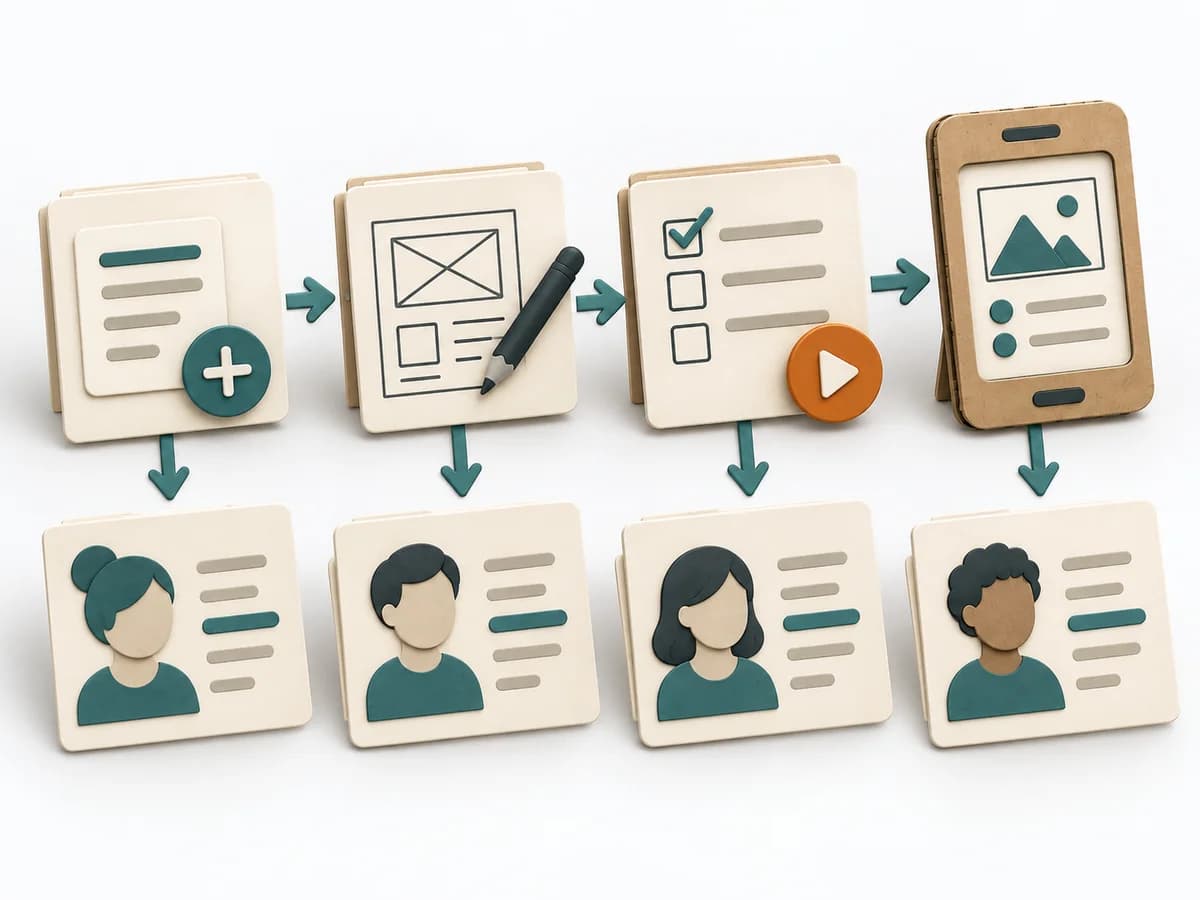 Knowledge Modeling Event Modeling | 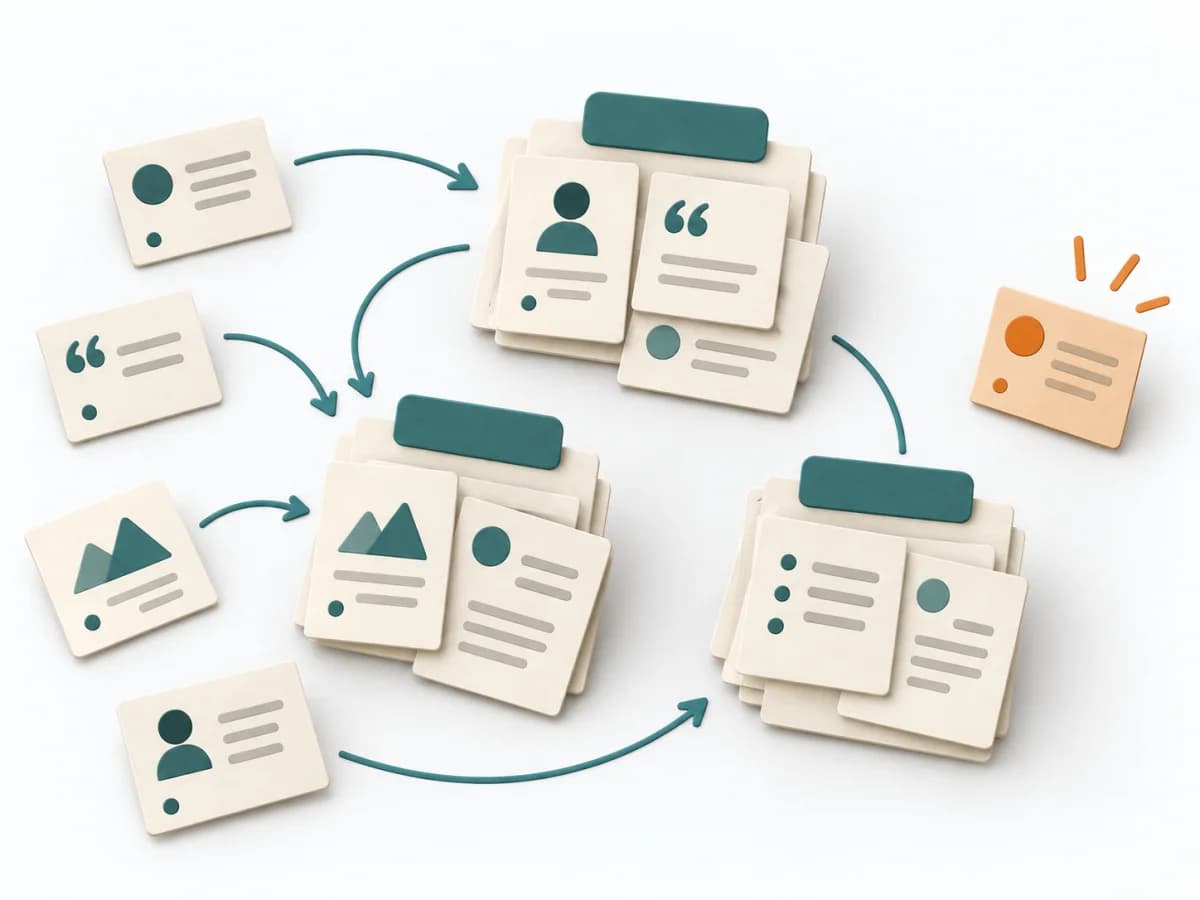 UX Research Affinity Diagramming | 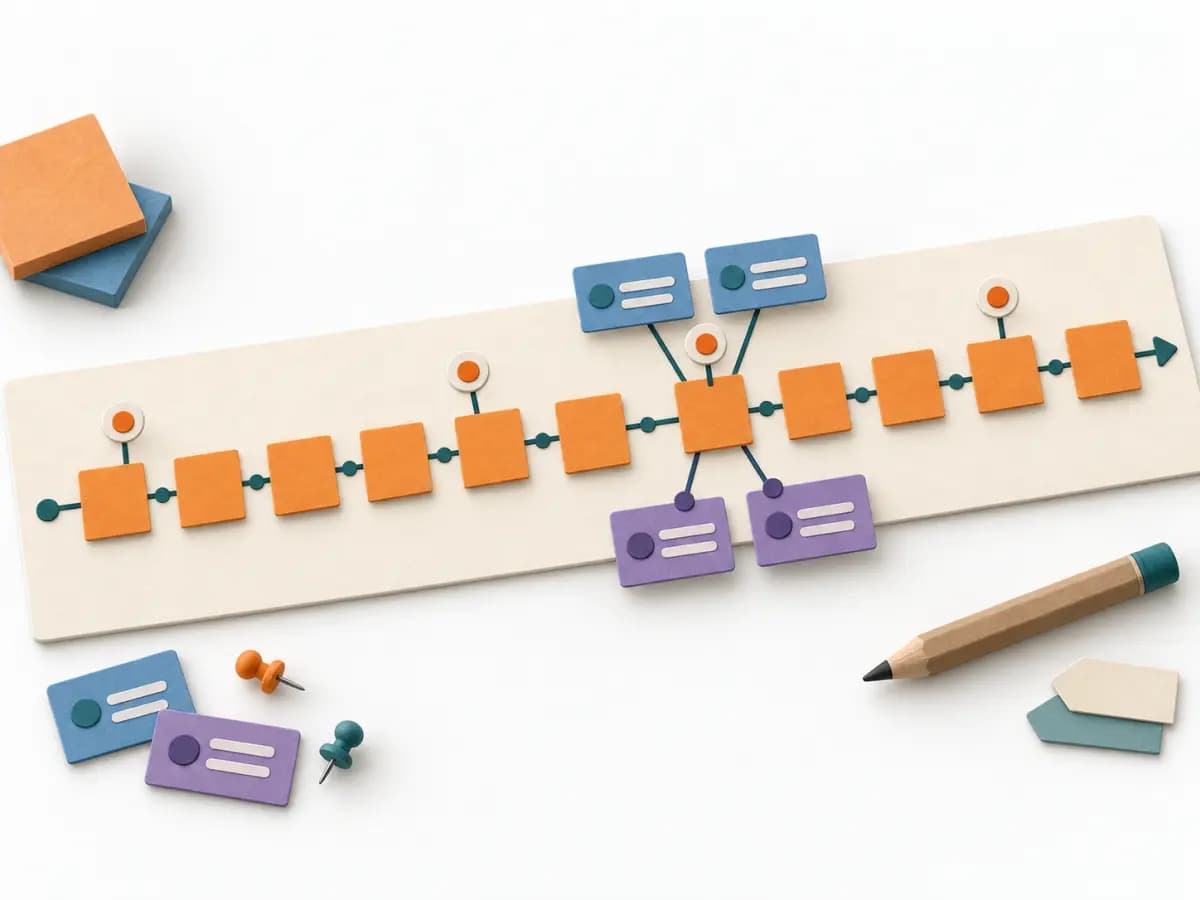 Domain Modeling EventStorming |
|---|---|---|---|
Purposedifferent | Event Modeling connects business workflows with commands, events, and views into one coherent mental model. It helps design behavior, UI, and technical slices from the same underlying logic. | When research notes, feedback, or observations sit unconnected side by side, affinity diagramming sorts the raw material into solid themes. Many individual points turn into patterns that make decisions and opportunities clearer. | When a domain consists of many events, rules, and states, it creates a shared modeling space for the team. It bundles language, flows, and boundaries before domain knowledge fragments into siloed views. |
Complexitydifferent | Medium | Low | Medium |
Timedifferent | 2-6 h | 45–90 min | 2-8 h |
Participantsdifferent | 2-8 | 3-10 | 5-12 |
Formatdifferent | Workshop + async | Workshop | Workshop |
Outputdifferent | Event Model, UI Flow, Commands, Read Models | Theme clusters, Insight statements, Opportunity areas | Event Timeline, Ubiquitous Language, Boundaries, Open Questions |
Tagsno overlap | EventsBlueprintDomain-Driven DesignBehavior | SynthesisQualitativeRoot cause | Domain-Driven DesignEventsDiscoveryWorkshop |
Often compared together
Methods with strong topical overlap with the current selection, not yet in the comparison.