View methods side by side.
Choose up to four methods. Add them using the search and share the comparison by copying its link.
| Criterion |  UX Research Empathy Mapping | 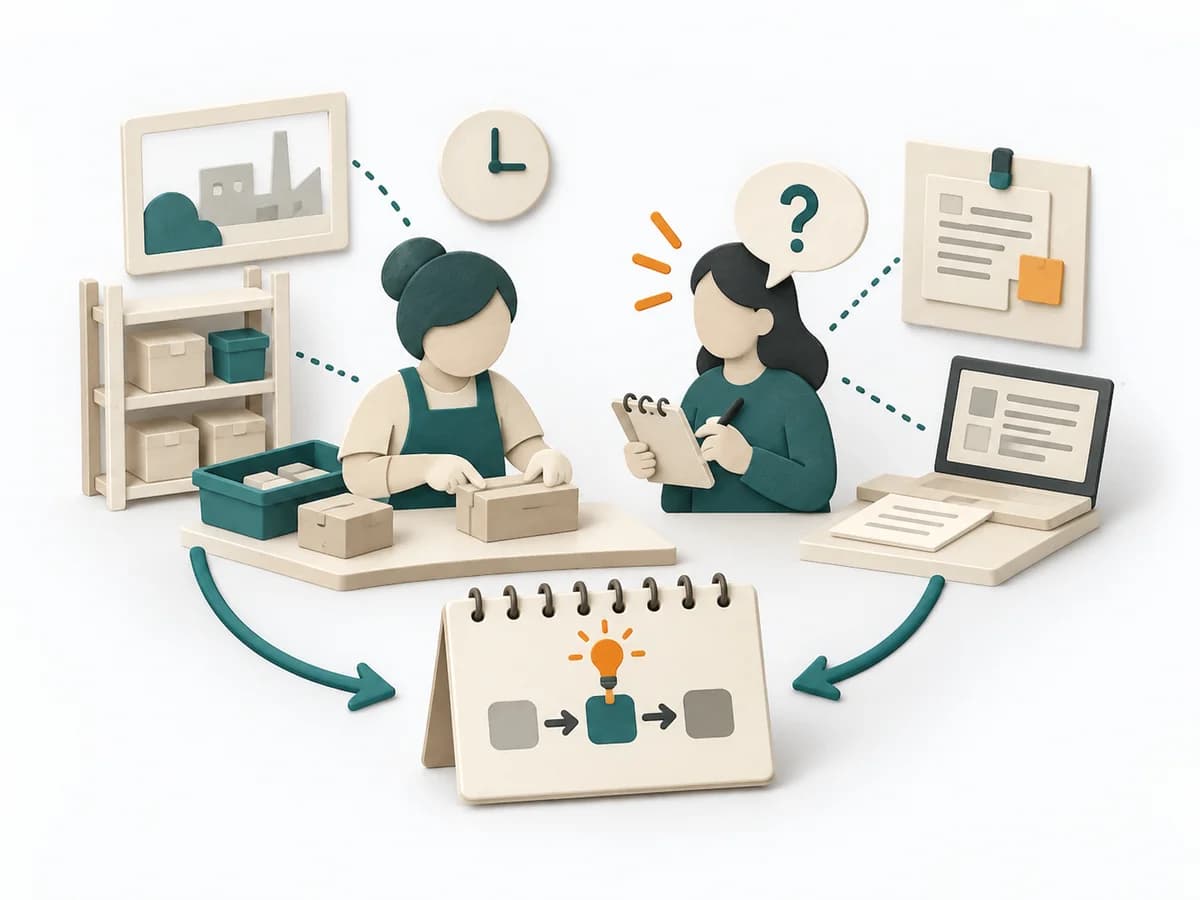 UX Research Contextual Inquiry |  Innovation Reverse Brainstorming |
|---|---|---|---|
Purposedifferent | When a lot is assumed about a target group but little is seen jointly, empathy mapping makes knowledge and gaps directly comparable. The picture also shows which assumptions hold up and where evidence is missing. | When work processes are known only from accounts and the real context stays hidden, Contextual Inquiry makes behavior at the workplace visible. Observation and follow-up questions together show how people actually work, get interrupted, and improvise. | For persistent errors or blockages, the method shifts the view to the opposite of the desired effect. It exposes the mechanics of failure and makes hidden causes easier to grasp. This makes improvement more concrete and the problem clearer. |
Complexitydifferent | Low | Medium | Low |
Timedifferent | 30–60 min | 1-3 Wochen | 30-60 min |
Participantsdifferent | 4-8 | 4-12 Beobachtungen | 3-12 |
Formatdifferent | Workshop | Workshop + async | Workshop |
Outputdifferent | Empathy Map, Assumptions List, Research Gaps | Field Notes, Workflow Insights, Pain Points | Reverse Ideas, Risk Themes, Solution Ideas |
Tagsno overlap | SynthesisQualitativeWorkshop | UX researchObservationContext | BrainstormingIdeationCreativityRisk |
Often compared together
Methods with strong topical overlap with the current selection, not yet in the comparison.