View methods side by side.
Choose up to four methods. Add them using the search and share the comparison by copying its link.
| Criterion | 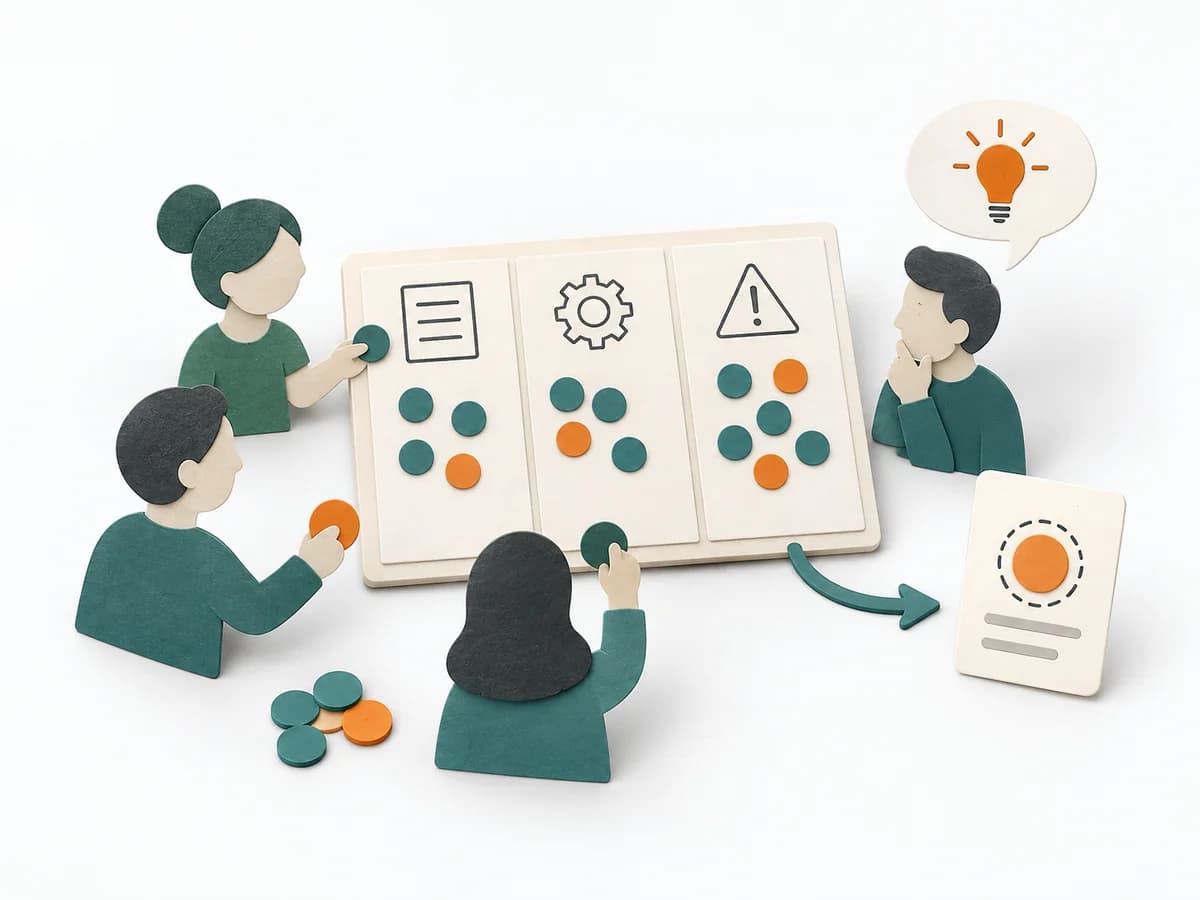 Facilitation Dot Estimation | 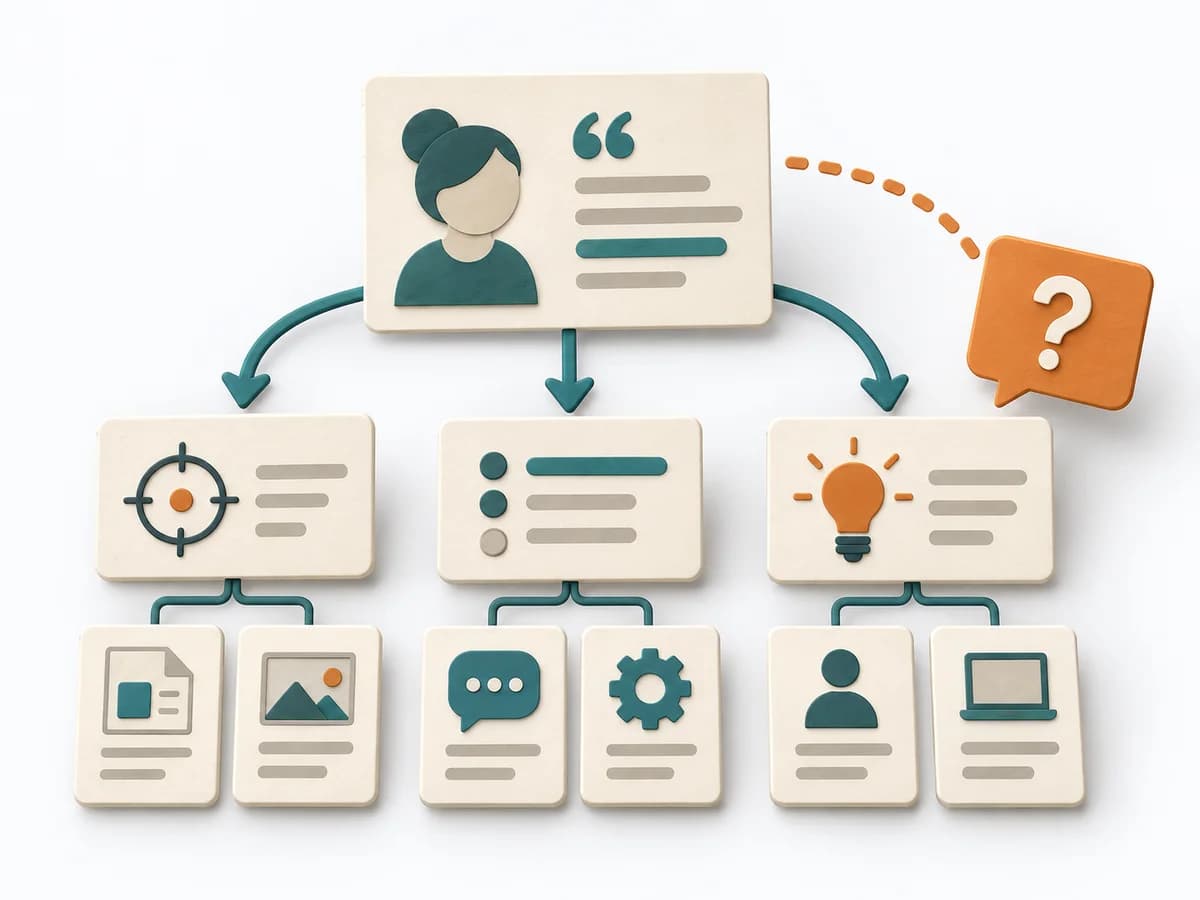 Agile Example Mapping |  Agile Three Amigos |
|---|---|---|---|
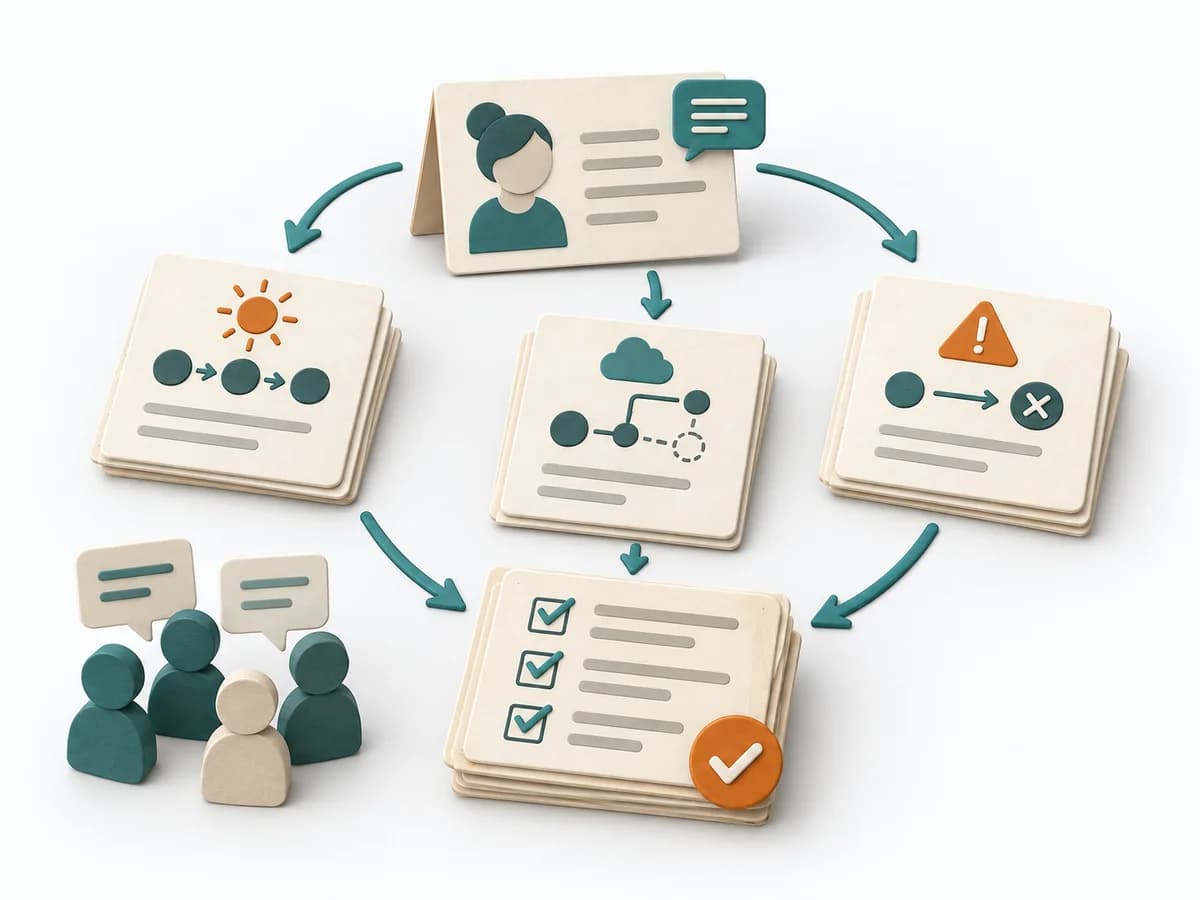
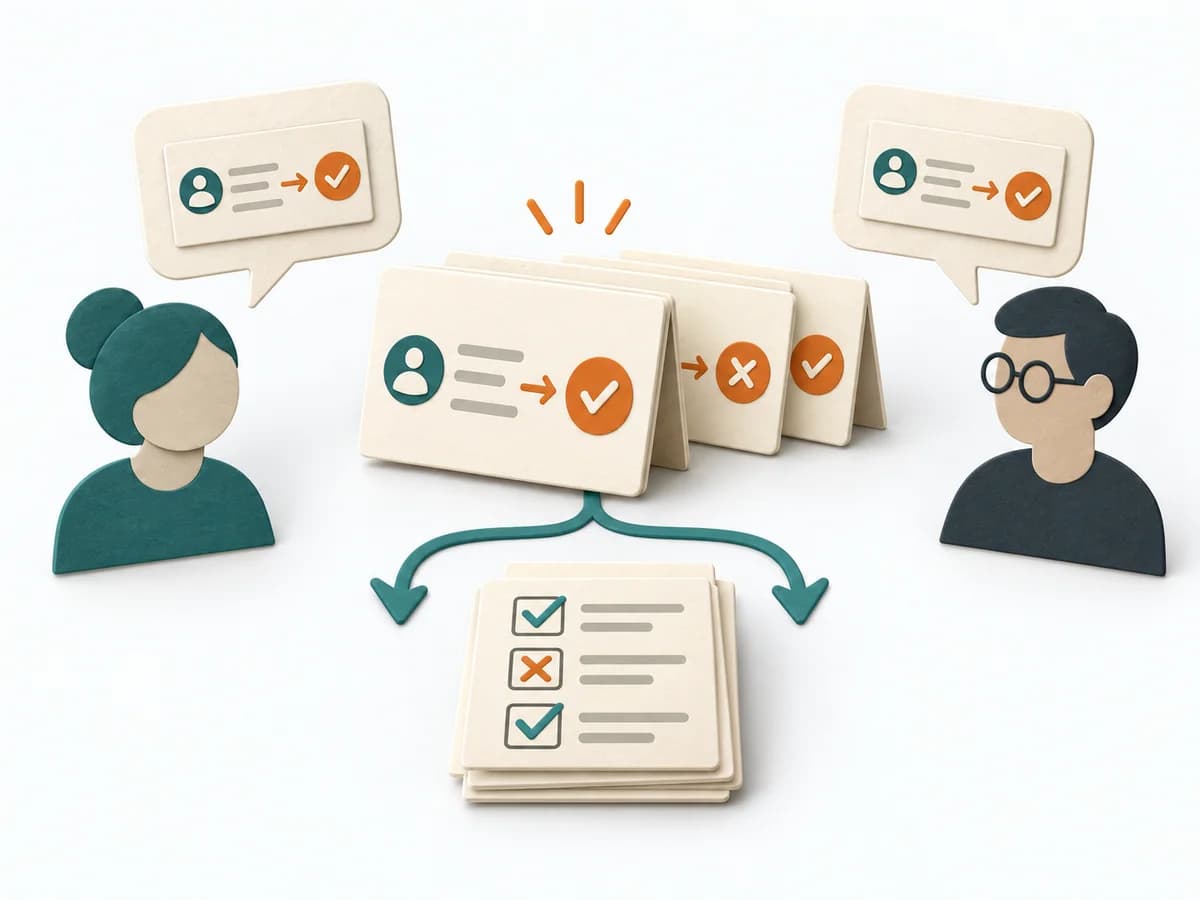
Purposedifferent | When size or effort can only be estimated roughly, Dot Estimation condenses the group's experience into a quick range. It turns individual contributions into a visible selection. The result is captured as an Effort Heatmap, Risk Signals, and Discussion Targets. | When a story carries business rules and exceptions, it brings clarity before implementation. It makes examples, open questions, and boundaries visible enough that the logic becomes jointly sound. | When story, test, and implementation could drift apart, it brings business perspective, engineering, and quality together early. It prevents a story from being read differently only late in the process. |
Complexitysame | Low | Low | Low |
Timedifferent | 5-20 min | 30-60 min | 15-30 min |
Participantsdifferent | 3-20 | 3-7 | 3 |
Formatdifferent | Workshop | Workshop | Workshop + async |
Outputdifferent | Effort Heatmap, Risk Signals, Discussion Targets | Example Map, Acceptance Criteria, Open Questions | Clarified Story, Test Examples, Open Questions |
Tagsno overlap | EstimationEffortRisk | Behavior-Driven DevelopmentRequirementsExamplesRefinement | CollaborationBehavior-Driven DevelopmentQualityRefinement |
Often compared together
Methods with strong topical overlap with the current selection, not yet in the comparison.