View methods side by side.
Choose up to four methods. Add them using the search and share the comparison by copying its link.
| Criterion |  Knowledge Modeling Domain Storytelling |  Operations Bottleneck Analysis |  Facilitation Dot Voting |
|---|---|---|---|
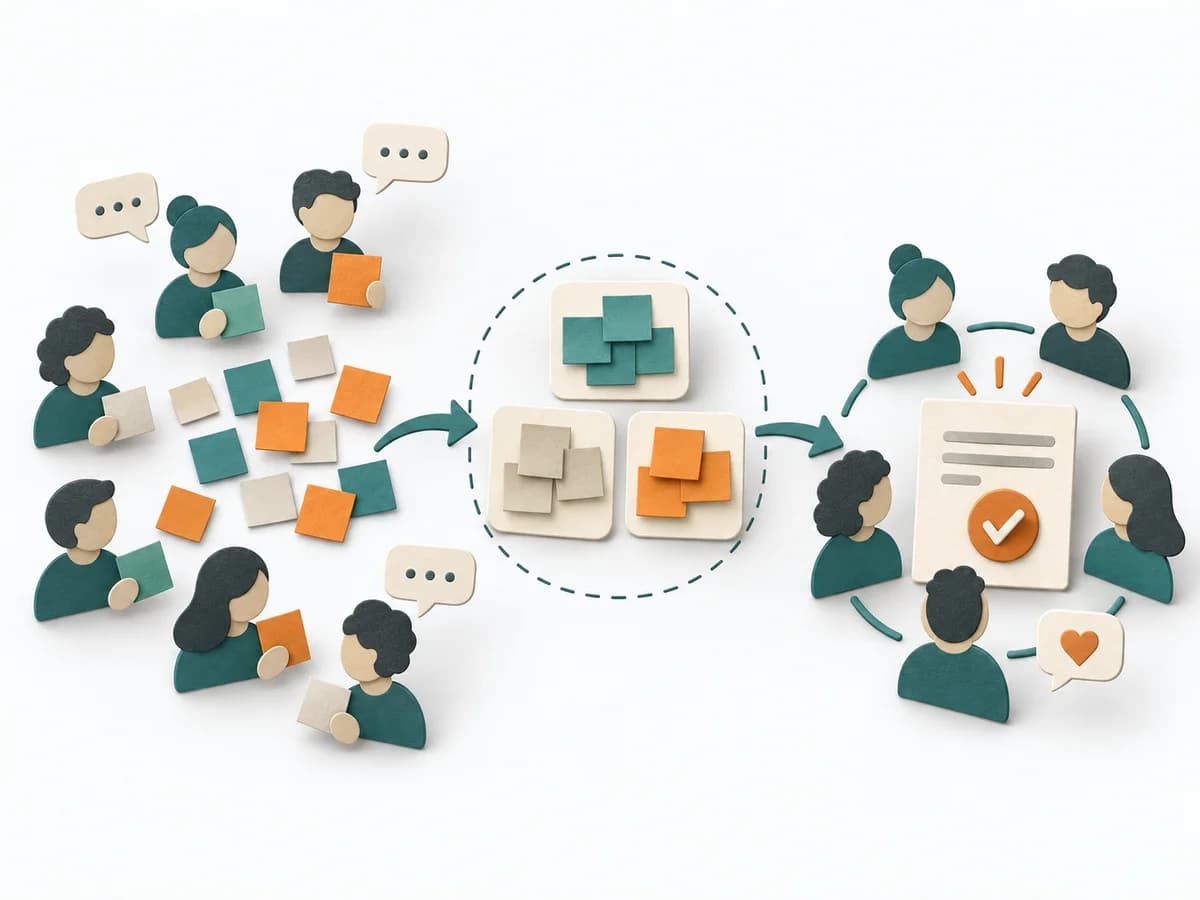
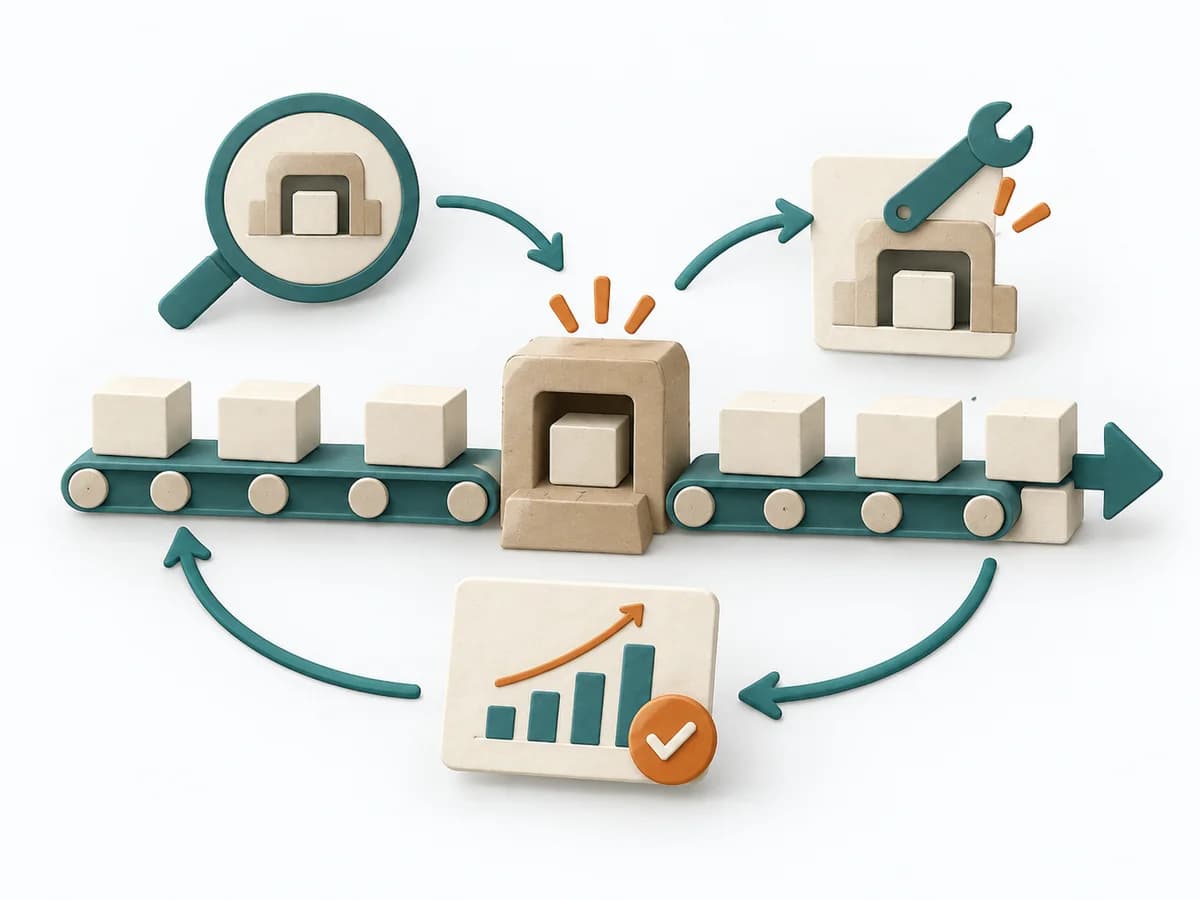
Purposedifferent | Domain Storytelling translates domain knowledge into a shared narrative of actors, objects, and workflows. It is especially useful when language, rules, and process understanding must be tightly connected. | For a flow that backs up at one point, the method looks for the capacity limit with the greatest leverage. It explains why extra effort elsewhere barely improves throughput. | When a workshop has produced too many options and the group needs to condense quickly, dot voting makes preferences visible in a short time. It bundles individual votes into a solid signal for the next selection. |
Complexitydifferent | Low | Medium | Low |
Timedifferent | 1-2 h | 1-3 h | 5-15 min |
Participantsdifferent | 2-8 | 3-8 | 3-20 |
Formatdifferent | Workshop | Workshop + async | Workshop |
Outputdifferent | Domain Story, Glossary Notes, Process Narrative | Bottleneck Map, Flow Metrics, Improvement Options, Follow-up Measures | Ranked list, Consensus signal, Shortlist |
Tagsno overlap | KnowledgeDomain-Driven DesignProcess | FlowMeasurementConstraints | FacilitationVotingConsensusPrioritization |
Often compared together
Methods with strong topical overlap with the current selection, not yet in the comparison.