View methods side by side.
Choose up to four methods. Add them using the search and share the comparison by copying its link.
| Criterion |  UX Research Diary Study | 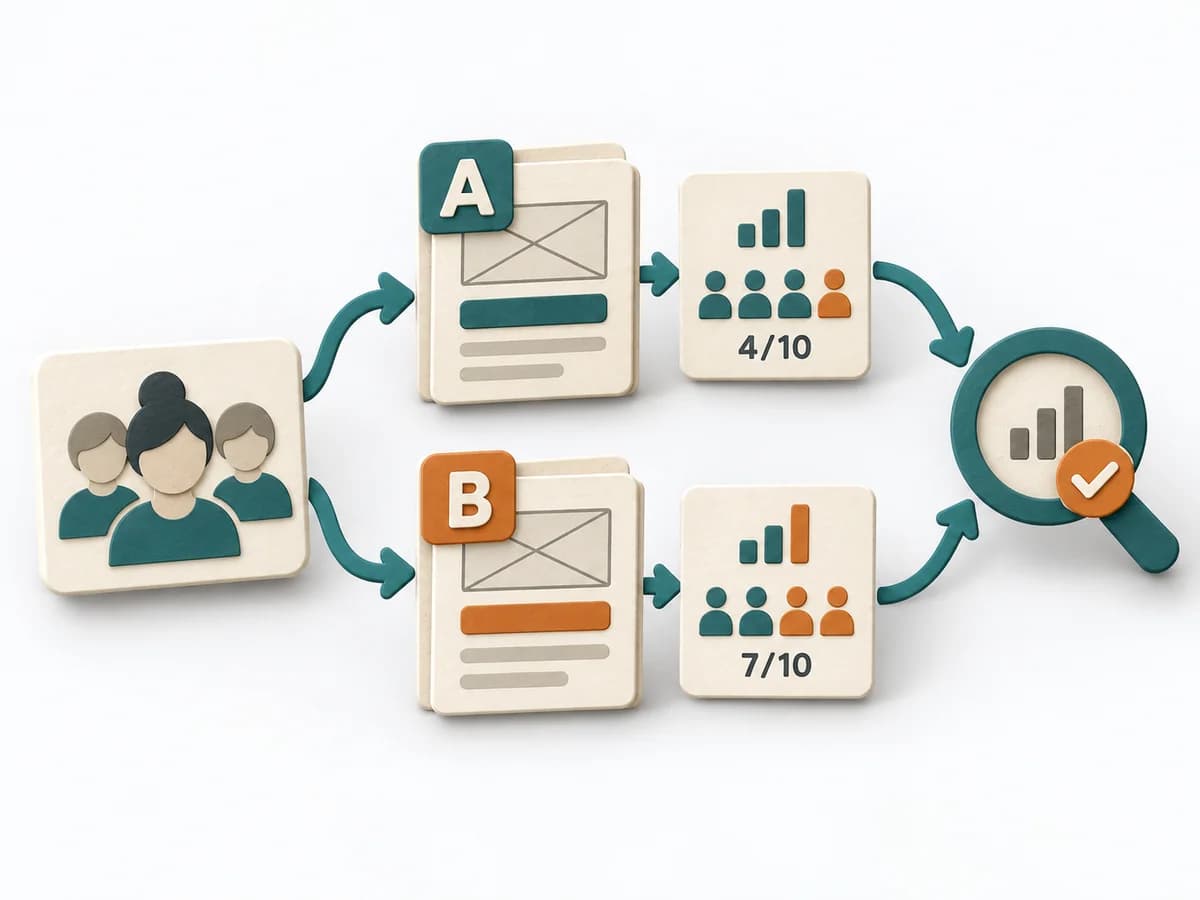 Growth A/B Testing | 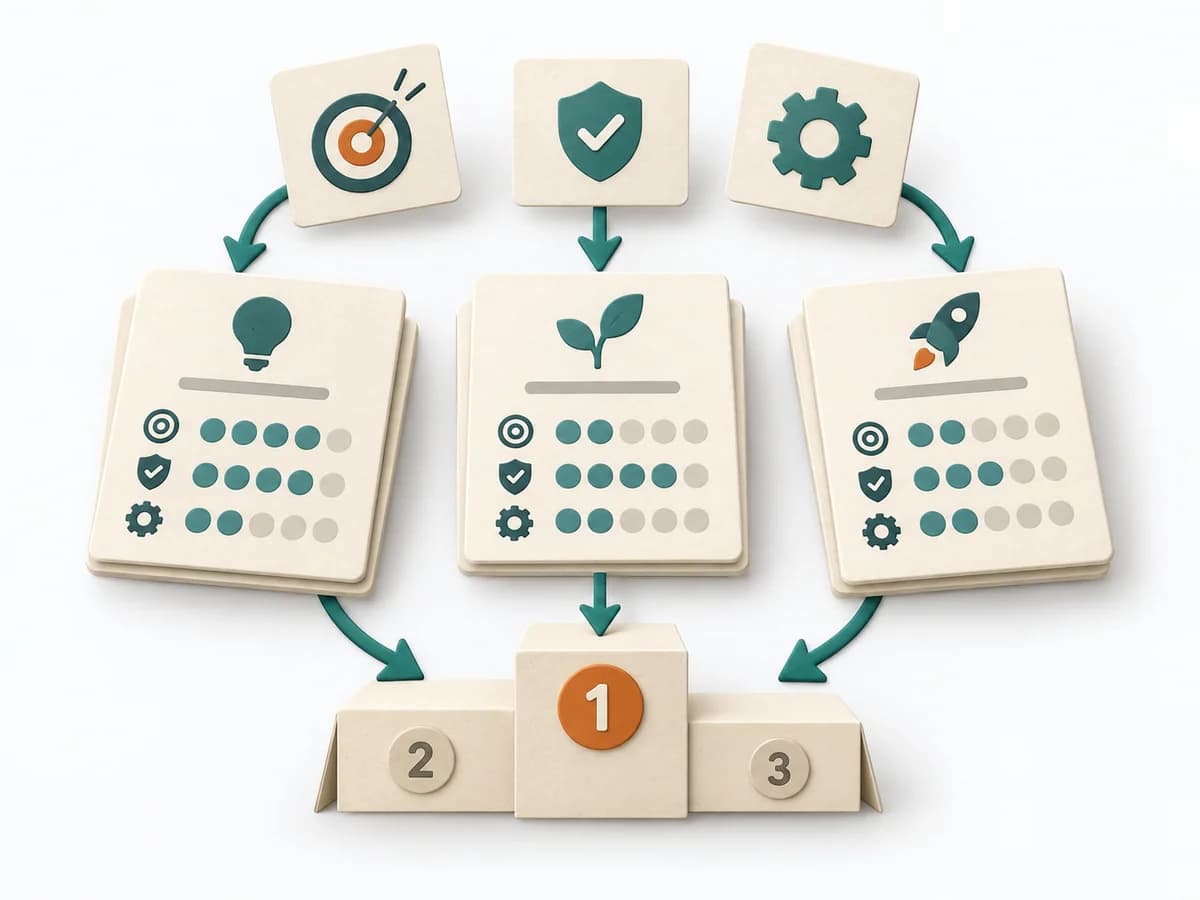 Product Strategy ICE Scoring |
|---|---|---|---|
Purposedifferent | When experiences build up over days or weeks and a single session cannot capture them, Diary Study records the course of everyday life. Recurring triggers, moods, and habits become visible this way, beyond the sharpness of memory. | When two variants compete, discussions quickly decide by taste rather than effect. A/B Testing checks behavior under controlled conditions and separates real improvement from chance or expectation effects. | When ideas need sorting quickly, it condenses impact, confidence, and effort into one compact score. It connects customer value, product logic, and decision priorities. The result is captured as an ICE table and top-ideas list. |
Complexitydifferent | Medium | High | Low |
Timedifferent | 1-4 Wochen | 1-4 Wochen | 30-60 min |
Participantsdifferent | 5-20 | 1-6 | 2-8 |
Formatdifferent | Async | Async | Workshop + async |
Outputdifferent | Diary Entries, Longitudinal Patterns, Experience Timeline | Experiment results, Decision log, Learning summary | ICE Table, Top Idea List |
Tagsno overlap | UX researchTrackingBehavior | ExperimentsGrowthAnalyticsValidation | PrioritizationScoringGrowthDecision |
Often compared together
Methods with strong topical overlap with the current selection, not yet in the comparison.