View methods side by side.
Choose up to four methods. Add them using the search and share the comparison by copying its link.
| Criterion | 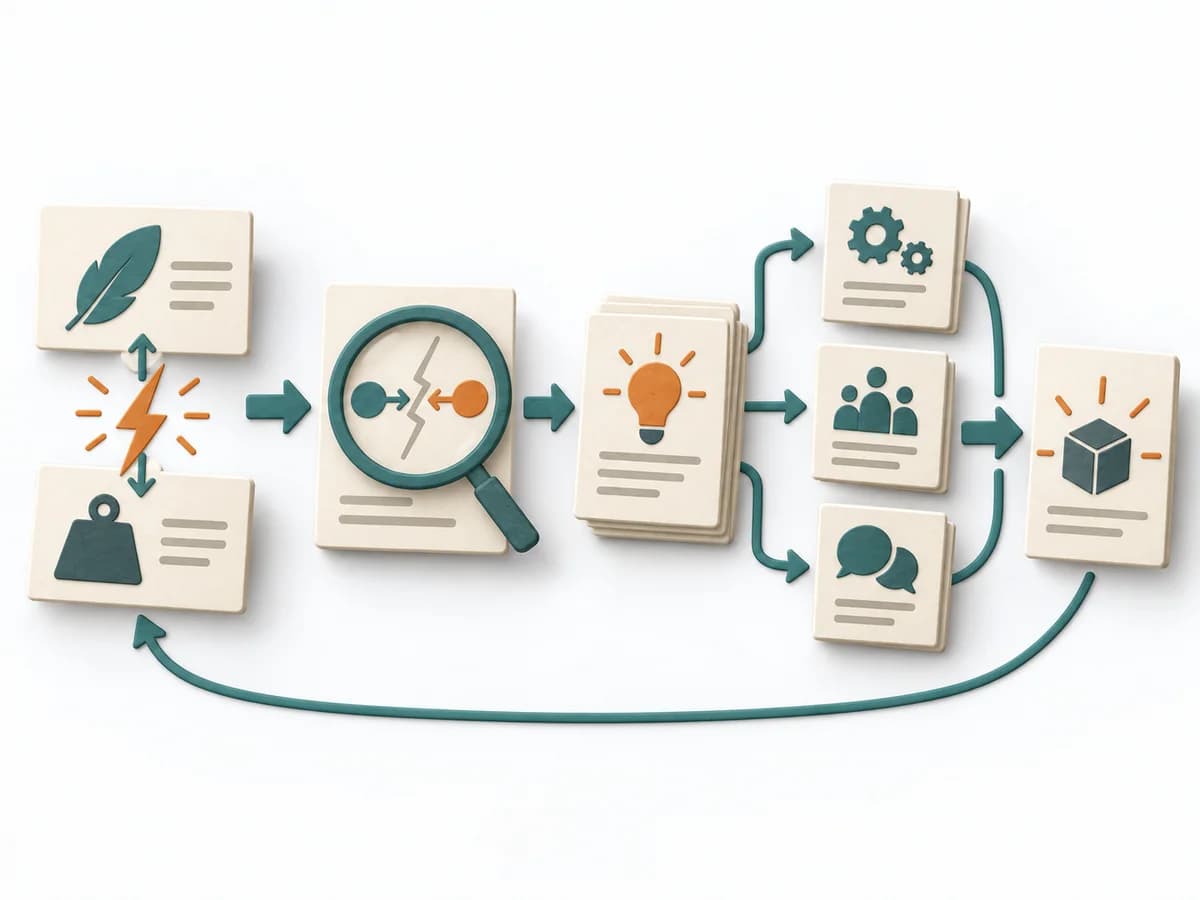 Innovation Contradiction Analysis |  Facilitation Six Thinking Hats |  Facilitation Stakeholder Mapping |
|---|---|---|---|
Purposedifferent | When a system should improve while another measure suffers as a result, the method makes the underlying conflict precisely formulable. It separates the desired effect from its side effect. This makes solutions possible that address the contradiction deliberately instead of half-heartedly. | When a topic gets stuck too quickly in the same thinking mode, Six Thinking Hats deliberately separates the perspectives. This means facts, risks, creativity, and emotional signals get worked through one after another instead of mixed together. | When an initiative depends on many people, interests, and power dynamics, Stakeholder Mapping systematically orders the environment. It shows who influences, who is affected, and where relationship management or safeguarding matters first. |
Complexitydifferent | Medium | Medium | Low |
Timedifferent | 60-120 min | 45-90 min | 60–90 min |
Participantsdifferent | 2-8 | 4-12 | 2-8 |
Formatdifferent | Workshop | Workshop | Workshop + async |
Outputdifferent | Contradiction Statement, Abstraction Notes, Solution Principles, Concept Ideas | Perspective Notes, Decision Inputs, Action Items | Stakeholder Map, Engagement Plan, Risk Notes |
Tagsno overlap | ContradictionsInnovationProblem solving | FacilitationOptionsDecision | StakeholdersAlignmentFacilitationChange |
Often compared together
Methods with strong topical overlap with the current selection, not yet in the comparison.



