View methods side by side.
Choose up to four methods. Add them using the search and share the comparison by copying its link.
| Criterion |  UX Research Card Sorting |  Delivery RAID Log |  Operations Family Tree Analysis |
|---|---|---|---|
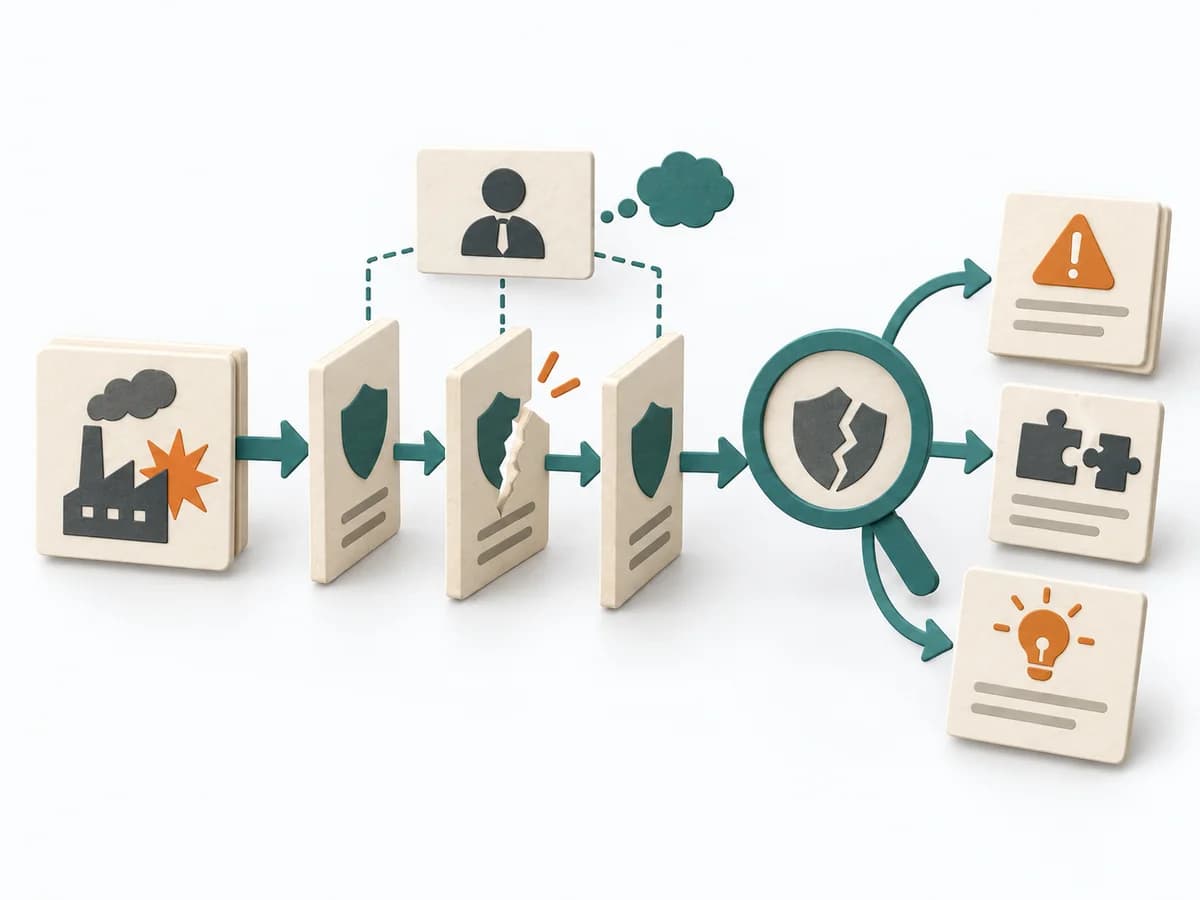
Purposedifferent | When content only makes sense internally and users can't find the structure again, card sorting exposes their mental order. Terms, groups, and naming are then aligned with the target group's expectations. | Helps clarify scope, sequence, and delivery flow in concrete terms. It makes work, boundaries, and order steerable. The result is captured as a RAID Log and a source for status reporting. | For a series of incidents with a similar pattern, the method arranges individual events as branches of a common origin. It makes visible which conditions keep recurring. |
Complexitydifferent | Low | Low | Medium |
Timedifferent | 20-45 min | 30 min Setup, dann laufend | 2-4 h |
Participantsdifferent | Based on research question | 1-3 maintaining, briefing for everyone | 2-6 |
Formatdifferent | Workshop + async | Async | Workshop + async |
Outputdifferent | Content groups, Label set, IA hypotheses | RAID Log, Status Report Source | Family Tree Diagram, Pattern Notes, Systemic Measures |
Tagsno overlap | Information architectureNavigationStructure | RiskTrackingStakeholdersGovernance | Root causePatternsIncidentSystemic |
Often compared together
Methods with strong topical overlap with the current selection, not yet in the comparison.