View methods side by side.
Choose up to four methods. Add them using the search and share the comparison by copying its link.
| Criterion |  UX Research Card Sorting |  Facilitation Consensus Workshop | 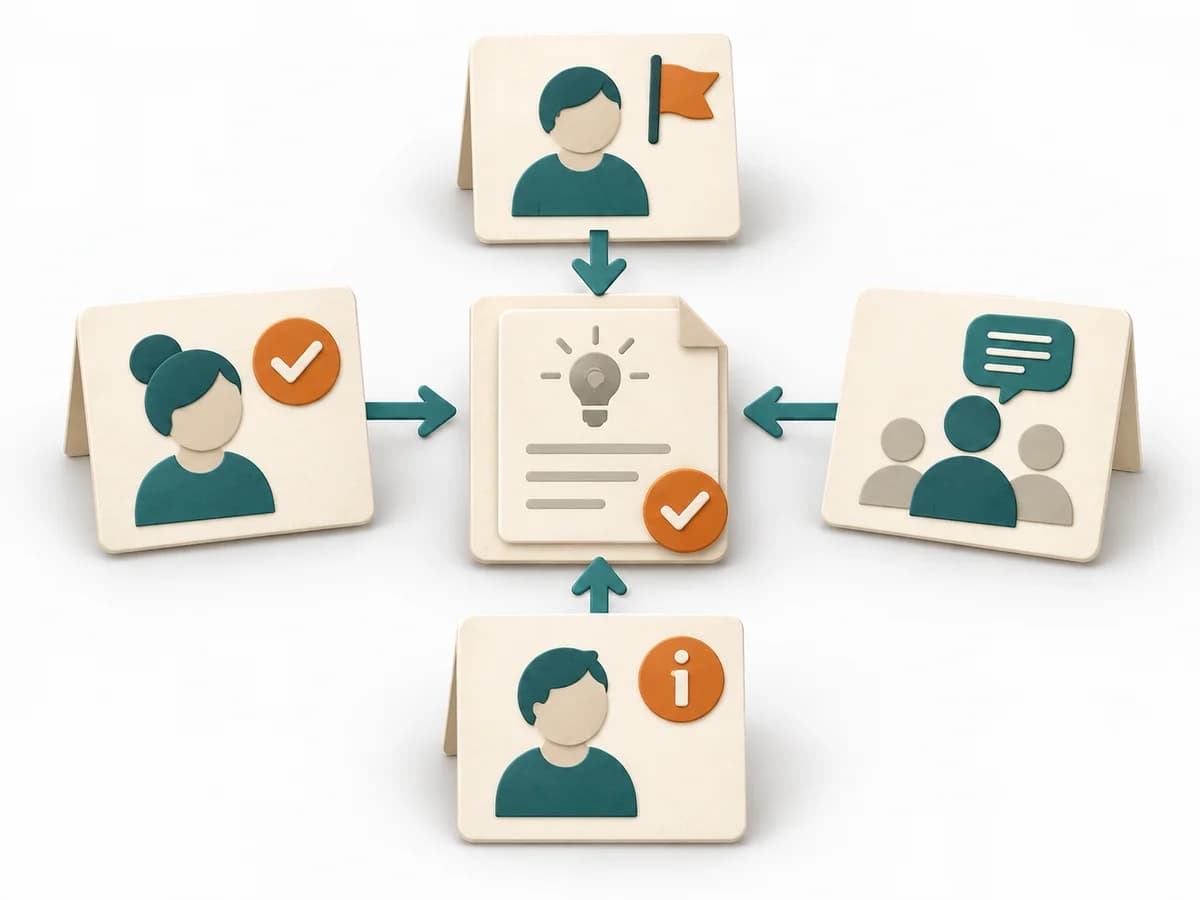 Decision Making DACI |
|---|---|---|---|
Purposedifferent | When content only makes sense internally and users can't find the structure again, card sorting exposes their mental order. Terms, groups, and naming are then aligned with the target group's expectations. | When a group needs a solid decision without outvoting individual factions, a Consensus Workshop creates a negotiable common ground. It makes agreement, reservations, and open tensions discussable at the same time. | In cross-functional decisions, responsibilities quickly blur between approval, influence, and execution. DACI arranges these roles so decision pressure, contribution, and information stay cleanly separated. |
Complexitydifferent | Low | Medium | Low |
Timedifferent | 20-45 min | 1-3 h | 30-60 min |
Participantsdifferent | Based on research question | 5-30 | 2-10 |
Formatdifferent | Workshop + async | Workshop | Workshop + async |
Outputdifferent | Content groups, Label set, IA hypotheses | Consensus Clusters, Theme Titles, Priority Areas | DACI Matrix, Decision Owner, Decision Log |
Tagsno overlap | Information architectureNavigationStructure | FacilitationConsensusWorkshopAlignment | DecisionRolesGovernanceAlignment |
Often compared together
Methods with strong topical overlap with the current selection, not yet in the comparison.