View methods side by side.
Choose up to four methods. Add them using the search and share the comparison by copying its link.
| Criterion | 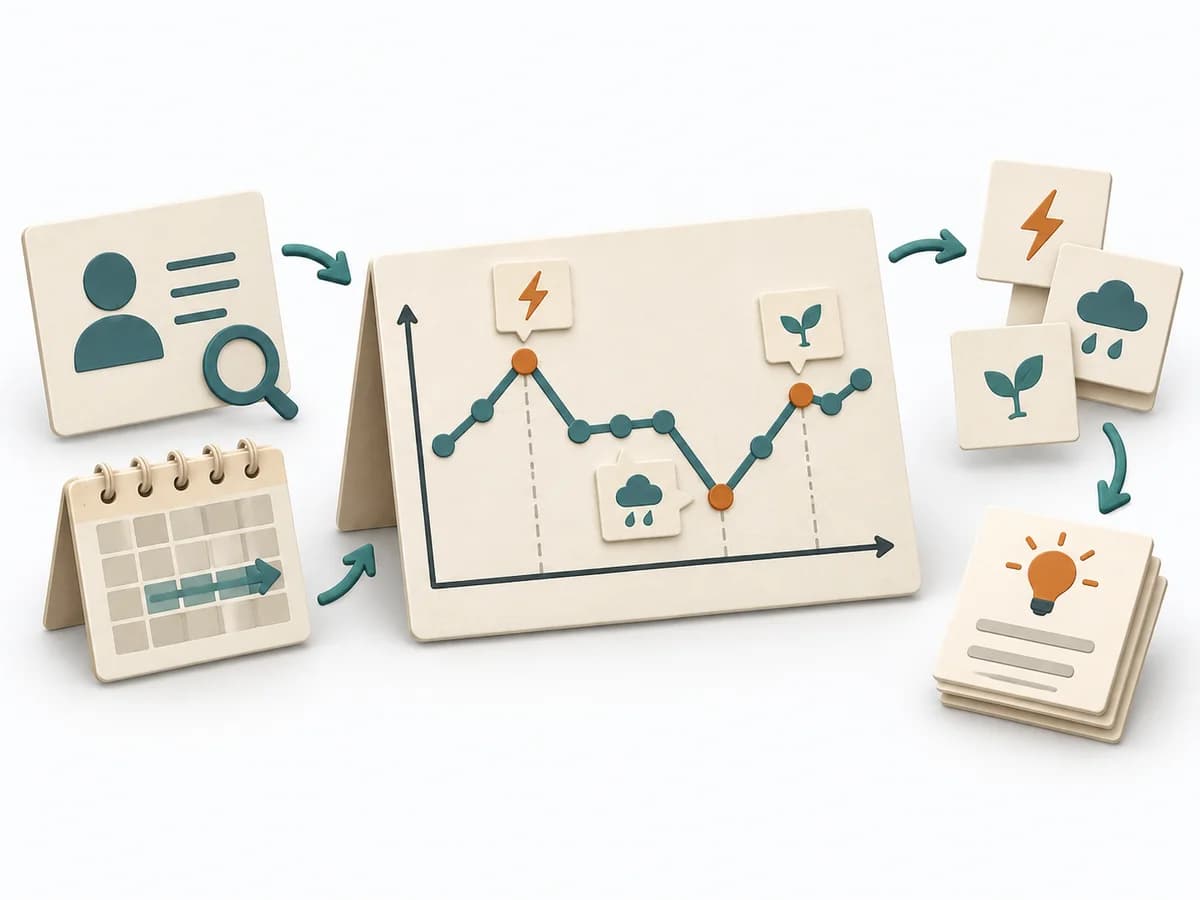 Systems Thinking Behavior Over Time Graph |  Systems Thinking CATWOE Analysis |  Delivery Communication Plan |
|---|---|---|---|
Purposedifferent | A Behavior Over Time Graph shows how a metric or observation develops over time. The method makes trends, breaks, and recurring patterns visible that get lost in snapshots. | CATWOE structures a problem from six viewpoints and prevents too narrow a view of the situation. Different experiences of the system become comparably discussable this way. | When many people need to be informed in parallel and messages would otherwise arrive unevenly or too late, a Communication Plan orders communication reliably. Channels, audiences, and cadences interlock so important information doesn't get lost. |
Complexitydifferent | Low | Medium | Low |
Timedifferent | 20-45 min | 45-90 min | 45-90 min |
Participantsdifferent | 1-10 | 3-8 | 2-6 |
Formatsame | Workshop + async | Workshop + async | Workshop + async |
Outputdifferent | Behavior Over Time Graph, Trend Hypotheses, Key Events | CATWOE Canvas, Root Definition, Stakeholder Perspectives, Constraints | Communication Plan, Channel Matrix, Message Cadence |
Tagsno overlap | Systems thinkingPatternsDynamics | Systems thinkingFramingStakeholders | CommunicationStakeholdersDeliveryPlanning |
Often compared together
Methods with strong topical overlap with the current selection, not yet in the comparison.