View methods side by side.
Choose up to four methods. Add them using the search and share the comparison by copying its link.
| Criterion |  Architecture Architecture Decision Record | 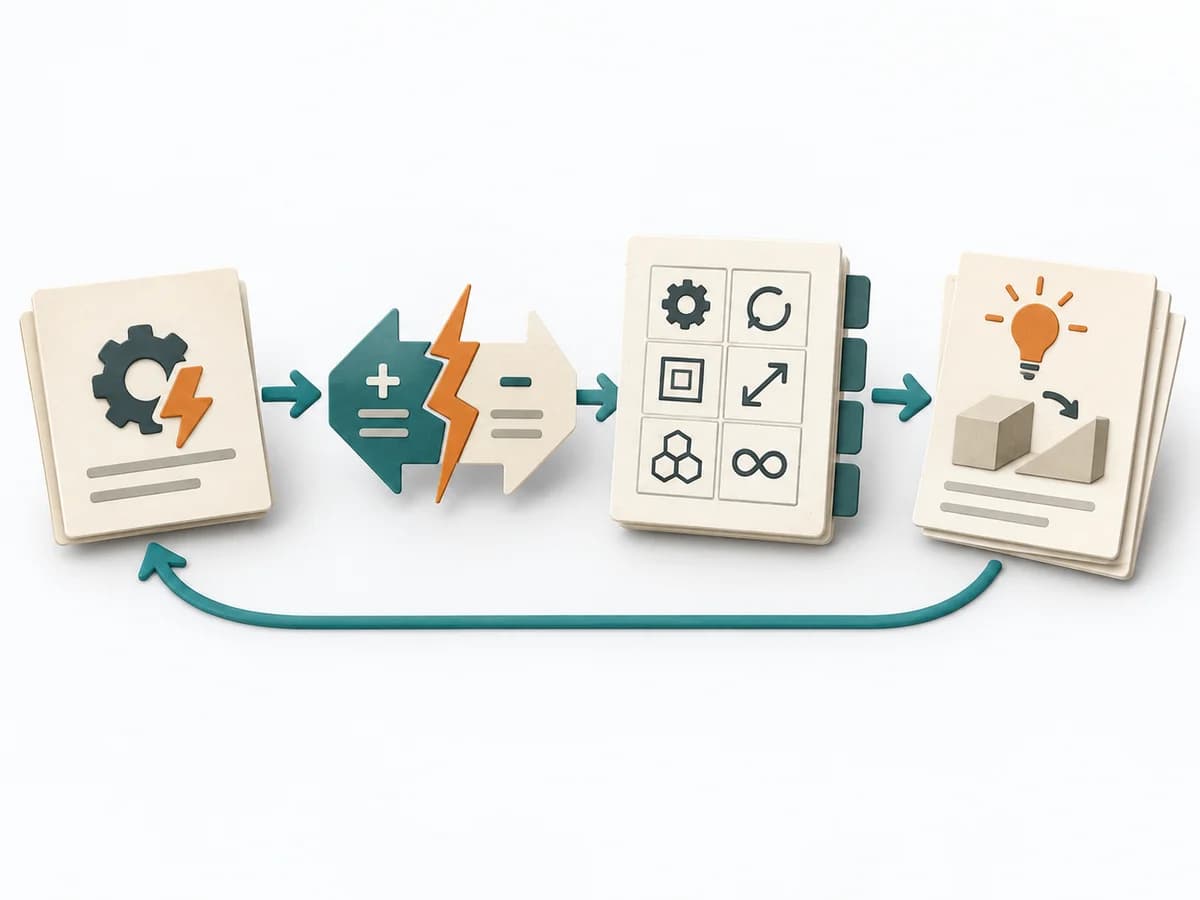 Innovation TRIZ |  Innovation Design Sprint |
|---|---|---|---|
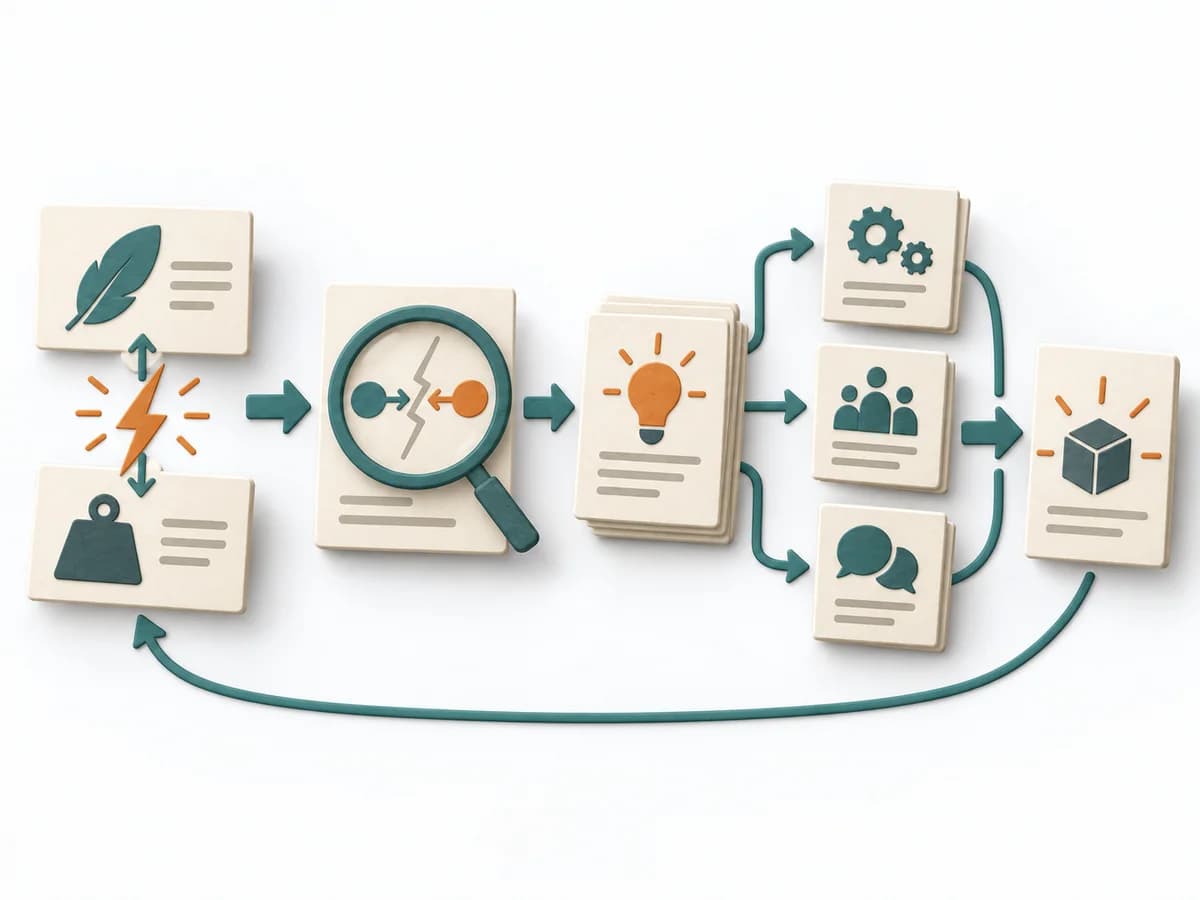
Purposedifferent | An ADR permanently records an architecture decision with context, trade-offs, and consequence. It creates continuity for later changes because the decision path stays traceable. | For technical contradictions or trade-offs, the method looks for solutions that resolve opposing requirements at the same time. It translates limits into an explicit picture of conflict that becomes workable. This produces not just compromises but more elegant principles. | When the product question is unclear and time pressure is high, the method takes a team from an open idea to a testable solution. It connects problem understanding, decision, and learning in one compact format, lowering the risk of spending a lot of energy on a mere guess. |
Complexitydifferent | Low | High | High |
Timedifferent | 15-45 min | 1-4 h | 4-5 Tage |
Participantsdifferent | 1-3 | 2-8 | 5-8 |
Formatdifferent | Async | Workshop + async | Workshop |
Outputdifferent | ADR File, Decision Log, Rationale | Contradiction Statement, Inventive Principles, Solution Concepts | Prototype, Test Findings, Decision Rationale |
Tagsno overlap | ArchitectureRationaleDocumentationGovernance | InnovationProblem solvingContradictionsCreativity | Design sprintPrototypeValidationInnovation |
Often compared together
Methods with strong topical overlap with the current selection, not yet in the comparison.