View methods side by side.
Choose up to four methods. Add them using the search and share the comparison by copying its link.
Selected:Architecture Decision RecordStrategic, Tactical and Operational PlanningForce Field Analysis
| Criterion |  Architecture Architecture Decision Record | 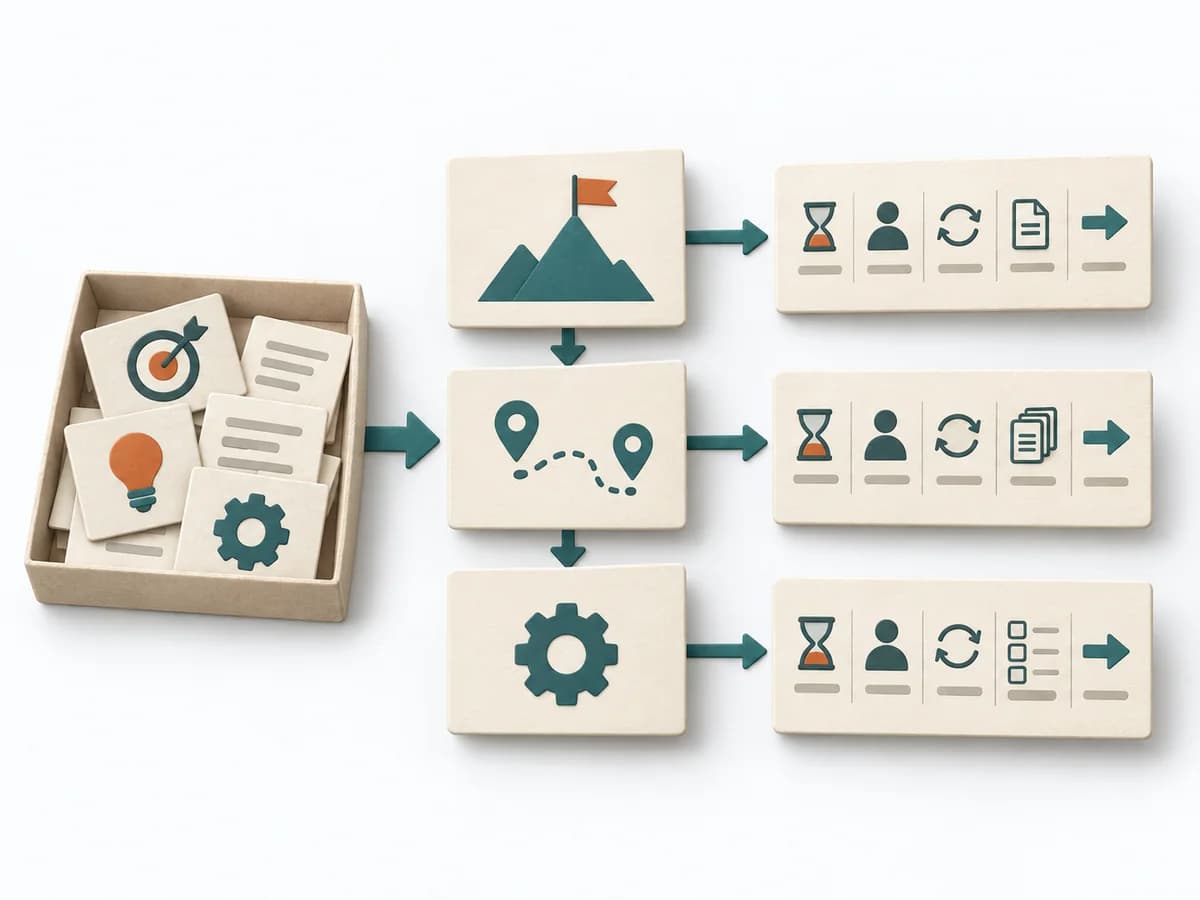 Business Strategy Strategic, Tactical and Operational Planning |  Decision Making Force Field Analysis |
|---|---|---|---|
Purposedifferent | An ADR permanently records an architecture decision with context, trade-offs, and consequence. It creates continuity for later changes because the decision path stays traceable. | It places decisions and artifacts at the right level. Strategic planning clarifies direction, tactical planning translates it into programs, and operational planning steers concrete processes. | In change initiatives, supporting and restraining forces sit at the table at the same time. Force Field Analysis makes these tensions explicit and shows where change can be pushed forward by strengthening or relieving. |
Complexitydifferent | Low | Medium | Low |
Timedifferent | 15-45 min | 90-180 min | 45-90 min |
Participantsdifferent | 1-3 | 4-12 | 3-12 |
Formatdifferent | Async | Workshop | Workshop |
Outputdifferent | ADR File, Decision Log, Rationale | Planning Levels Map, Cadence Model, Planning Artifact Inventory | Force Field Map, Change Levers, Risk Notes |
Tagsno overlap | ArchitectureRationaleDocumentationGovernance | CadenceGovernanceExecution | ChangeDecisionStrategy |
Often compared together
Methods with strong topical overlap with the current selection, not yet in the comparison.