Complete firstComparable subject
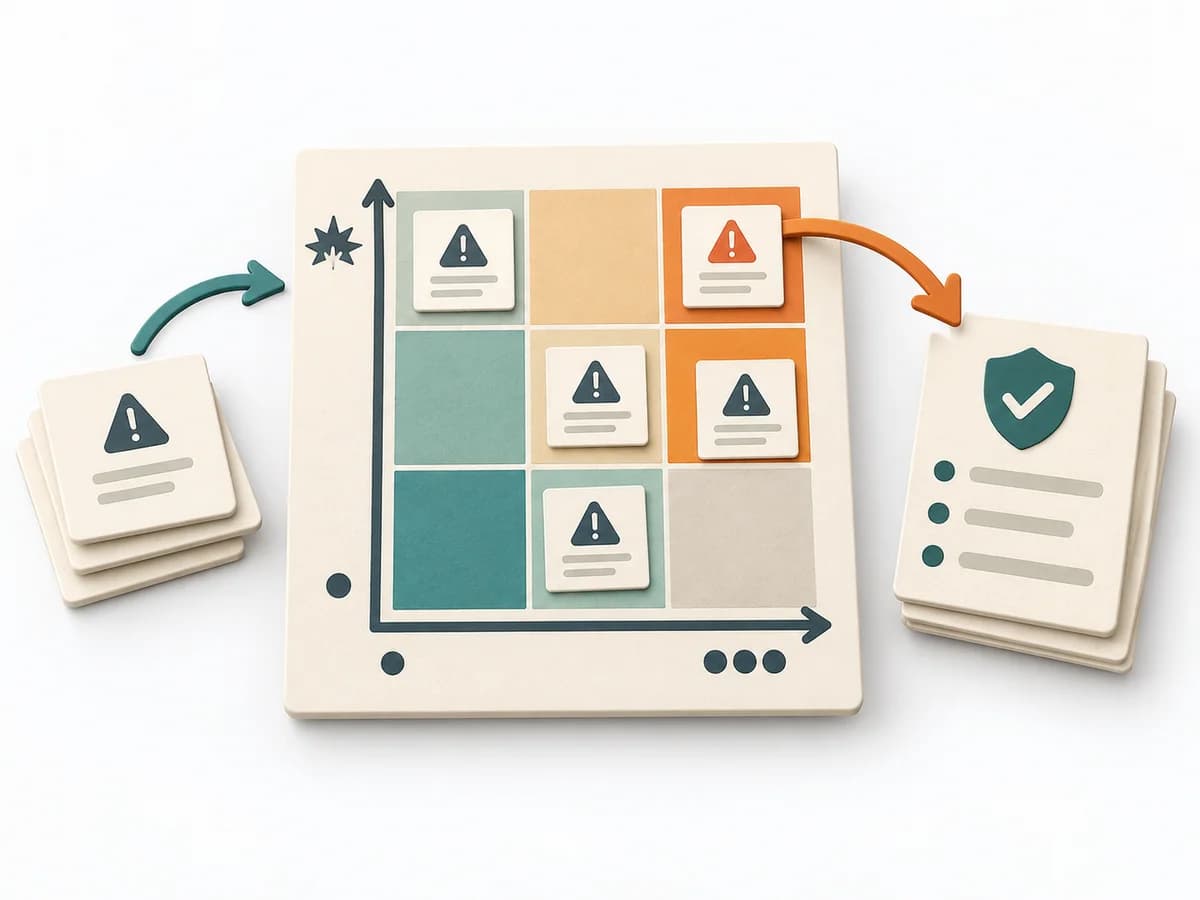
Close scope, unit, WBS, included work, and estimation question in writing; appoint a coordinator who does not estimate.
Without a common frame, values are not comparable.
A practical method guide: clarify prerequisites and materials, understand the complete process, and look up outputs, pitfalls, and stop criteria.
What needs to be finished first
Close scope, unit, WBS, included work, and estimation question in writing; appoint a coordinator who does not estimate.
Shared scope/WBS, Definition of Done, historical analogies, private estimate sheets, and anonymous round summary
What needs to be ready before start
Shared scope/WBS, Definition of Done, historical analogies, private estimate sheets, and anonymous round summary
Coordinator facilitates · 3–7 expert estimators · scope owner answers · scribe records assumptions
Close scope, unit, WBS, included work, and estimation question in writing; appoint a coordinator who does not estimate.
90–180 minutes for 2–4 anonymous estimation rounds; preparation separate.
Prepare a workspace with Brief · Private · Reflect · Clarify · Re-estimate; separate example from live data.
The one question this method answers
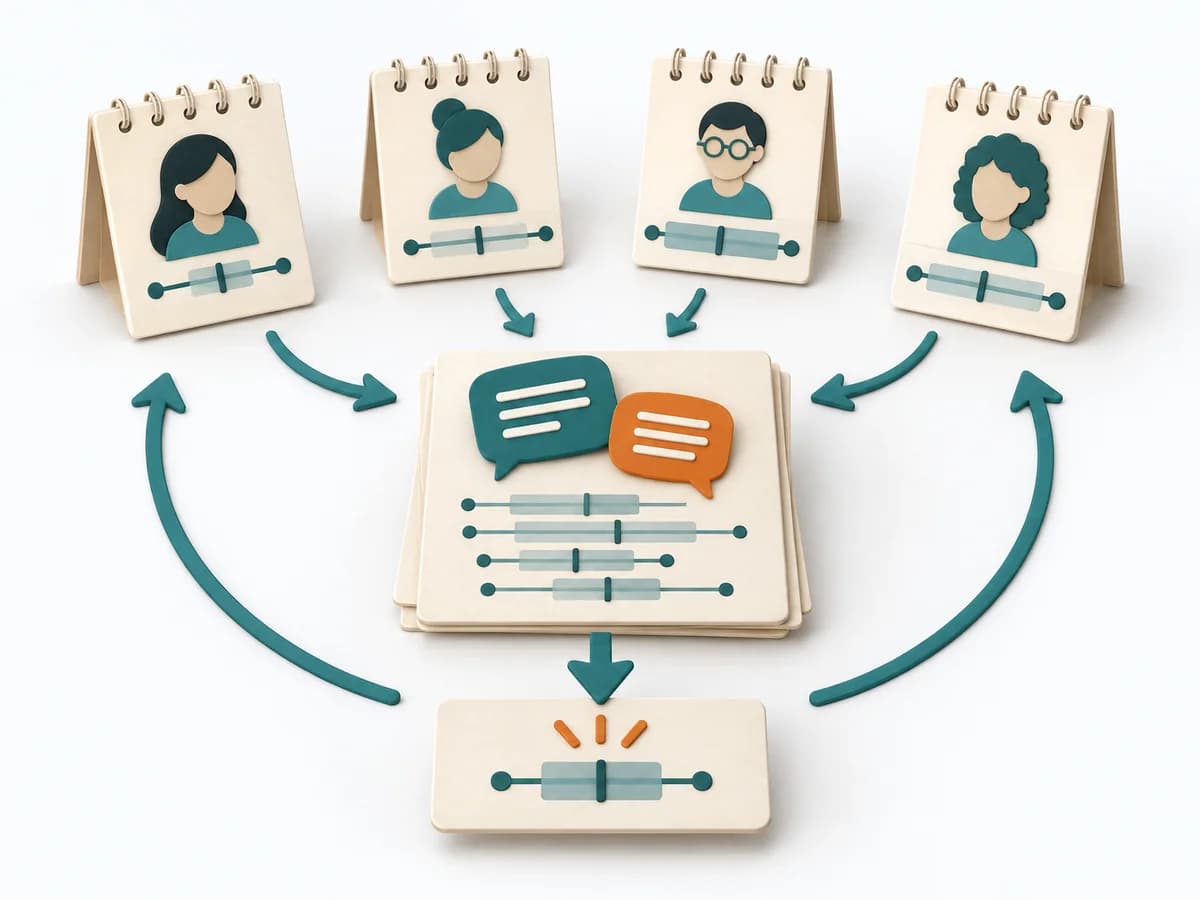
What estimate range emerges when experts first estimate independently, compare assumptions anonymously, and re-estimate with new information?
Phases with goal, actions, output and pitfall
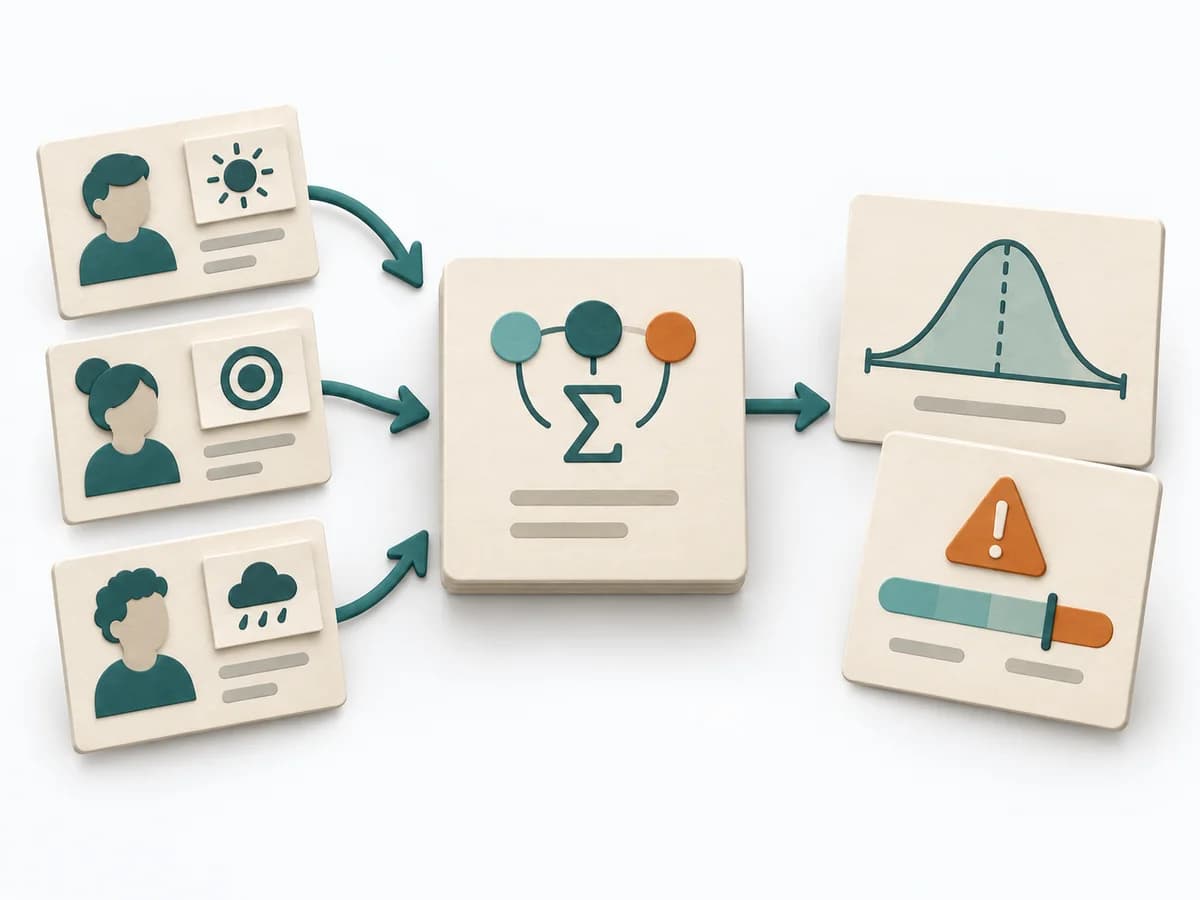
Several experts estimate in parallel, compare their assumptions, and adjust after feedback. Ranges, uncertainty, and strong dissent become visible without forcing an apparent average. The approach strengthens planning discipline where numbers remain approximations.
Fictional example
Fictional values show the actual method fields.
| Round/person | Estimate | Assumptions | Evidence | Anonymous feedback | Revision | Status |
|---|---|---|---|---|---|---|
| R1 · E1Add evidence and rationale. | 18 PD | No legacy migration | Token API exists | Range 18–30; migration disputed | 24 PD | Updated |
| R1 · E2Add evidence and rationale. | 24 PD | Five browsers, full tests | Last checkout item | Test scope confirmed | 26 PD | Updated |
| R1 · E3Add evidence and rationale. | 30 PD | Certification internal | Compliance experience | Certification external | 27 PD | Updated |
| OutcomeAdd evidence and rationale. | 24–27 PD | Migration included; certification external | Three private revisions | Residual spread from test depth | Review after migration probe | Stop rule met |
All values are fictional.
Brief
Goal
Shared scope: Coordinator explains scope, unit, and historical evidence; answers are shared equally.
Inputs for this step
Actions
Output
Shared scope
Coordinator explains scope, unit, and historical evidence; answers are shared equally.
Quality check
Is everyone estimating the same work in the same unit?
Pitfall
Some experts receive extra corridor information. Distribute every answer in writing to the whole panel.
Timing: 15–25 minutes
Private
Goal
Round 1: Each expert independently estimates total or WBS parts and records assumptions and uncertainty.
Inputs for this step
Actions
Output
Round 1
Each expert independently estimates total or WBS parts and records assumptions and uncertainty.
Quality check
Were values submitted independently with rationale?
Pitfall
Early group discussion creates authority anchoring. Submit the first round privately and simultaneously.
Timing: 15–25 minutes
Reflect
Goal
Anonymous summary: Coordinator shows distribution and rationales anonymously without making the mean a target.
Inputs for this step
Actions
Output
Anonymous summary
Coordinator shows distribution and rationales anonymously without making the mean a target.
Quality check
Are range and diverging assumptions visible?
Pitfall
Only mean 24 is shown and differences disappear. Show individual values, range, and assumptions anonymously side by side.
Timing: 10–20 minutes
Clarify
Goal
Clarified assumptions: Panel discusses reasons, updates shared scope, and identifies missing evidence without defending people.
Inputs for this step
Actions
Output
Clarified assumptions
Panel discusses reasons, updates shared scope, and identifies missing evidence without defending people.
Quality check
Did the discussion create information rather than consensus pressure?
Pitfall
Coordinator pushes a compromise value. Clarify factual assumptions only; protect private judgement until the next round.
Timing: 20–30 minutes
Re-estimate
Goal
Delphi range: Estimate privately again; after stable spread, document range, assumptions, and review condition.
Inputs for this step
Actions
Output
Delphi range
Estimate privately again; after stable spread, document range, assumptions, and review condition.
Quality check
Is residual spread explainable and the stop rule met?
Pitfall
Rounds continue until every value matches. Stop at a stable explained range and preserve uncertainty.
Timing: 15–30 minutes
What comes out at the end
Sketch: what the artifact looks like
Traceable Delphi estimate with individual rounds, anonymous rationales, shared scope, residual spread, and review trigger.
Record date, team, data state, and review date; preserve prior versions.
Set subject, data, roles, flow, and review.
To be confirmed
To be confirmed
Complete run Time: 90–180 minutes for 2–4 anonymous estimation rounds; preparation separate.
Complete this worksheet on paper or in your own document during the work.
| Round/person | Estimate | Assumptions | Evidence | Anonymous feedback | Revision | Status |
|---|---|---|---|---|---|---|
| R1 · E1 | ||||||
| R1 · E2 | ||||||
| R1 · E3 | ||||||
| Outcome |
The blank worksheet contains prompts only.
Reference · original teaching example
Expected artifact: Shared scope
Coordinator explains scope, unit, and historical evidence; answers are shared equally.
Entry:
...
Expected artifact: Round 1
Each expert independently estimates total or WBS parts and records assumptions and uncertainty.
Entry:
...
Expected artifact: Anonymous summary
Coordinator shows distribution and rationales anonymously without making the mean a target.
Entry:
...
Expected artifact: Clarified assumptions
Panel discusses reasons, updates shared scope, and identifies missing evidence without defending people.
Entry:
...
Expected artifact: Delphi range
Estimate privately again; after stable spread, document range, assumptions, and review condition.
Entry:
...
...
Method guide: https://methodatlas.meierhoff-systems.de/en/methods/wideband-delphi/run-sheet
Concrete filled scenario, fictional example
Fictional example for orientation. Counts and timings describe this case and are not universal requirements.
Concrete filled scenario, fictional example
| Round/person | Estimate | Assumptions | Evidence | Anonymous feedback | Revision | Status |
|---|---|---|---|---|---|---|
| R1 · E1 | 18 PD | No legacy migration | Token API exists | Range 18–30; migration disputed | 24 PD | Updated |
| R1 · E2 | 24 PD | Five browsers, full tests | Last checkout item | Test scope confirmed | 26 PD | Updated |
| R1 · E3 | 30 PD | Certification internal | Compliance experience | Certification external | 27 PD | Updated |
| Outcome | 24–27 PD | Migration included; certification external | Three private revisions | Residual spread from test depth | Review after migration probe | Stop rule met |
Recognize symptoms and steer against them
Quick overview, the full text is in the matching phase in the flow
Some experts receive extra corridor information.
Distribute every answer in writing to the whole panel.
Early group discussion creates authority anchoring.
Submit the first round privately and simultaneously.
Only mean 24 is shown and differences disappear.
Show individual values, range, and assumptions anonymously side by side.
Coordinator pushes a compromise value.
Clarify factual assumptions only; protect private judgement until the next round.
Rounds continue until every value matches.
Stop at a stable explained range and preserve uncertainty.
When to pause, resolve prerequisites, or choose another approach
Go to the profile for purpose, similar methods, and sources or continue to the next method in the catalog.