methodatlas
Session Builder

Plan my session

Plan a concrete work block with agenda, roles, preparation, and a copyable result artifact.

Method session30-60 min per session, plus 2-4 h synthesis after all sessionsWorkshop or asyncInterview Notes

Session: User Interviews

The plan translates the method into a concrete facilitated work block. Your inputs flow directly into the session brief and work artifact.

Derived automatically

Method session with 5-12. The plan uses the existing method logic and the runsheet.

Runsheet
Participation logic
Team round, shared work and alignment

Use the session for shared understanding. Contributions are collected visibly, assumptions are aligned, and open differences remain traceable in the artifact.

Outcome logic
Finish artifact

The session works directly toward Interview Notes. After the session, the artifact should be shareable, reviewable, or reusable.

  1. 1

    Phase 1: Guide pilot

    1-2 h preparation + 1 pilot interview

    Check guide against hypotheses. Run pilot interview with 1 target-group person or proxy. Rephrase or remove questions that do not work. Hint: Skipping pilot costs data quality later. At least one practice iteration, otherwise the first real interviews teach the interviewer at the expense of insights.

    FacilitatorInterview Notes
  2. 2

    Phase 2: Conduct interviews

    30-60 min per session

    Warm-up, context, 4-6 main questions with follow-ups, closing. Open questions, no leading questions. Probe interesting anecdotes. Hint: Leading questions distort. Yes/no questions waste depth. If you already expect an answer, rephrase the question.

    FacilitatorThemes
  3. 3

    Phase 3: Condense notes immediately

    15-30 min after each interview

    Directly after interview, add impressions, quotes, surprising moments. Create 3-5 key findings per session. Hint: After 24 h much is forgotten. Immediate condensation is mandatory. Recording alone is not enough.

    FacilitatorInsight Summary
  4. 4

    Phase 4: Synthesize all sessions

    2-4 h

    Affinity mapping: put highlights on stickies, cluster into themes. Write one insight sentence per cluster with quote evidence. Check hypotheses: confirmed, refuted, open. Hint: Without synthesis, interviews remain loose anecdotes. Synthesis is the actual insight work.

    FacilitatorInterview Notes
  5. 5

    Phase 5: Share insights and act

    1-2 h

    Create insight document or presentation with top-5 themes, each with quote evidence. Inform stakeholders. Define action idea per insight. Hint: Insights without action fade. Named owner and next step per insight, otherwise interviews become research activity.

    OwnerThemes
  6. 6

    Publish artifact

    10 min

    Check the artifact for completeness, define location, set version or status, and name review recipients.

    OwnerInterview Notes
Usable artifact

Session Brief

For invitations, boards, tickets, PR descriptions, or workshop notes.

session-brief.md

Session Brief: User Interviews

Goal

Artifact: Interview Notes

Working Question

How do users behave in real situations, which motives drive them, and which pain points should shape discovery or design decisions?

Context

Research questions; hypotheses or assumptions to test; participant demographics and background; known sensitive topics.

Setup

  • Format: Method session
  • Duration: 30-60 min per session, plus 2-4 h synthesis after all sessions
  • Mode: Workshop or async
  • Participants: One interviewer as lead; one note-taker (can be same person if recorded); optional second observer for synthesis; recruiter for scheduling.
  • Owner: One interviewer as lead
  • Participation mode: Team round, shared work and alignment
  • Outcome logic: Finish artifact

Participation Logic

Use the session for shared understanding. Contributions are collected visibly, assumptions are aligned, and open differences remain traceable in the artifact.

Outcome Logic

The session works directly toward Interview Notes. After the session, the artifact should be shareable, reviewable, or reusable.

Input

Interview guide (semi-structured, 6-10 open main questions plus probes); recording tool with consent; notes template or live note-taker; calibration pilot completed.

Preparation

Guide in funnel structure: warm-up, context, main themes, deepening, closing. 5 participants for first saturation threshold, max 12-15 for affordable insight. Written recording consent upfront. Pilot with 1 person to refine guide.

Agenda

  1. Phase 1: Guide pilot (1-2 h preparation + 1 pilot interview) Owner: Facilitator Action: Check guide against hypotheses. Run pilot interview with 1 target-group person or proxy. Rephrase or remove questions that do not work. Hint: Skipping pilot costs data quality later. At least one practice iteration, otherwise the first real interviews teach the interviewer at the expense of insights. Output: Interview Notes

  2. Phase 2: Conduct interviews (30-60 min per session) Owner: Facilitator Action: Warm-up, context, 4-6 main questions with follow-ups, closing. Open questions, no leading questions. Probe interesting anecdotes. Hint: Leading questions distort. Yes/no questions waste depth. If you already expect an answer, rephrase the question. Output: Themes

  3. Phase 3: Condense notes immediately (15-30 min after each interview) Owner: Facilitator Action: Directly after interview, add impressions, quotes, surprising moments. Create 3-5 key findings per session. Hint: After 24 h much is forgotten. Immediate condensation is mandatory. Recording alone is not enough. Output: Insight Summary

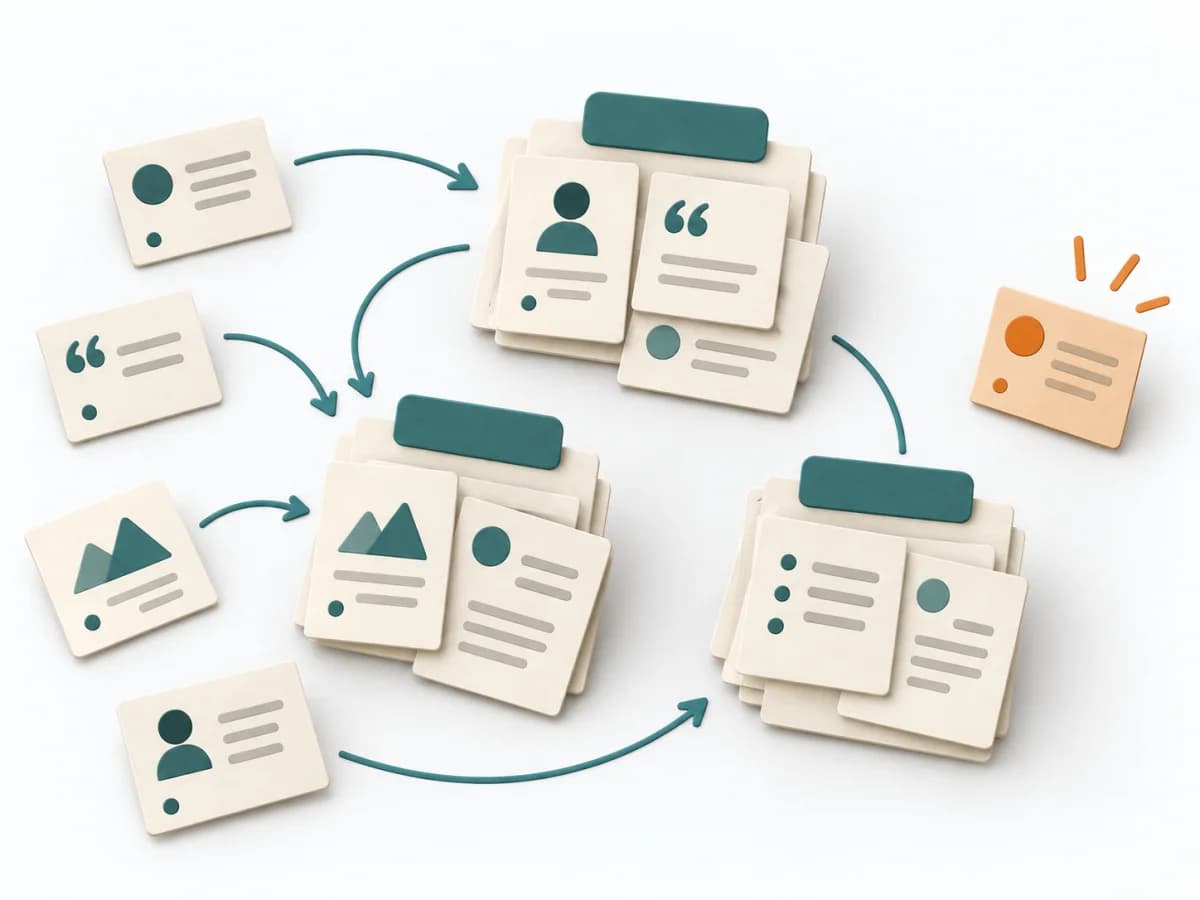
  4. Phase 4: Synthesize all sessions (2-4 h) Owner: Facilitator Action: Affinity mapping: put highlights on stickies, cluster into themes. Write one insight sentence per cluster with quote evidence. Check hypotheses: confirmed, refuted, open. Hint: Without synthesis, interviews remain loose anecdotes. Synthesis is the actual insight work. Output: Interview Notes

  5. Phase 5: Share insights and act (1-2 h) Owner: Owner Action: Create insight document or presentation with top-5 themes, each with quote evidence. Inform stakeholders. Define action idea per insight. Hint: Insights without action fade. Named owner and next step per insight, otherwise interviews become research activity. Output: Themes

  6. Publish artifact (10 min) Owner: Owner Action: Check the artifact for completeness, define location, set version or status, and name review recipients. Output: Interview Notes

Closeout

  • Update result artifact: Interview Notes
  • Define location, version, and review recipients.
  • Define owner, next step, and review date.
Usable artifact

Work artifact

Pre-filled starting point based on the matching template.

work-artifact.md

Interview Notes: User Interviews

Working Question

How do users behave in real situations, which motives drive them, and which pain points should shape discovery or design decisions?

Context

Research questions; hypotheses or assumptions to test; participant demographics and background; known sensitive topics.

Participants

  • Owner: One interviewer as lead
  • Participants: One interviewer as lead; one note-taker (can be same person if recorded); optional second observer for synthesis; recruiter for scheduling.

Input

Interview guide (semi-structured, 6-10 open main questions plus probes); recording tool with consent; notes template or live note-taker; calibration pilot completed.

Template

User Interviews Working Template

Goal

One-on-one conversations to understand user behavior, motivation, and context.

Context

When and for what do we use this method?

Input

Which data, observations, decisions, or materials are available?

Execution

Short notes along the runsheet.

Output artifacts

  • Interview Notes:
  • Themes:
  • Insight Summary:

Assumptions and open questions

  • ...

Decision / Next step

Owner, date, and success signal.

Completion Check

  • Interview Notes is complete enough for review:
  • Location:
  • Version / status:
  • Review by:
  • Next step:

Next Step

  • Review result
  • Mark open questions
  • Schedule review or decision
Template base

User Interviews Working Template

View templateCompact working template for User Interviews with context, input, output artifacts, and next step.
markdown

user-interviews-working-template.md

Compact working template for User Interviews with context, input, output artifacts, and next step.

User Interviews Working Template

Goal

One-on-one conversations to understand user behavior, motivation, and context.

Context

When and for what do we use this method?

Input

Which data, observations, decisions, or materials are available?

Execution

Short notes along the runsheet.

Output artifacts

  • Interview Notes:
  • Themes:
  • Insight Summary:

Assumptions and open questions

  • ...

Decision / Next step

Owner, date, and success signal.

Ready to use when
  • Working question, owner, and target artifact are visible.
  • The result fits Interview Notes.
  • Own project folder per research round with date, research question, and sample description. Version insights with validated/refuted status. Explicitly reference previous insights in follow-up research.
  • Open questions are noted as follow-ups.
  • The next review or decision point is scheduled.