methodatlas
Session Builder

Plan my session

Plan a concrete work block with agenda, roles, preparation, and a copyable result artifact.

Method session45-90 minWorkshopResponsibility Map

Session: Responsibility Poker

The plan translates the method into a concrete facilitated work block. Your inputs flow directly into the session brief and work artifact.

Derived automatically

Method session with 3-10. The plan uses the existing method logic and the runsheet.

Runsheet
Participation logic
Team round, shared work and alignment

Use the session for shared understanding. Contributions are collected visibly, assumptions are aligned, and open differences remain traceable in the artifact.

Outcome logic
Finish artifact

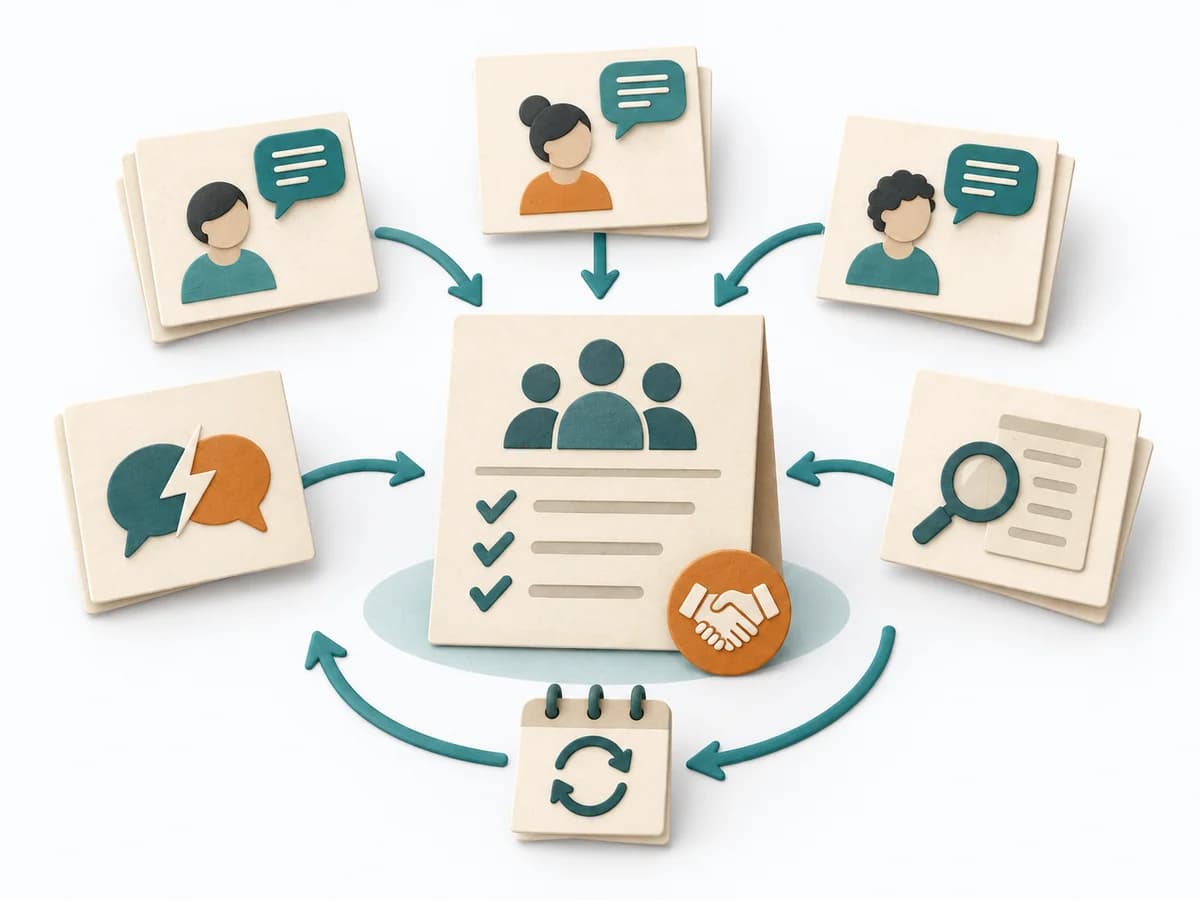
The session works directly toward Responsibility Map. After the session, the artifact should be shareable, reviewable, or reusable.

  1. 1

    Phase 1: Clarify scale and tasks

    10-15 min

    Facilitator explains scale with examples. Review task list together, clarify misunderstandings. Refine or split tasks if needed. Hint: Vague task titles lead to different interpretations. Sprint planning can mean preparation, moderation or decision. Clarify beforehand.

    FacilitatorResponsibility Map
  2. 2

    Phase 2: Choose individual cards

    15-20 min

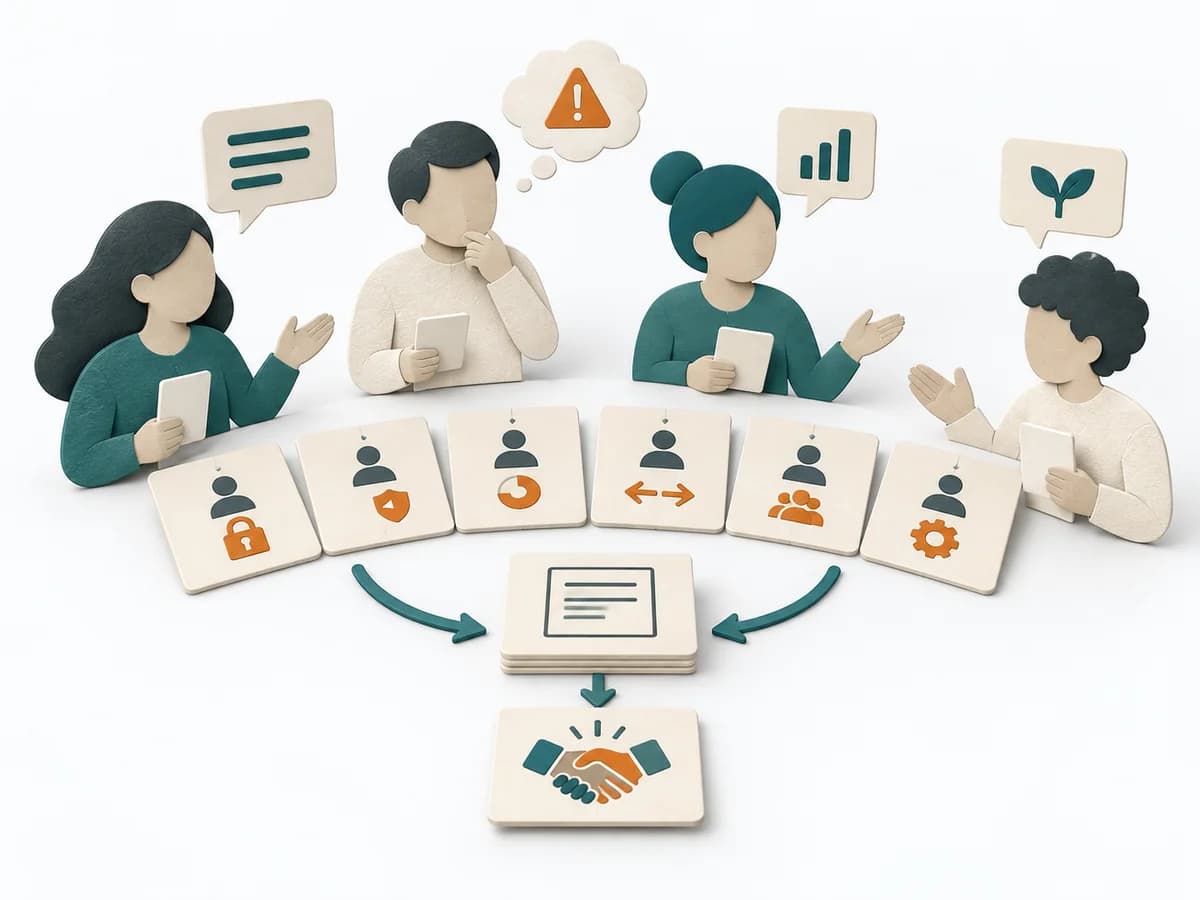
    For each task, every person chooses one card for themselves and one for every other person. Silent phase, no discussion. Hint: Both views (self-assessment and external expectation) are needed. If only self-cards are compared, expectation gaps remain hidden.

    FacilitatorRole Agreements
  3. 3

    Phase 3: Make differences visible

    15-25 min

    Reveal cards simultaneously per task. Discuss differences between self-assessment and external expectation. Which tasks have broad spread? Hint: Spread is insight, not conflict. The question is not who is right, but why we see it differently.

    FacilitatorOpen Questions
  4. 4

    Phase 4: Make agreement

    10-20 min

    Formulate agreement per task: who is primary responsible (owner), who contributes, who is informed? Convert into RACI or DACI format if needed. Hint: Agreement must be explicit. "We do it together" is not an agreement, but conflict deferral.

    FacilitatorResponsibility Map
  5. 5

    Phase 5: Open questions and cadence

    5-10 min

    Note tasks where no agreement was reached as open questions. Owner for clarification. Cadence for review, for example after 4 weeks. Hint: Some role questions need lead decision or new information. Mark clearly as open, do not resolve artificially.

    OwnerRole Agreements
  6. 6

    Publish artifact

    10 min

    Check the artifact for completeness, define location, set version or status, and name review recipients.

    OwnerResponsibility Map
Usable artifact

Session Brief

For invitations, boards, tickets, PR descriptions, or workshop notes.

session-brief.md

Session Brief: Responsibility Poker

Goal

Artifact: Responsibility Map

Working Question

What expectations do team members have for responsibility per task, where do they differ, and what agreement do we make?

Context

Task list prepared in advance (for example sprint planning, architecture decision, stakeholder update, hiring); scale defined; reason (new team composition, recurring role conflicts, delegation clarity).

Setup

  • Format: Method session
  • Duration: 45-90 min
  • Mode: Workshop
  • Participants: One facilitator who explains scale and moderates discussion; three to ten team members whose role relationship should be clarified; one scribe for final responsibility map.
  • Owner: One facilitator who explains scale and moderates discussion
  • Participation mode: Team round, shared work and alignment
  • Outcome logic: Finish artifact

Participation Logic

Use the session for shared understanding. Contributions are collected visibly, assumptions are aligned, and open differences remain traceable in the artifact.

Outcome Logic

The session works directly toward Responsibility Map. After the session, the artifact should be shareable, reviewable, or reusable.

Input

Cards with responsibility levels (for example Does it themselves, Drives it, Advises, Observes, Not involved); list of 8-15 tasks or decisions; whiteboard or Miro board with matrix (tasks x people); timer.

Preparation

Put scale on wall with examples per level. Make task list visible. Distribute cards or digital voting tools. Rule: one card per task and person, reveal simultaneously.

Agenda

  1. Phase 1: Clarify scale and tasks (10-15 min) Owner: Facilitator Action: Facilitator explains scale with examples. Review task list together, clarify misunderstandings. Refine or split tasks if needed. Hint: Vague task titles lead to different interpretations. Sprint planning can mean preparation, moderation or decision. Clarify beforehand. Output: Responsibility Map

  2. Phase 2: Choose individual cards (15-20 min) Owner: Facilitator Action: For each task, every person chooses one card for themselves and one for every other person. Silent phase, no discussion. Hint: Both views (self-assessment and external expectation) are needed. If only self-cards are compared, expectation gaps remain hidden. Output: Role Agreements

  3. Phase 3: Make differences visible (15-25 min) Owner: Facilitator Action: Reveal cards simultaneously per task. Discuss differences between self-assessment and external expectation. Which tasks have broad spread? Hint: Spread is insight, not conflict. The question is not who is right, but why we see it differently. Output: Open Questions

  4. Phase 4: Make agreement (10-20 min) Owner: Facilitator Action: Formulate agreement per task: who is primary responsible (owner), who contributes, who is informed? Convert into RACI or DACI format if needed. Hint: Agreement must be explicit. "We do it together" is not an agreement, but conflict deferral. Output: Responsibility Map

  5. Phase 5: Open questions and cadence (5-10 min) Owner: Owner Action: Note tasks where no agreement was reached as open questions. Owner for clarification. Cadence for review, for example after 4 weeks. Hint: Some role questions need lead decision or new information. Mark clearly as open, do not resolve artificially. Output: Role Agreements

  6. Publish artifact (10 min) Owner: Owner Action: Check the artifact for completeness, define location, set version or status, and name review recipients. Output: Responsibility Map

Closeout

  • Update result artifact: Responsibility Map
  • Define location, version, and review recipients.
  • Define owner, next step, and review date.
Usable artifact

Work artifact

Pre-filled starting point based on the matching template.

work-artifact.md

Responsibility Map: Responsibility Poker

Working Question

What expectations do team members have for responsibility per task, where do they differ, and what agreement do we make?

Context

Task list prepared in advance (for example sprint planning, architecture decision, stakeholder update, hiring); scale defined; reason (new team composition, recurring role conflicts, delegation clarity).

Participants

  • Owner: One facilitator who explains scale and moderates discussion
  • Participants: One facilitator who explains scale and moderates discussion; three to ten team members whose role relationship should be clarified; one scribe for final responsibility map.

Input

Cards with responsibility levels (for example Does it themselves, Drives it, Advises, Observes, Not involved); list of 8-15 tasks or decisions; whiteboard or Miro board with matrix (tasks x people); timer.

Template

Responsibility Poker Canvas

Context

What is this method used for?

Core question

Which question should be answered at the end?

Input

Which data, observations, or materials are available?

Working area

  • Area 1:
  • Area 2:
  • Area 3:
  • Relationships / patterns:

Output artifacts

  • Responsibility Map:
  • Role Agreements:
  • Open Questions:

Open questions

  • ...

Next step

Owner, date, success signal.

Completion Check

  • Responsibility Map is complete enough for review:
  • Location:
  • Version / status:
  • Review by:
  • Next step:

Next Step

  • Review result
  • Mark open questions
  • Schedule review or decision
Template base

Responsibility Poker Working Template

View templateCompact working template for Responsibility Poker with context, input, output artifacts, and next step.
canvas

responsibility-poker-working-template.md

Compact working template for Responsibility Poker with context, input, output artifacts, and next step.

Responsibility Poker Canvas

Context

What is this method used for?

Core question

Which question should be answered at the end?

Input

Which data, observations, or materials are available?

Working area

  • Area 1:
  • Area 2:
  • Area 3:
  • Relationships / patterns:

Output artifacts

  • Responsibility Map:
  • Role Agreements:
  • Open Questions:

Open questions

  • ...

Next step

Owner, date, success signal.

Ready to use when
  • Working question, owner, and target artifact are visible.
  • The result fits Responsibility Map.
  • One entry per session with date. Repeat after role changes or new team members. Track agreements with date, document conflicts explicitly.
  • Open questions are noted as follow-ups.
  • The next review or decision point is scheduled.