Complete firstClear working frame
Name the owner, object of challenge, allowed evidence, prohibited actions, stop authority and decision use.
Without a bounded question or checkable evidence, the result will be unclear.
A practical method guide: clarify prerequisites and materials, understand the complete process, and look up outputs, pitfalls, and stop criteria.
What needs to be finished first
Name the owner, object of challenge, allowed evidence, prohibited actions, stop authority and decision use.
What needs to be ready before start
Current decision material, evidence register, scoped authority, independent participants and secure findings handling.
Decision owner · independent challenge lead · relevant experts · mitigation owners.
Choose materials, data access and participants to fit the research or decision question.
60–240 minutes for a tabletop challenge; remediation and retest need follow-up.
Open the method-specific structure. Fictional examples are for orientation only; keep the blank worksheet separate from actual findings.
The one question this method answers
How could the plan fail under a credible opposing perspective, and what changes the decision?
Phases with goal, actions, output and pitfall
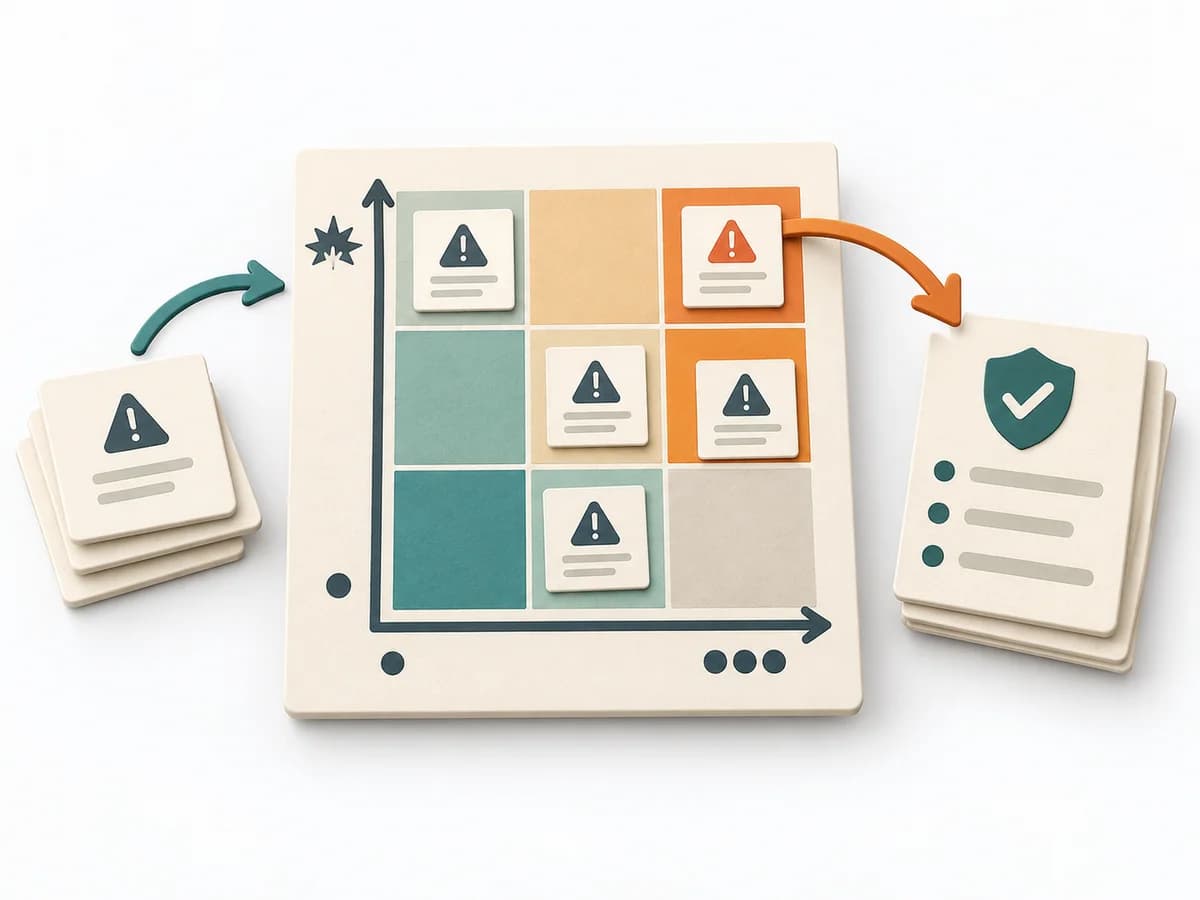
Red teaming examines a decision, plan, or system from an independent challenge perspective. An authorized brief defines boundaries and stop rules. The investigation challenges assumptions and identifies plausible failure paths.
Fictional example
Method-specific prompts and a fictional worked example; template prompts remain empty.
Keep the challenge inside an explicit safe boundary.
**Scope:** Challenge the launch plan using documents and tabletop scenarios only. No live probing or customer data access is authorized.
Add an independent perspective where possible.
**Challenge:** If confirmation is delayed while inventory stays reserved, can support determine the authoritative state?
Describe mechanism and consequence without personal criticism.
**Finding:** The plan does not identify a reconciliation owner or user recovery path. This is a planning gap, not a production defect.
Record a criterion and follow-up date.
**Response:** Product and operations add a procedure and test it in another tabletop.
The U.S. Army handbook is a practitioner source for structured independent challenge. This guide limits exercises to an approved scope.
Scope

Goal
Keep the challenge inside an explicit safe boundary.
Inputs for this step
Actions
Output
Authorized challenge brief
Authorized challenge brief
Quality check
Can everyone state what is out of scope?
Timing: About 10–20 minutes; schedule data or clarification work separately.
Perspectives

Goal
Add an independent perspective where possible.
Inputs for this step
Actions
Output
Challenge roles and assumptions
Challenge roles and assumptions
Quality check
Can the group challenge its own assumptions?
Pitfall
The team mirrors decision owners. Invite an independent reviewer.
Timing: About 10–20 minutes; schedule data or clarification work separately.
Challenge
Goal
Describe mechanism and consequence without personal criticism.
Inputs for this step
Actions
Output
Prioritized vulnerabilities
Prioritized vulnerabilities
Quality check
Is each finding plausible and specific?
Pitfall
Speculation is presented as fact. Add evidence and uncertainty.
Timing: About 10–20 minutes; schedule data or clarification work separately.
Response

Goal
Record a criterion and follow-up date.
Inputs for this step
Actions
Output
Decision and mitigation log
Decision and mitigation log
Quality check
Can the owner verify risk reduction?
Pitfall
Findings have no decision or owner. Assign owner, evidence and due date.
Timing: About 10–20 minutes; schedule data or clarification work separately.
What comes out at the end
Sketch: what the artifact looks like
Versioned record of question, evidence, result, uncertainty, owners and next review date.
Track date, scope, sources, assumptions and changes; assign an owner and review for ongoing practice or initiatives.
Plan a session or initiative to match the actual scope of work.
To be confirmed
To be confirmed
Prepare the full method Time: 60–240 minutes for a tabletop challenge; remediation and retest need follow-up.
Complete this worksheet on paper or in your own document during the work.
Keep the challenge inside an explicit safe boundary.
...
Add an independent perspective where possible.
...
Describe mechanism and consequence without personal criticism.
...
Record a criterion and follow-up date.
...
Blank worksheet contains prompts only, with no example data.
Expected artifact: Authorized challenge brief
Authorized challenge brief
Entry:
...
Expected artifact: Challenge roles and assumptions
Challenge roles and assumptions
Entry:
...
Expected artifact: Prioritized vulnerabilities
Prioritized vulnerabilities
Entry:
...
Expected artifact: Decision and mitigation log
Decision and mitigation log
Entry:
...
...
Method guide: https://methodatlas.meierhoff-systems.de/en/methods/red-teaming/run-sheet
Concrete filled scenario, fictional example
Fictional example for orientation. Counts and timings describe this case and are not universal requirements.
Concrete filled scenario, fictional example
Scope: Challenge the launch plan using documents and tabletop scenarios only. No live probing or customer data access is authorized.
Challenge: If confirmation is delayed while inventory stays reserved, can support determine the authoritative state?
Finding: The plan does not identify a reconciliation owner or user recovery path. This is a planning gap, not a production defect.
Response: Product and operations add a procedure and test it in another tabletop.
Decision use: The launch owner records accept, mitigate or defer rationale.
Recognize symptoms and steer against them
Quick overview, the full text is in the matching phase in the flow
Red team is treated as permission for live probing.
Use tabletop evidence unless technical access is expressly authorized.
The team mirrors decision owners.
Invite an independent reviewer.
Speculation is presented as fact.
Add evidence and uncertainty.
Findings have no decision or owner.
Assign owner, evidence and due date.
When to pause, resolve prerequisites, or choose another approach
Go to the profile for purpose, similar methods, and sources or continue to the next method in the catalog.