Plan my session
Plan a concrete work block with agenda, roles, preparation, and a copyable result artifact.
Session: Polarity Mapping
The plan translates the method into a concrete facilitated work block. Your inputs flow directly into the session brief and work artifact.
Method session with 3-12. The plan uses the existing method logic and the runsheet.
RunsheetUse the session for shared understanding. Contributions are collected visibly, assumptions are aligned, and open differences remain traceable in the artifact.
The session works directly toward Polarity Map. After the session, the artifact should be shareable, reviewable, or reusable.
- 1
Phase 1: Polarity instead of problem
10-15 minCheck together whether the tension really is a polarity: both poles are needed, the tension is lasting, and there is no clearly right pole. If yes, name both poles. Hint: If one pole is clearly preferred and the other is only a transitional workaround, it is a problem, not a polarity. Switch methods.
FacilitatorPolarity Map - 2
Phase 2: Benefits per pole
20-25 minCollect benefits per pole (upper left and upper right fields). Capture at least five per pole. Ground them in concrete examples. Hint: If one pole receives far fewer benefits, the group is not balanced. Introduce a devil's-advocate role for the underrepresented pole.
FacilitatorWarning Signs - 3
Phase 3: Risks of overemphasis
20-25 minAsk for each pole: what happens if this pole is pursued alone and the other is neglected? Fill the lower quadrant per pole. Use examples from real incidents where this happened. Hint: Risks of overemphasis are the real warning signs. They show when the pendulum has swung too far.
FacilitatorBalance Actions - 4
Phase 4: Formulate warning signs
15-20 minDefine concrete, observable warning signs per pole (for example metrics, behavior patterns, mood) that indicate the pendulum has swung too far toward this pole. At least three per pole. Hint: Warning signs must be measurable or clearly observable. "It feels wrong" is not a warning sign; "time-to-decision exceeds 14 days" is one.
FacilitatorPolarity Map - 5
Phase 5: Balancing actions
15-20 minDefine one concrete action per warning sign that pulls toward the other pole. Name an owner and trigger for every action. Hint: Actions are not executed all at once, but when a warning sign appears. The owner must be in a position to initiate the action.
OwnerWarning Signs - 6
Publish artifact
10 minCheck the artifact for completeness, define location, set version or status, and name review recipients.
OwnerPolarity Map
Session Brief
For invitations, boards, tickets, PR descriptions, or workshop notes.
session-brief.md
Session Brief: Polarity Mapping
Goal
Artifact: Polarity Map
Working Question
Which poles are in a lasting tension, what benefits does each pole offer, and which warning signs and actions keep the pendulum in balance?
Context
Description of the tension in 2-3 sentences; previous attempts to solve it as a problem and why it returned; examples of both poles in daily work; affected stakeholders.
Setup
- Format: Method session
- Duration: 1-2 h
- Mode: Workshop
- Participants: One facilitator with polarity experience who defines poles cleanly and balances the discussion; three to twelve participants with a position on the tension; one scribe for warning signs and balancing actions.
- Owner: One facilitator with polarity experience who defines poles cleanly and balances the discussion
- Participation mode: Team round, shared work and alignment
- Outcome logic: Finish artifact
Participation Logic
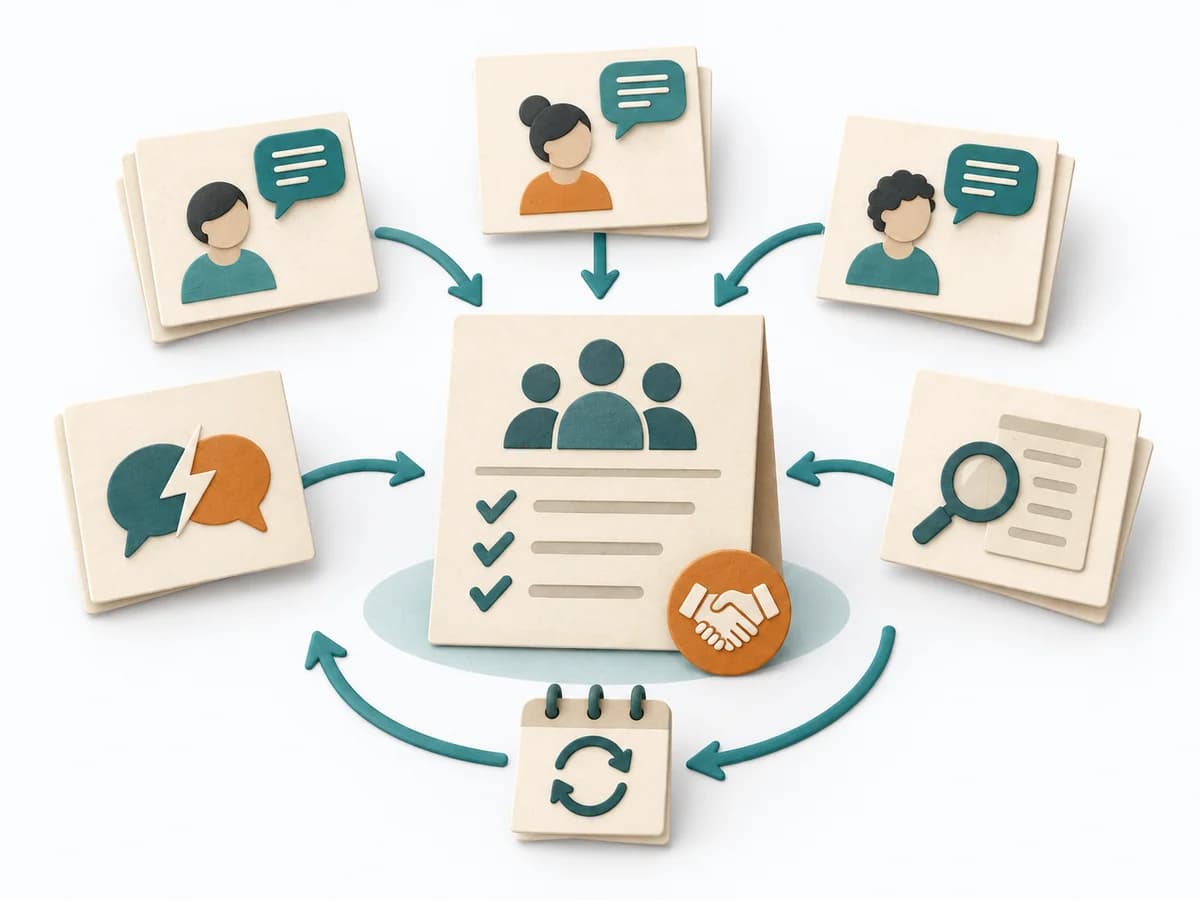
Use the session for shared understanding. Contributions are collected visibly, assumptions are aligned, and open differences remain traceable in the artifact.
Outcome Logic
The session works directly toward Polarity Map. After the session, the artifact should be shareable, reviewable, or reusable.
Input
Whiteboard or Miro board with a four-field grid (two poles horizontally, Benefits at the top and Risks of overemphasis at the bottom); sticky notes in two colors for the two poles; markers; timer.
Preparation
Prepare a four-field grid, Pole A on the left, Pole B on the right. Benefits at the top, risks of overemphasis at the bottom. Rule: the tension is a polarity, not a problem. There is no single right end state.
Agenda
-
Phase 1: Polarity instead of problem (10-15 min) Owner: Facilitator Action: Check together whether the tension really is a polarity: both poles are needed, the tension is lasting, and there is no clearly right pole. If yes, name both poles. Hint: If one pole is clearly preferred and the other is only a transitional workaround, it is a problem, not a polarity. Switch methods. Output: Polarity Map
-
Phase 2: Benefits per pole (20-25 min) Owner: Facilitator Action: Collect benefits per pole (upper left and upper right fields). Capture at least five per pole. Ground them in concrete examples. Hint: If one pole receives far fewer benefits, the group is not balanced. Introduce a devil's-advocate role for the underrepresented pole. Output: Warning Signs
-
Phase 3: Risks of overemphasis (20-25 min) Owner: Facilitator Action: Ask for each pole: what happens if this pole is pursued alone and the other is neglected? Fill the lower quadrant per pole. Use examples from real incidents where this happened. Hint: Risks of overemphasis are the real warning signs. They show when the pendulum has swung too far. Output: Balance Actions
-
Phase 4: Formulate warning signs (15-20 min) Owner: Facilitator Action: Define concrete, observable warning signs per pole (for example metrics, behavior patterns, mood) that indicate the pendulum has swung too far toward this pole. At least three per pole. Hint: Warning signs must be measurable or clearly observable. "It feels wrong" is not a warning sign; "time-to-decision exceeds 14 days" is one. Output: Polarity Map
-
Phase 5: Balancing actions (15-20 min) Owner: Owner Action: Define one concrete action per warning sign that pulls toward the other pole. Name an owner and trigger for every action. Hint: Actions are not executed all at once, but when a warning sign appears. The owner must be in a position to initiate the action. Output: Warning Signs
-
Publish artifact (10 min) Owner: Owner Action: Check the artifact for completeness, define location, set version or status, and name review recipients. Output: Polarity Map
Closeout
- Update result artifact: Polarity Map
- Define location, version, and review recipients.
- Define owner, next step, and review date.
Work artifact
Pre-filled starting point based on the matching template.
work-artifact.md
Polarity Map: Polarity Mapping
Working Question
Which poles are in a lasting tension, what benefits does each pole offer, and which warning signs and actions keep the pendulum in balance?
Context
Description of the tension in 2-3 sentences; previous attempts to solve it as a problem and why it returned; examples of both poles in daily work; affected stakeholders.
Participants
- Owner: One facilitator with polarity experience who defines poles cleanly and balances the discussion
- Participants: One facilitator with polarity experience who defines poles cleanly and balances the discussion; three to twelve participants with a position on the tension; one scribe for warning signs and balancing actions.
Input
Whiteboard or Miro board with a four-field grid (two poles horizontally, Benefits at the top and Risks of overemphasis at the bottom); sticky notes in two colors for the two poles; markers; timer.
Template
Polarity Mapping Canvas
Context
What is this method used for?
Core question
Which question should be answered at the end?
Input
Which data, observations, or materials are available?
Working area
- Area 1:
- Area 2:
- Area 3:
- Relationships / patterns:
Output artifacts
- Polarity Map:
- Warning Signs:
- Balance Actions:
Open questions
- ...
Next step
Owner, date, success signal.
Completion Check
- Polarity Map is complete enough for review:
- Location:
- Version / status:
- Review by:
- Next step:
Next Step
- Review result
- Mark open questions
- Schedule review or decision
Polarity Mapping Working Template
View templateCompact working template for Polarity Mapping with context, input, output artifacts, and next step.canvas
polarity-mapping-working-template.md
Compact working template for Polarity Mapping with context, input, output artifacts, and next step.
Polarity Mapping Canvas
Context
What is this method used for?
Core question
Which question should be answered at the end?
Input
Which data, observations, or materials are available?
Working area
- Area 1:
- Area 2:
- Area 3:
- Relationships / patterns:
Output artifacts
- Polarity Map:
- Warning Signs:
- Balance Actions:
Open questions
- ...
Next step
Owner, date, success signal.
- Working question, owner, and target artifact are visible.
- The result fits Polarity Map.
- Create one entry per polarity with date. Whenever a balancing action is triggered, add an update section: warning sign, action, effect. The map remains a living document, not a one-off workshop output.
- Open questions are noted as follow-ups.
- The next review or decision point is scheduled.