Complete firstConcrete subject
Set one concrete service and its knowledge boundary; gather known roles, artifacts, and locations.
Without a boundary the run becomes generic and untestable.
A practical method guide: clarify prerequisites and materials, understand the complete process, and look up outputs, pitfalls, and stop criteria.
What needs to be finished first
Set one concrete service and its knowledge boundary; gather known roles, artifacts, and locations.
Facilitator · domain representatives · knowledge holders · transfer owners
What needs to be ready before start
Domain list, role overview, existing documents, systems, and dependencies
Facilitator · domain representatives · knowledge holders · transfer owners
Set one concrete service and its knowledge boundary; gather known roles, artifacts, and locations. Prepare real cases, sources, and boundaries.
90–180 minutes for one domain; add validation with knowledge holders.
Create a workspace with Domain scope · Knowledge register · Assessment · Risk map · Transfer plan; keep example values separate from live data.
The one question this method answers
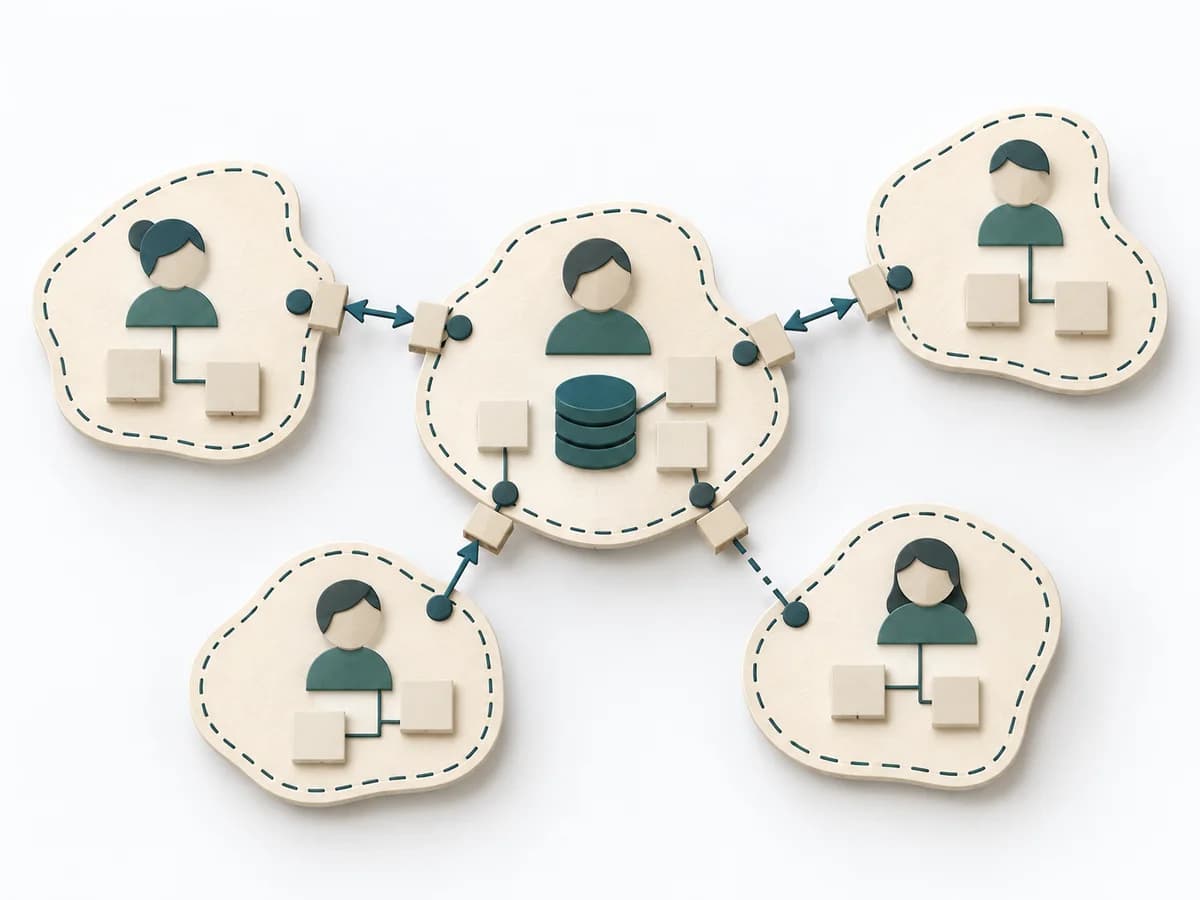
Which critical knowledge exists where, with whom, and at what risk to the work?
Phases with goal, actions, output and pitfall
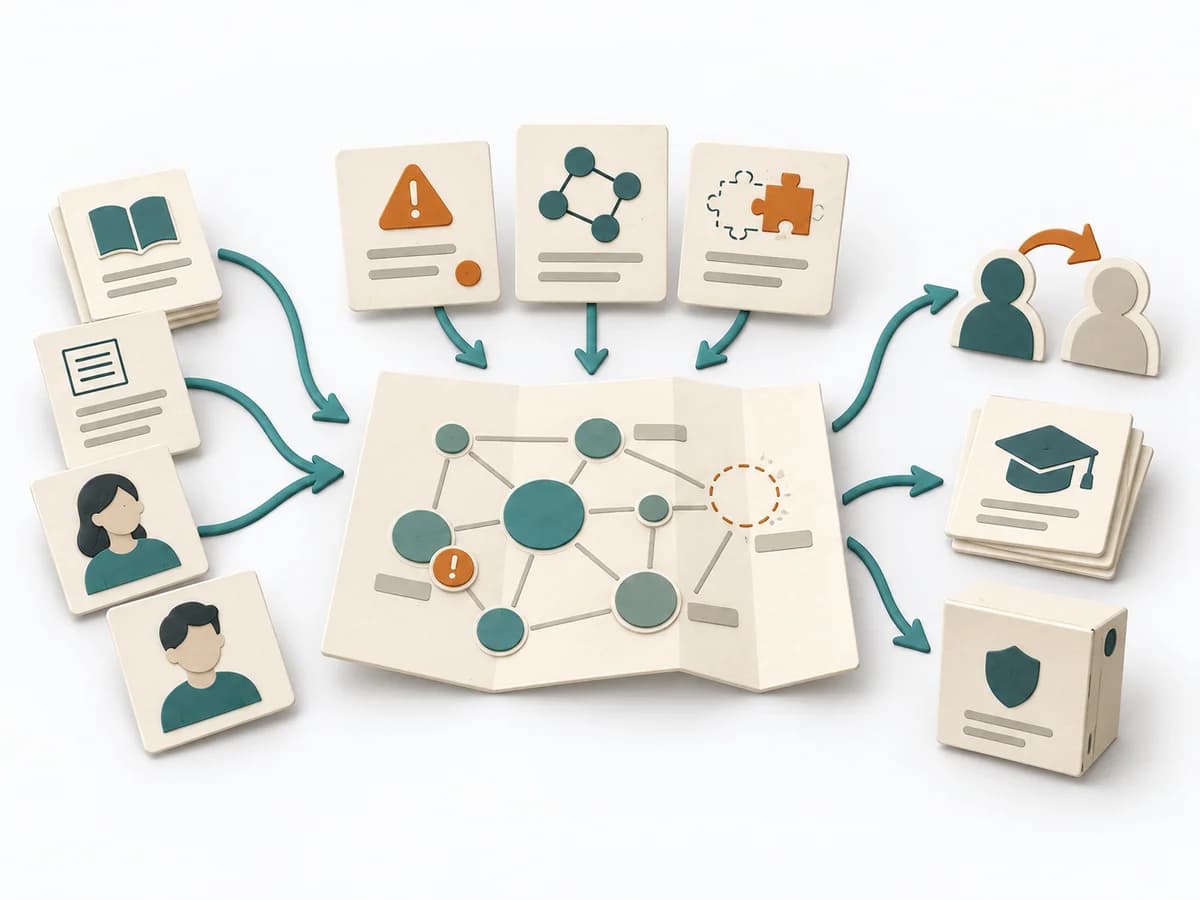
Zuerst werden Wissensdomänen, Quellen und Träger gesammelt. Danach bewertet das Team Kritikalität, Abhängigkeiten und fehlende Bausteine und plant Transfers oder Sicherungen. Am Ende entsteht eine Karte, die Lern- und Übergabeaufwand gezielt steuerbar macht.
Fictional example
Fictional values are assigned to explicit method fields.
| Knowledge area | Holder | Artifact | Location | Currency | Criticality | Transfer |
|---|---|---|---|---|---|---|
| Slot rulesRecord knowledge area with holder, artifact, risk, and transfer. | Lea | Pickup wiki page | Confluence / Ops | Checked 2 Oct | High, used daily | Kim handles the next exception |
| Warehouse exceptionsRecord knowledge area with holder, artifact, risk, and transfer. | Murat | No artifact yet | Personal knowledge | Current only verbally | Critical, single-person risk | Document three cases by 18 Oct |
All details are fictional.
Scope
Goal
Domain scope: Define scope and knowledge domains around one concrete service.
Inputs for this step
Actions
Output
Domain scope
Define scope and knowledge domains around one concrete service
Quality check
Is the scope tied to one service and a clear boundary?
Pitfall
When the scope is too broad or chosen without a concrete service, the knowledge cannot be bounded meaningfully afterward. Anchor scope and knowledge domains to one concrete service and a clear boundary.
Timing: Use the time needed within the overall frame; close the step only after its check passes.
Knowledge
Goal
Knowledge register: Record knowledge holders, artifacts, and locations for each domain.
Inputs for this step
Actions
Output
Knowledge register
Record knowledge holders, artifacts, and locations for each domain
Quality check
Does each entry name knowledge, holder, artifact, and location?
Pitfall
When entries name only a topic without a holder or location, the knowledge cannot be located again later. Capture knowledge, holder, artifact, and location together for every entry.
Timing: Use the time needed within the overall frame; close the step only after its check passes.
Assessment
Goal
Assessment: Assess criticality, currency, and dependencies with evidence.
Inputs for this step
Actions
Output
Assessment
Assess criticality, currency, and dependencies with evidence
Quality check
Are criticality and currency justified by use or incidents?
Pitfall
When criticality and currency are only guessed rather than evidenced, later prioritization gets distorted. Ground criticality and currency in actual use or incidents, not assumption.
Timing: Use the time needed within the overall frame; close the step only after its check passes.
Risks
Goal
Risk map: Mark knowledge gaps, single-person risks, and stale artifacts.
Inputs for this step
Actions
Output
Risk map
Mark knowledge gaps, single-person risks, and stale artifacts
Quality check
Are missing knowledge and missing documentation separated?
Pitfall
When missing knowledge and missing documentation are mixed together, the wrong actions follow. Mark knowledge gaps and documentation gaps separately and make single-person risks visible.
Timing: Use the time needed within the overall frame; close the step only after its check passes.
Transfer
Goal
Transfer plan: Plan transfer actions with owner, audience, and review date.
Inputs for this step
Actions
Output
Transfer plan
Plan transfer actions with owner, audience, and review date
Quality check
Can every transfer action be checked through a real task?
Pitfall
When transfer actions are planned without a real task, it stays unclear whether the transfer actually worked. Tie every action to a real task with an owner, target audience, and review date.
Timing: Use the time needed within the overall frame; close the step only after its check passes.
What comes out at the end
Sketch: what the artifact looks like
Transfer plan with evidence, open points, owner, and review.
Record date, owner, source state, and review date; preserve earlier versions.
Plan subject, participation, complete flow, and review.
To be confirmed
To be confirmed
Complete run Time: 90–180 minutes for one domain; add validation with knowledge holders.
Complete this worksheet on paper or in your own document during the work.
| Knowledge area | Holder | Artifact | Location | Currency | Criticality | Transfer |
|---|---|---|---|---|---|---|
| Slot rules | ||||||
| Warehouse exceptions |
The blank worksheet contains prompts only.
Reference source · original teaching example
Expected artifact: Domain scope
Define scope and knowledge domains around one concrete service
Entry:
...
Expected artifact: Knowledge register
Record knowledge holders, artifacts, and locations for each domain
Entry:
...
Expected artifact: Assessment
Assess criticality, currency, and dependencies with evidence
Entry:
...
Expected artifact: Risk map
Mark knowledge gaps, single-person risks, and stale artifacts
Entry:
...
Expected artifact: Transfer plan
Plan transfer actions with owner, audience, and review date
Entry:
...
...
Method guide: https://methodatlas.meierhoff-systems.de/en/methods/knowledge-mapping/run-sheet
Concrete filled scenario, fictional example
Fictional example for orientation. Counts and timings describe this case and are not universal requirements.
Concrete filled scenario, fictional example
| Knowledge area | Holder | Artifact | Location | Currency | Criticality | Transfer |
|---|---|---|---|---|---|---|
| Slot rules | Lea | Pickup wiki page | Confluence / Ops | Checked 2 Oct | High, used daily | Kim handles the next exception |
| Warehouse exceptions | Murat | No artifact yet | Personal knowledge | Current only verbally | Critical, single-person risk | Document three cases by 18 Oct |
Recognize symptoms and steer against them
Quick overview, the full text is in the matching phase in the flow
When the scope is too broad or chosen without a concrete service, the knowledge cannot be bounded meaningfully afterward.
Anchor scope and knowledge domains to one concrete service and a clear boundary.
When entries name only a topic without a holder or location, the knowledge cannot be located again later.
Capture knowledge, holder, artifact, and location together for every entry.
When criticality and currency are only guessed rather than evidenced, later prioritization gets distorted.
Ground criticality and currency in actual use or incidents, not assumption.
When missing knowledge and missing documentation are mixed together, the wrong actions follow.
Mark knowledge gaps and documentation gaps separately and make single-person risks visible.
When transfer actions are planned without a real task, it stays unclear whether the transfer actually worked.
Tie every action to a real task with an owner, target audience, and review date.
When to pause, resolve prerequisites, or choose another approach
Go to the profile for purpose, similar methods, and sources or continue to the next method in the catalog.