Complete firstClear scope
A recurring exercise program with an approved scenario, safety boundaries, and relevant operations roles.
Without a boundary, data, perspectives, or flows become mixed.
A practical method guide: clarify prerequisites and materials, understand the complete process, and look up outputs, pitfalls, and stop criteria.
What needs to be finished first
A recurring exercise program with an approved scenario, safety boundaries, and relevant operations roles.
Relevant people and sources can be included.
What needs to be ready before start
Shared workspace, accessible sources, and a decision log.
Exercise lead · safety lead · response team · observers
Clarify the question, timeframe, data access, roles, and known uncertainties in advance.
Recurring exercise; plan preparation, execution, recovery, and action review separately.
Create a shared version. Label facts, assumptions, and decisions separately.
The one question this method answers
Can the system and response team safely detect and handle this bounded failure scenario?
Phases with goal, actions, output and pitfall
Game Day examines resilience, operational procedures, and team coordination through controlled failure exercises. Observations show which safeguards and procedures work and where further improvements are needed.
Fictional worked example
Regularly rehearse controlled failure scenarios to check resilience, procedures, and team coordination.
State learning goal, service, scenario, and environment.
Disable a read-only dependency in an isolated test environment.
Define participants, observation, kill switch, and thresholds.
No production traffic; safety lead holds immediate kill switch.
Capture alerts, system state, and response during exercise.
Alert within 2 min; fallback active; no data changes; user impact <5 min.
Record recovery, findings, owners, and next exercise.
Fictional finding: dashboard omits dependency. Owner adds visibility; retest next quarter.
Fictional exercise: a read-only dependency fails in a production-like test environment. Goal: detect alert, activate fallback, keep user impact under 5 minutes. Safety lead can stop at any time. Exercise reveals a missing dashboard alert; no production traffic is injected.
Objective
Goal
Is the scenario approved and bounded?
Inputs for this step
Actions
Output
Bounded, approved failure scenario
Bounded, approved failure scenario
Quality check
Is the scenario approved and bounded?
Pitfall
Fault injected beyond safe boundary Test blast radius and kill switch; safety lead stops at threshold.
Timing: Part of the agreed work block; research may be separate.
Boundaries

Goal
Can anyone stop the exercise?
Inputs for this step
Actions
Output
Participant, communications, and safety plan
Participant, communications, and safety plan
Quality check
Can anyone stop the exercise?
Pitfall
Exercise surprises stakeholders Communicate scenario, time, and possible impact in advance.
Timing: Part of the agreed work block; research may be separate.
Execution
Goal
Is real user protection maintained?
Inputs for this step
Actions
Output
Observed system and team response
Observed system and team response
Quality check
Is real user protection maintained?
Pitfall
Only technology is exercised Include operations, communications, and decision roles.
Timing: Part of the agreed work block; research may be separate.
Learning

Goal
Do gaps feed procedures and the next exercise?
Inputs for this step
Actions
Output
Tracked findings and retest plan
Tracked findings and retest plan
Quality check
Do gaps feed procedures and the next exercise?
Pitfall
Findings are not fed back Feed actions into runbooks, alerting, and the next scenario.
Timing: Part of the agreed work block; research may be separate.
What comes out at the end
Sketch: what the artifact looks like
Versioned result with question, evidence, open issues, next action, ownership, and review date.
Record date, scope, sources, and changes. Preserve earlier observations.
Prepare Game Day with a clear question, roles, and sources.
To be confirmed
To be confirmed
Plan the full method Time: Set according to scope and available evidence
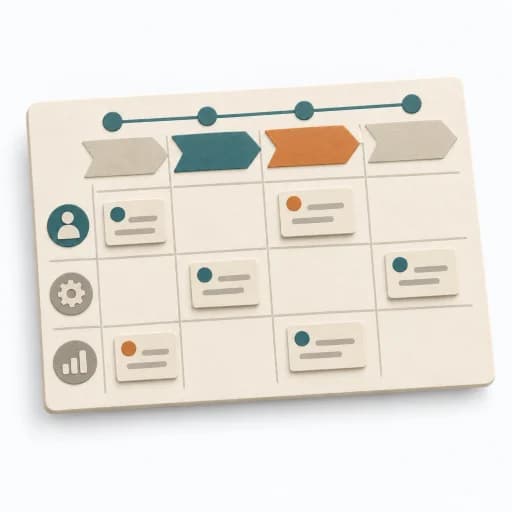
Complete this worksheet on paper or in your own document during the work.
State learning goal, service, scenario, and environment.
...
Define participants, observation, kill switch, and thresholds.
...
Capture alerts, system state, and response during exercise.
...
Record recovery, findings, owners, and next exercise.
...
Blank worksheet: start with a bounded question. Enter observed facts only, mark assumptions, and record open questions and sources.
Conduct game days regularly · AWS Well-Architected
Expected artifact: Bounded, approved failure scenario
Bounded, approved failure scenario
Entry:
...
Expected artifact: Participant, communications, and safety plan
Participant, communications, and safety plan
Entry:
...
Expected artifact: Observed system and team response
Observed system and team response
Entry:
...
Expected artifact: Tracked findings and retest plan
Tracked findings and retest plan
Entry:
...
...
Method guide: https://methodatlas.meierhoff-systems.de/en/methods/game-day/run-sheet
Concrete filled scenario, fictional example
Fictional example for orientation. Counts and timings describe this case and are not universal requirements.
Concrete filled scenario, fictional example
Fictional exercise: a read-only dependency fails in a production-like test environment. Goal: detect alert, activate fallback, keep user impact under 5 minutes. Safety lead can stop at any time. Exercise reveals a missing dashboard alert; no production traffic is injected.
All names and values are invented for illustration. Unresolved explanations remain questions.
Recognize symptoms and steer against them
Quick overview, the full text is in the matching phase in the flow
Fault injected beyond safe boundary
Test blast radius and kill switch; safety lead stops at threshold.
Exercise surprises stakeholders
Communicate scenario, time, and possible impact in advance.
Only technology is exercised
Include operations, communications, and decision roles.
Findings are not fed back
Feed actions into runbooks, alerting, and the next scenario.
When to pause, resolve prerequisites, or choose another approach
Go to the profile for purpose, similar methods, and sources or continue to the next method in the catalog.