Complete firstClear scope
Multiple named bounded contexts with known models and at least one relevant integration flow.
Without a boundary, data, perspectives, or flows become mixed.
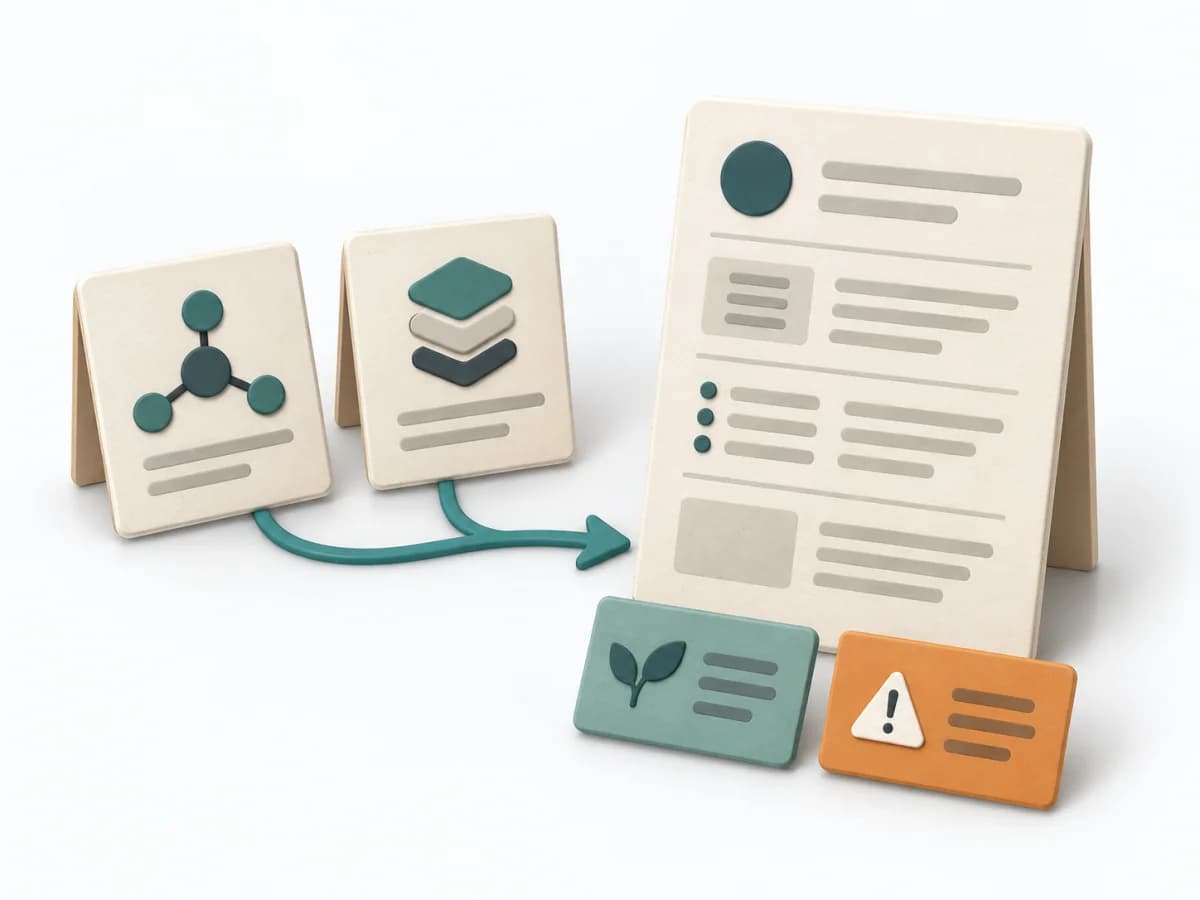
A practical method guide: clarify prerequisites and materials, understand the complete process, and look up outputs, pitfalls, and stop criteria.
What needs to be finished first
Multiple named bounded contexts with known models and at least one relevant integration flow.
Relevant people and sources can be included.
What needs to be ready before start
Shared workspace, accessible sources, and a decision log.
Domain experts · tech leads · facilitator
Clarify the question, timeframe, data access, roles, and known uncertainties in advance.
2–4 hours for a medium domain; complex landscapes need focused follow-up sessions.
Create a shared version. Label facts, assumptions, and decisions separately.
The one question this method answers
Which models apply where, and how do contexts influence one another when collaborating?
Phases with goal, actions, output and pitfall
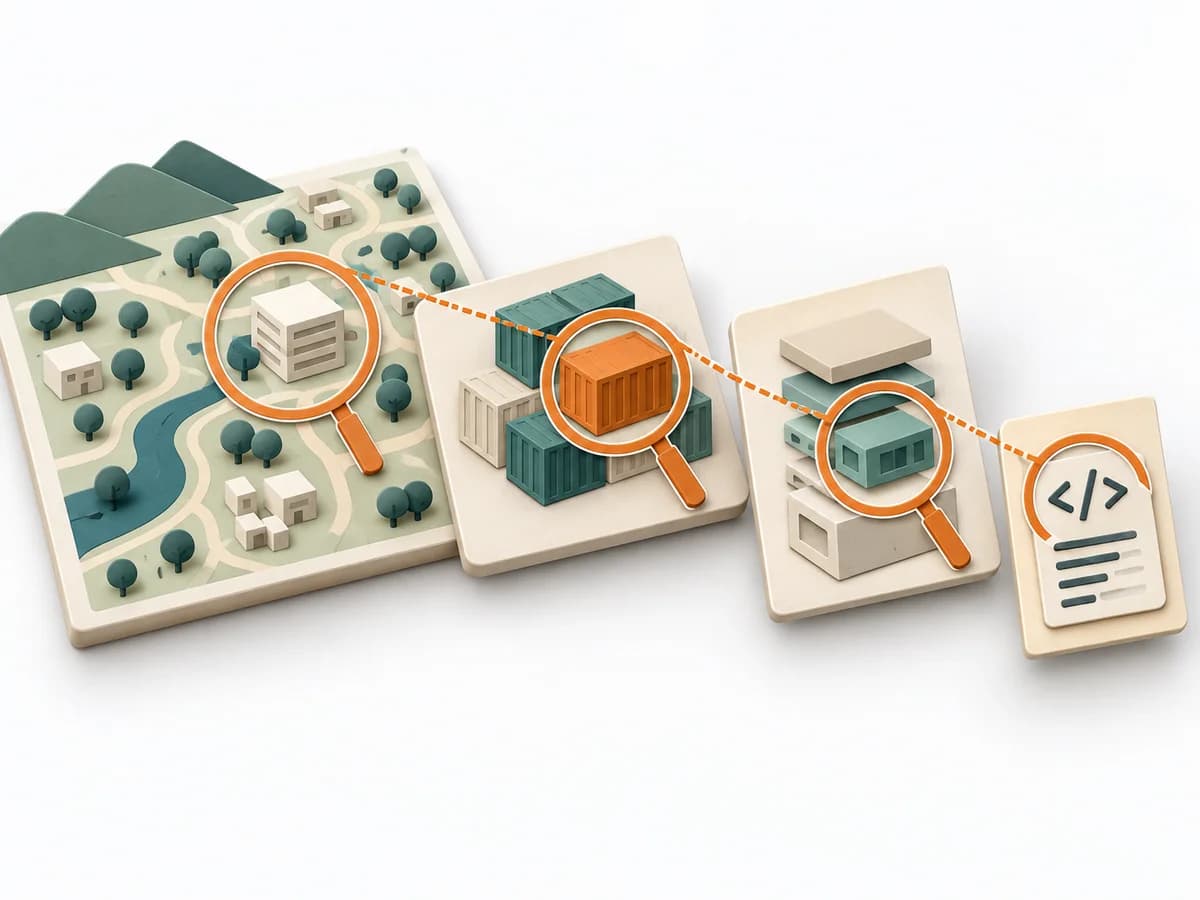
A context map shows bounded contexts and their integration relationships, dependencies, and translation boundaries. It makes visible where models interact and where clarification is needed.
Fictional worked example
Show bounded contexts and their integration relationships, dependencies, and translation boundaries.
Name context boundary, model owner, and local terms.
Upstream: product terms and status codes.
Show relationship, direction, interface, and exchanged information.
Downstream; ACL translates external status codes into local booking rules.
Record pattern, teams, and actual collaboration.
Publishes BillingCompleted event; booking consumes it.
Record ambiguities, translation gaps, and next clarification.
Fictional finding: “reserved” means different things in two contexts; align glossary.
Fictional platform: “Catalog” provides product data; “Booking” consumes it in an upstream/downstream relationship. An anti-corruption layer translates external status codes into booking terms. “Billing” publishes events consumed by booking. Arrows record direction; they do not assert team ownership.
Contexts
Goal
Is each context internally coherent?
Inputs for this step
Actions
Output
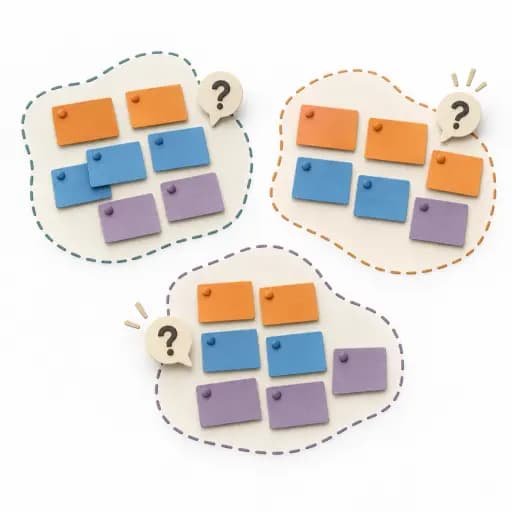
Bounded contexts and their language
Bounded contexts and their language
Quality check
Is each context internally coherent?
Pitfall
Boundaries follow system names alone Use language, rules, and model ownership as boundary evidence.
Timing: Part of the agreed work block; research may be separate.
Relationships
Goal
Is dependency direction clear?
Inputs for this step
Actions
Output
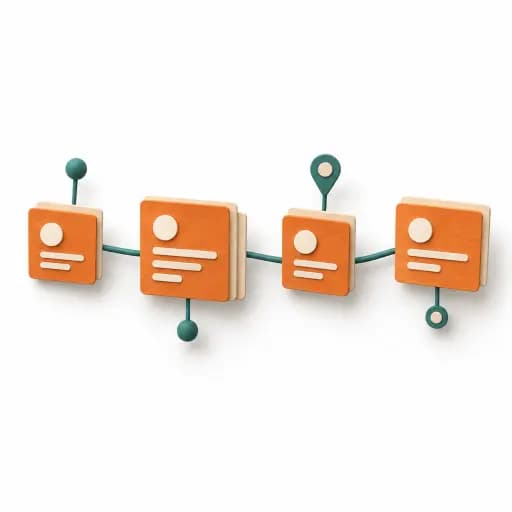
Directed dependency and integration map
Directed dependency and integration map
Quality check
Is dependency direction clear?
Pitfall
Arrow direction is ambiguous Define an upstream/downstream legend and verify each relationship.
Timing: Part of the agreed work block; research may be separate.
Integration
Goal
Do both sides understand the pattern?
Inputs for this step
Actions
Output
Agreed relationship patterns between contexts
Agreed relationship patterns between contexts
Quality check
Do both sides understand the pattern?
Pitfall
Pattern assigned without team reality Agree the pattern with both teams and actual delivery relationship.
Timing: Part of the agreed work block; research may be separate.
Clarification
Goal
Has the map been validated as a hypothesis?
Inputs for this step
Actions
Output
Open model and integration risks
Open model and integration risks
Quality check
Has the map been validated as a hypothesis?
Pitfall
Map frozen as target architecture Separate current relationship from desired change; update with evidence.
Timing: Part of the agreed work block; research may be separate.
What comes out at the end
Sketch: what the artifact looks like
Versioned result with question, evidence, open issues, next action, ownership, and review date.
Record date, scope, sources, and changes. Preserve earlier observations.
Prepare Context Map with a clear question, roles, and sources.
To be confirmed
To be confirmed
Plan the full method Time: Set according to scope and available evidence
Complete this worksheet on paper or in your own document during the work.
Name context boundary, model owner, and local terms.
...
Show relationship, direction, interface, and exchanged information.
...
Record pattern, teams, and actual collaboration.
...
Record ambiguities, translation gaps, and next clarification.
...
Blank worksheet: start with a bounded question. Enter observed facts only, mark assumptions, and record open questions and sources.
Bounded Context · Martin Fowler
Expected artifact: Bounded contexts and their language
Bounded contexts and their language
Entry:
...
Expected artifact: Directed dependency and integration map
Directed dependency and integration map
Entry:
...
Expected artifact: Agreed relationship patterns between contexts
Agreed relationship patterns between contexts
Entry:
...
Expected artifact: Open model and integration risks
Open model and integration risks
Entry:
...
...
Method guide: https://methodatlas.meierhoff-systems.de/en/methods/context-map/run-sheet
Concrete filled scenario, fictional example
Fictional example for orientation. Counts and timings describe this case and are not universal requirements.
Concrete filled scenario, fictional example
Fictional platform: “Catalog” provides product data; “Booking” consumes it in an upstream/downstream relationship. An anti-corruption layer translates external status codes into booking terms. “Billing” publishes events consumed by booking. Arrows record direction; they do not assert team ownership.
All names and values are invented for illustration. Unresolved explanations remain questions.
Recognize symptoms and steer against them
Quick overview, the full text is in the matching phase in the flow
Boundaries follow system names alone
Use language, rules, and model ownership as boundary evidence.
Arrow direction is ambiguous
Define an upstream/downstream legend and verify each relationship.
Pattern assigned without team reality
Agree the pattern with both teams and actual delivery relationship.
Map frozen as target architecture
Separate current relationship from desired change; update with evidence.
When to pause, resolve prerequisites, or choose another approach
Go to the profile for purpose, similar methods, and sources or continue to the next method in the catalog.