Complete firstClear scope
A resolved incident worth reviewing, with participants, evidence sources, and a safe learning environment.
Without a boundary, data, perspectives, or flows become mixed.
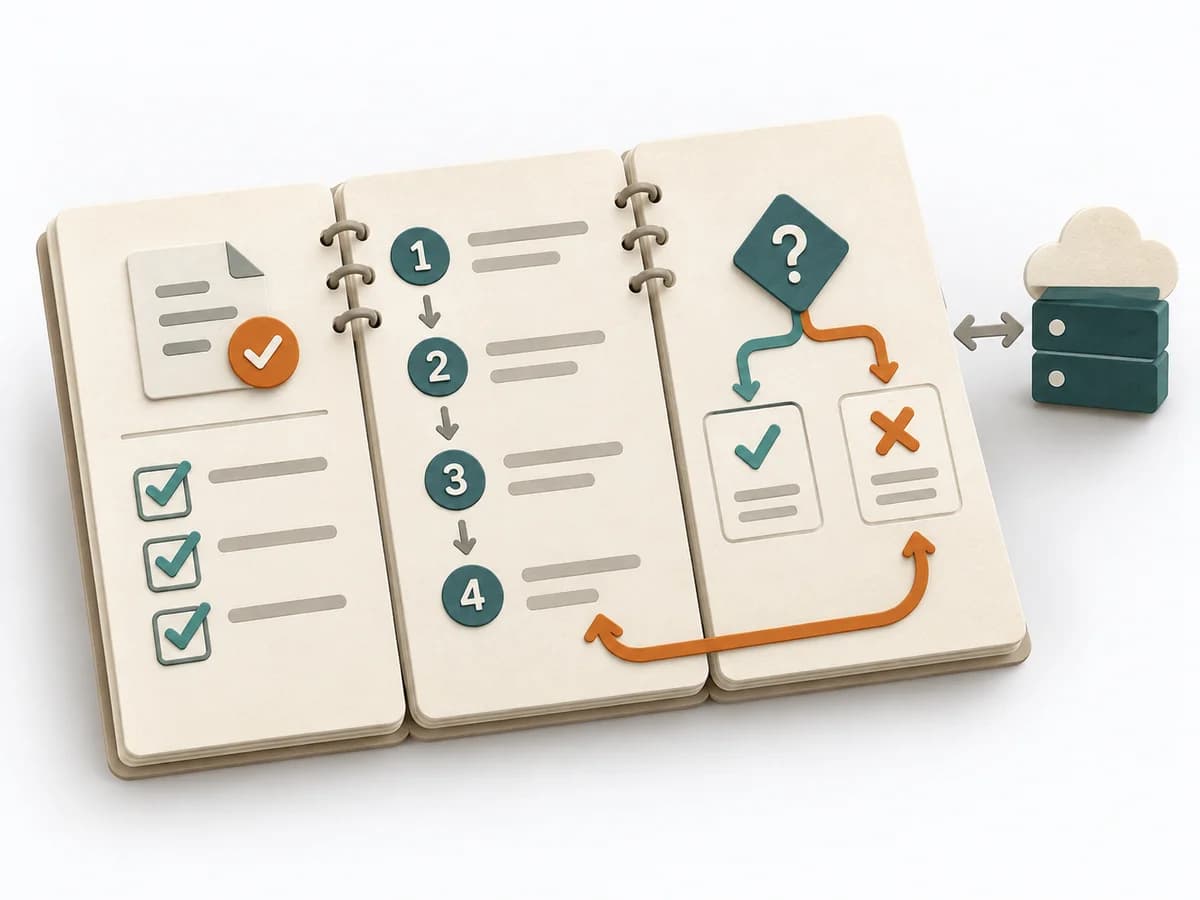
A practical method guide: clarify prerequisites and materials, understand the complete process, and look up outputs, pitfalls, and stop criteria.
What needs to be finished first
A resolved incident worth reviewing, with participants, evidence sources, and a safe learning environment.
Relevant people and sources can be included.
What needs to be ready before start
Shared workspace, accessible sources, and a decision log.
Incident responders · facilitator · action owners
Clarify the question, timeframe, data access, roles, and known uncertainties in advance.
60–90 minutes after stabilization; evidence preparation and action tracking are separate.
Create a shared version. Label facts, assumptions, and decisions separately.
The one question this method answers
Which conditions enabled the incident, and how do we reduce recurrence or impact?
Phases with goal, actions, output and pitfall
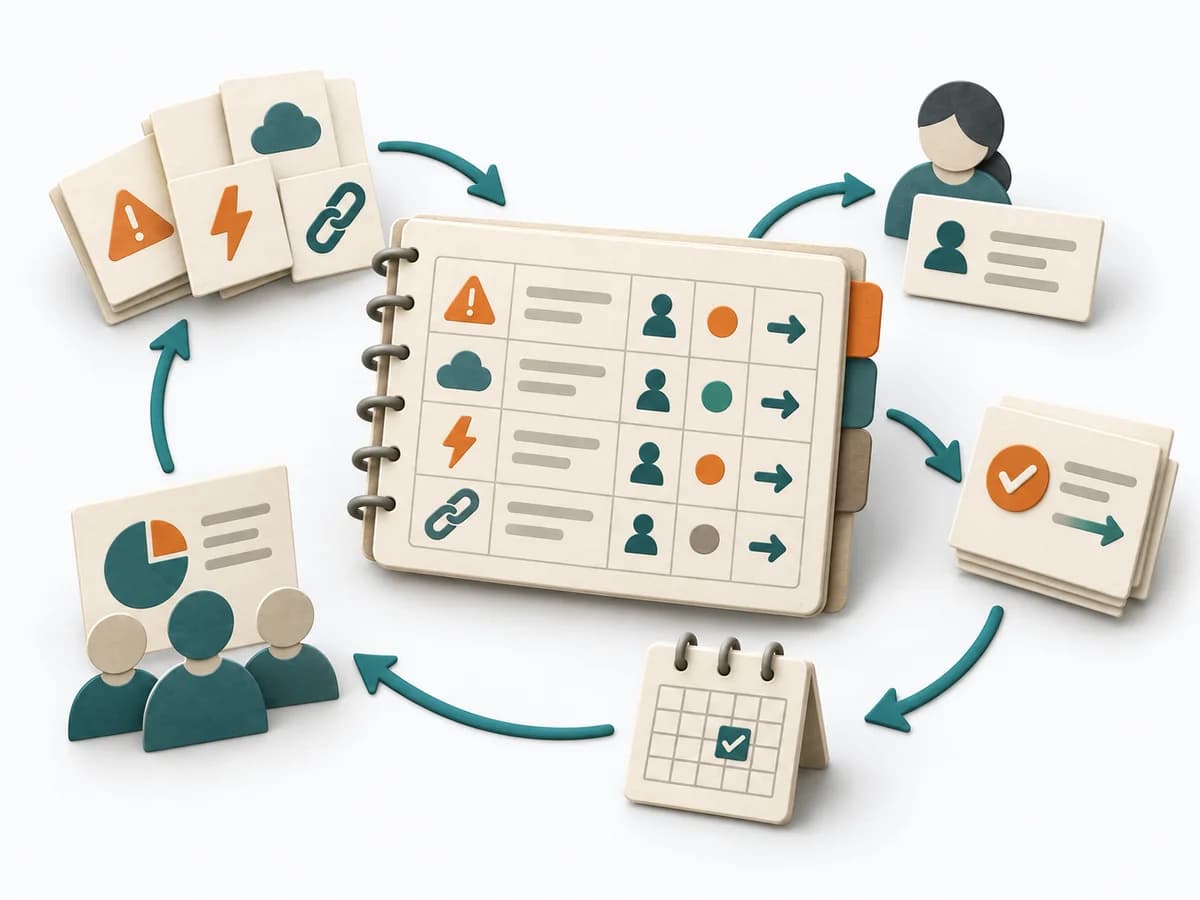
A blameless postmortem examines how system conditions and events interacted during an incident. It explains the conditions in which people acted and identifies traceable improvements.
Fictional worked example
After an incident, examine how events and system conditions interacted and derive trackable improvements.
Record incident ID, impact, period, and review purpose.
Fictional: booking confirmation delayed; 23 minutes, affected sessions documented.
Order events with source and contemporaneous knowledge.
10:02 config change; 10:14 queue alert; 10:25 rollback; 10:31 backlog cleared.
Record process, tool, and system conditions plus uncertainty.
Late alert threshold; rollback procedure unpracticed; no automatic reversion.
Add prevention/detection/mitigation action, owner, and date.
Review alert threshold (SRE, Sep 30); rehearse rollback (service team, Oct 7).
Fictional: a configuration change blocks booking confirmations for 23 minutes. Alerting shows queue growth only after 12 minutes; rollback follows manual escalation. The report records timeline, unclear alert threshold, and untested rollback. Actions: review threshold, automate rollback, assign owner and date.
Facts

Goal
Is immediate response complete?
Inputs for this step
Actions
Output
Bounded incident with preserved evidence
Bounded incident with preserved evidence
Quality check
Is immediate response complete?
Pitfall
Timeline simplified in hindsight Keep original timestamps and what was known at the time.
Timing: Part of the agreed work block; research may be separate.
Timeline
Goal
Are facts separated from interpretation?
Inputs for this step
Actions
Output
Evidence-based timeline
Evidence-based timeline
Quality check
Are facts separated from interpretation?
Pitfall
“Human error” ends analysis Ask about tools, work conditions, and safeguards.
Timing: Part of the agreed work block; research may be separate.
Conditions

Goal
Are multiple contributing conditions examined?
Inputs for this step
Actions
Output
Systemic contributing conditions without blame
Systemic contributing conditions without blame
Quality check
Are multiple contributing conditions examined?
Pitfall
Action is merely “be more careful” Change a concrete system condition and define how to measure it.
Timing: Part of the agreed work block; research may be separate.
Actions

Goal
Are actions verifiable and tracked?
Inputs for this step
Actions
Output
Trackable improvement actions
Trackable improvement actions
Quality check
Are actions verifiable and tracked?
Pitfall
Actions have no owner Give each follow-up an owner, date, and tracking location.
Timing: Part of the agreed work block; research may be separate.
What comes out at the end
Sketch: what the artifact looks like
Versioned result with question, evidence, open issues, next action, ownership, and review date.
Record date, scope, sources, and changes. Preserve earlier observations.
Prepare Blameless Postmortem with a clear question, roles, and sources.
To be confirmed
To be confirmed
Plan the full method Time: Set according to scope and available evidence
Complete this worksheet on paper or in your own document during the work.
Record incident ID, impact, period, and review purpose.
...
Order events with source and contemporaneous knowledge.
...
Record process, tool, and system conditions plus uncertainty.
...
Add prevention/detection/mitigation action, owner, and date.
...
Blank worksheet: start with a bounded question. Enter observed facts only, mark assumptions, and record open questions and sources.
Using SRE to meet reliability challenges · Google Cloud
Expected artifact: Bounded incident with preserved evidence
Bounded incident with preserved evidence
Entry:
...
Expected artifact: Evidence-based timeline
Evidence-based timeline
Entry:
...
Expected artifact: Systemic contributing conditions without blame
Systemic contributing conditions without blame
Entry:
...
Expected artifact: Trackable improvement actions
Trackable improvement actions
Entry:
...
...
Method guide: https://methodatlas.meierhoff-systems.de/en/methods/blameless-postmortem/run-sheet
Concrete filled scenario, fictional example
Fictional example for orientation. Counts and timings describe this case and are not universal requirements.
Concrete filled scenario, fictional example
Fictional: a configuration change blocks booking confirmations for 23 minutes. Alerting shows queue growth only after 12 minutes; rollback follows manual escalation. The report records timeline, unclear alert threshold, and untested rollback. Actions: review threshold, automate rollback, assign owner and date.
All names and values are invented for illustration. Unresolved explanations remain questions.
Recognize symptoms and steer against them
Quick overview, the full text is in the matching phase in the flow
Timeline simplified in hindsight
Keep original timestamps and what was known at the time.
“Human error” ends analysis
Ask about tools, work conditions, and safeguards.
Action is merely “be more careful”
Change a concrete system condition and define how to measure it.
Actions have no owner
Give each follow-up an owner, date, and tracking location.
When to pause, resolve prerequisites, or choose another approach
Go to the profile for purpose, similar methods, and sources or continue to the next method in the catalog.