View methods side by side.
Choose up to four methods. Add them using the search and share the comparison by copying its link.
| Criterion | 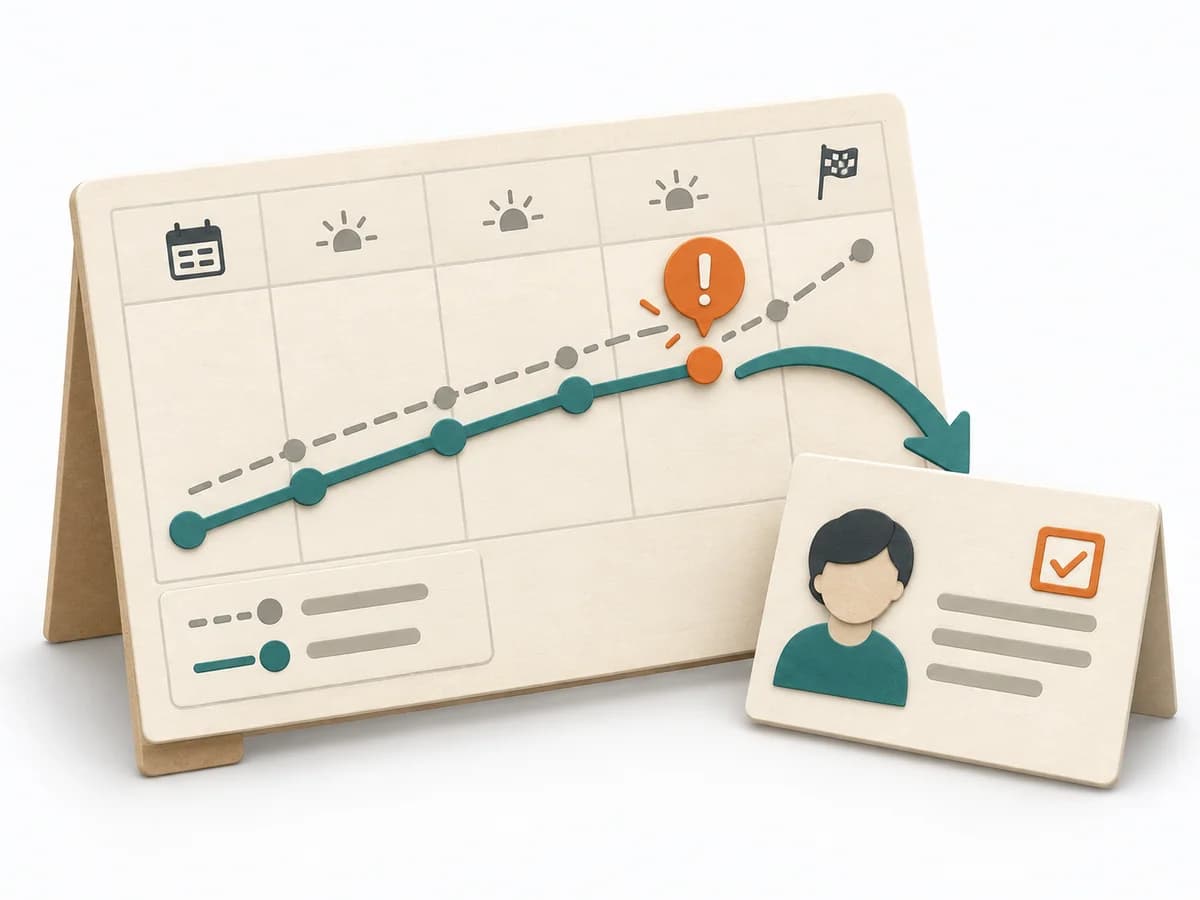 Operations Visual Management | 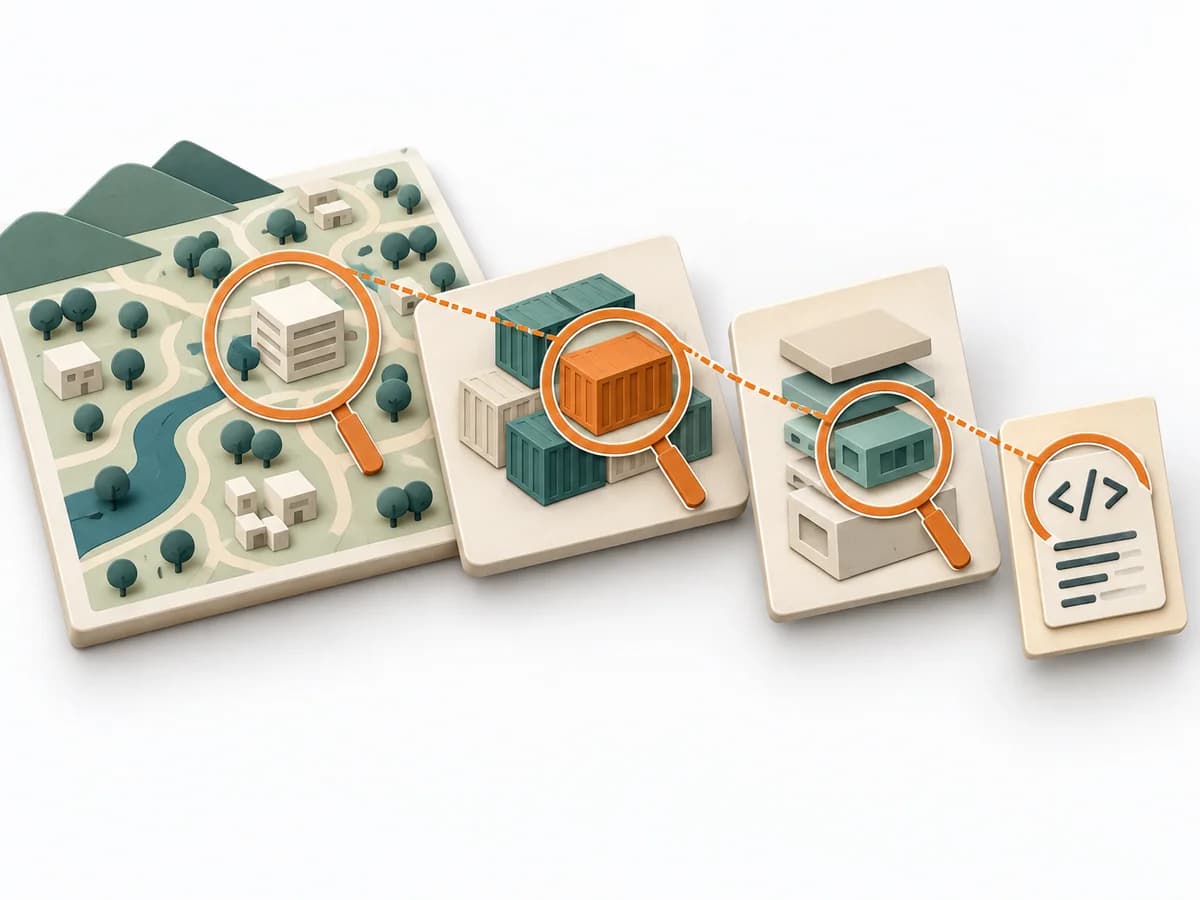 Architecture C4 Model | 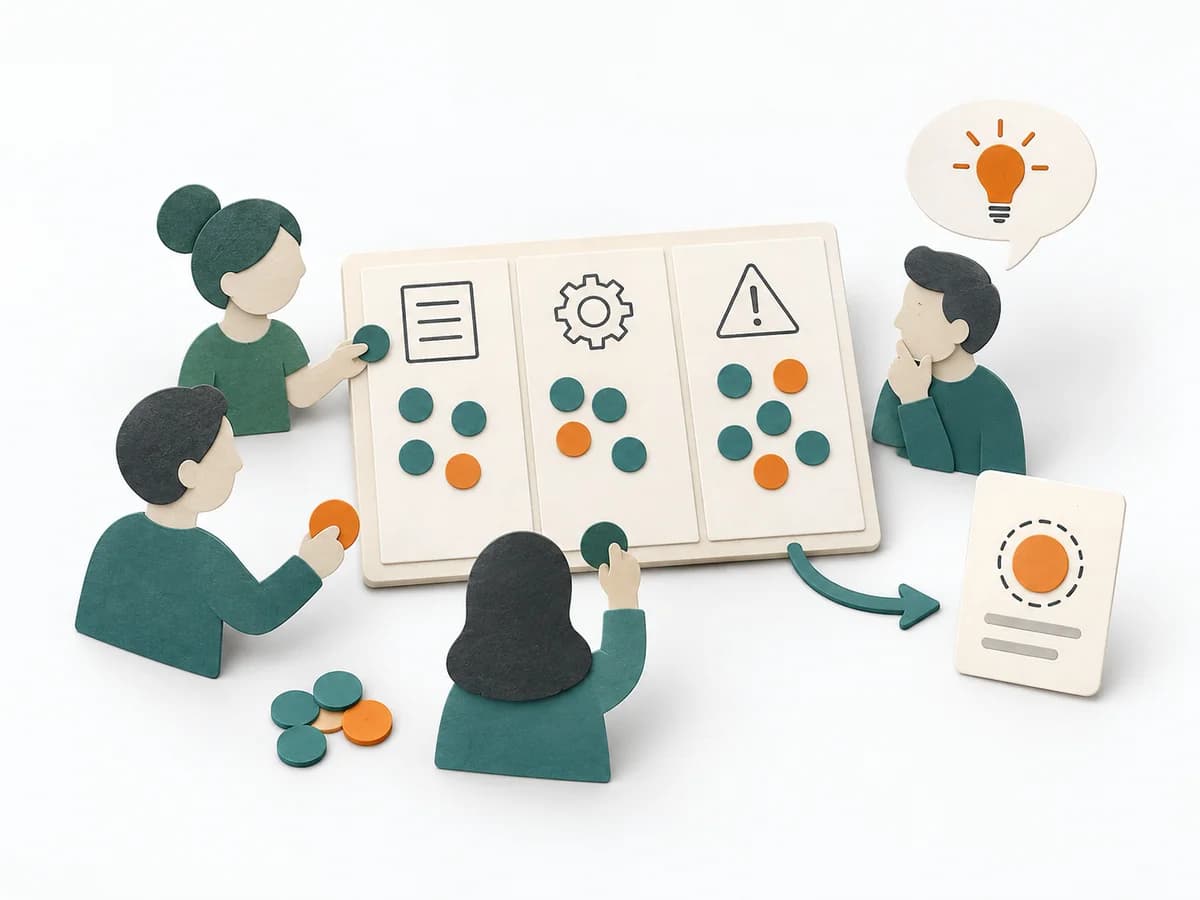 Facilitation Dot Estimation |
|---|---|---|---|
Purposedifferent | With high tempo and many parallel topics, the method makes status, deviations, and priorities visible at a glance. It reduces search effort and prevents what matters from getting lost in daily work. | The C4 Model makes a system legible across several resolution levels, from context down to code. It suits situations where different audiences need to understand the same architecture from different altitudes. | When size or effort can only be estimated roughly, Dot Estimation condenses the group's experience into a quick range. It turns individual contributions into a visible selection. The result is captured as an Effort Heatmap, Risk Signals, and Discussion Targets. |
Complexitysame | Low | Low | Low |
Timedifferent | Ongoing | 1-4 h | 5-20 min |
Participantsdifferent | 1-20 | 1-5 | 3-20 |
Formatdifferent | Workshop + async | Workshop + async | Workshop |
Outputdifferent | Visual Board, Status Indicators, Exception Cues | Context Diagram, Container Diagram, Component Diagram | Effort Heatmap, Risk Signals, Discussion Targets |
Tagsno overlap | SignalsOperationsVisual management | ArchitectureCommunicationVisualization | EstimationEffortRisk |
Often compared together
Methods with strong topical overlap with the current selection, not yet in the comparison.