View methods side by side.
Choose up to four methods. Add them using the search and share the comparison by copying its link.
| Criterion |  UX Research User Interviews | 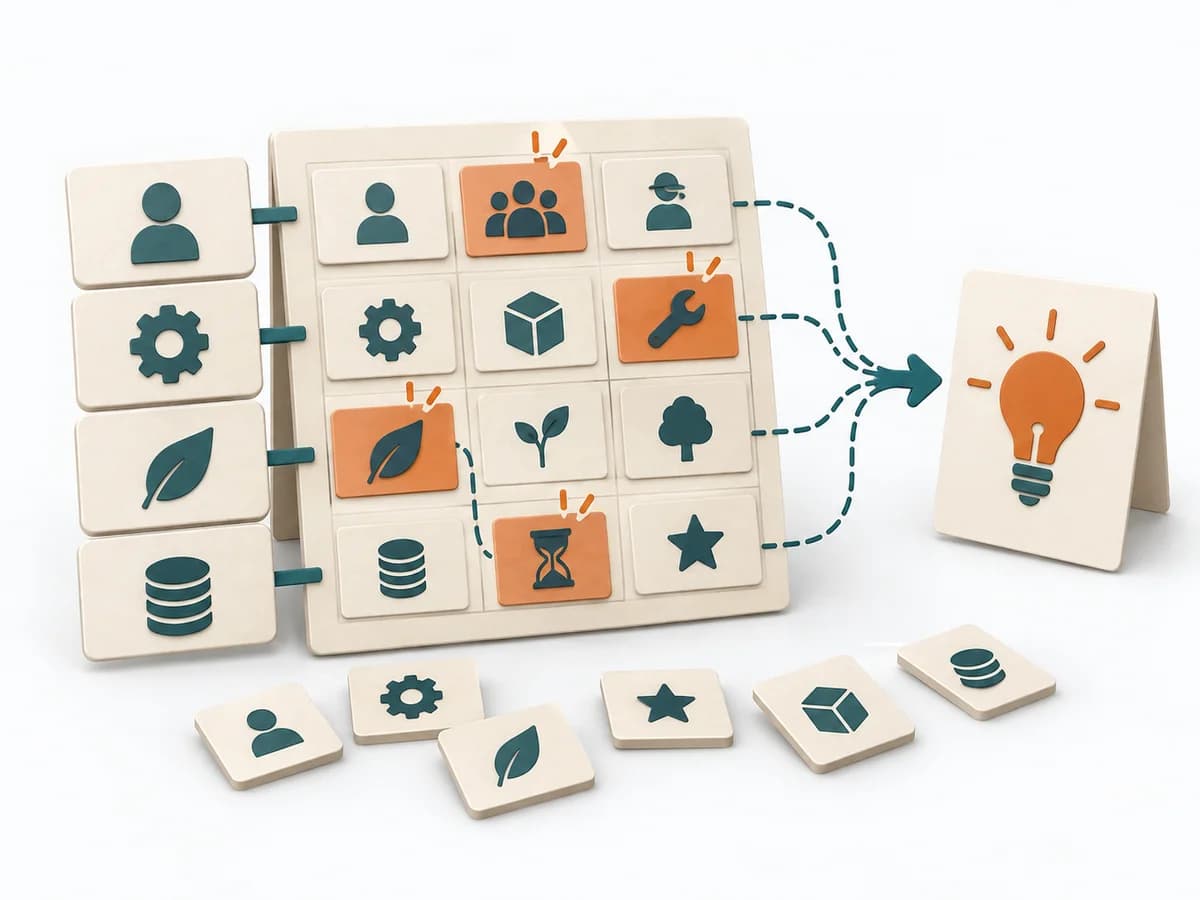 Innovation Morphological Analysis |  Innovation Rolestorming |
|---|---|---|---|
Purposedifferent | When teams derive needs only from assumptions and real motives are missing, user interviews give direct access to behavior and meaning. Conversations from the target group's everyday life make patterns, tensions, and open questions solidly visible. | For a search for solutions with many degrees of freedom, a grid emerges for systematic combinations. The method separates features, variants, and exclusion criteria, so the space gets explored deliberately. | When a search for ideas stalls, switching roles helps people step outside their own perspective and activate new logics of action. The method reduces habit because contributions arise from a different stance. This brings unfamiliar, often fitting solution approaches into play. |
Complexitydifferent | Low | Medium | Low |
Timedifferent | 30–60 min per interview | 1-3 h | 30-60 min |
Participantsdifferent | 1 participant per interview | 2-8 | 3-12 |
Formatdifferent | Workshop + async | Workshop + async | Workshop |
Outputdifferent | Interview Notes, Themes, Insight Summary | Morphological Box, Concept Combinations, Idea Shortlist | Rollenkarten, Ideenpool pro Rolle, Konsolidierte Shortlist |
Tagsno overlap | QualitativeResearchCustomerDiscovery | IdeationInnovationCreativity | BrainstormingIdeationCreativity |
Often compared together
Methods with strong topical overlap with the current selection, not yet in the comparison.