View methods side by side.
Choose up to four methods. Add them using the search and share the comparison by copying its link.
| Criterion | 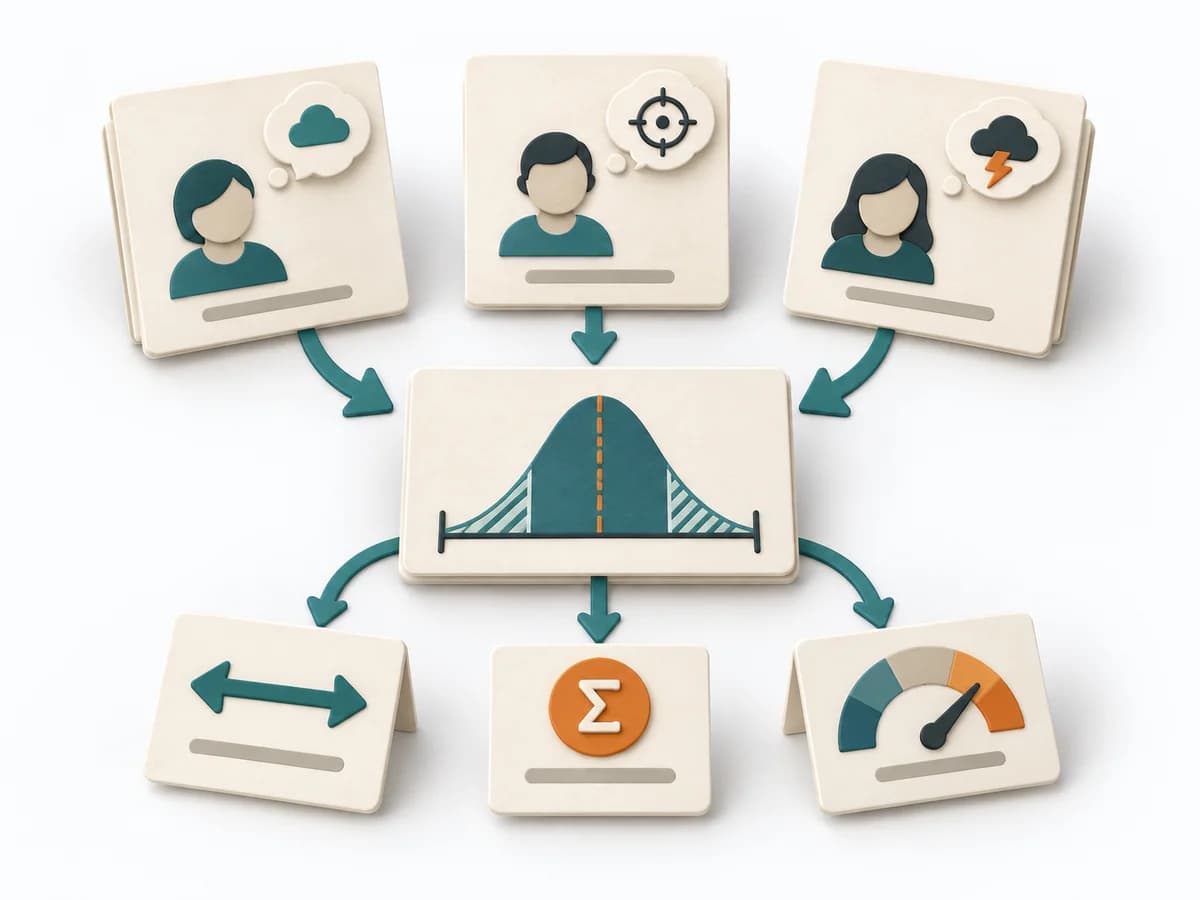 Decision Making Three-Point Estimation | 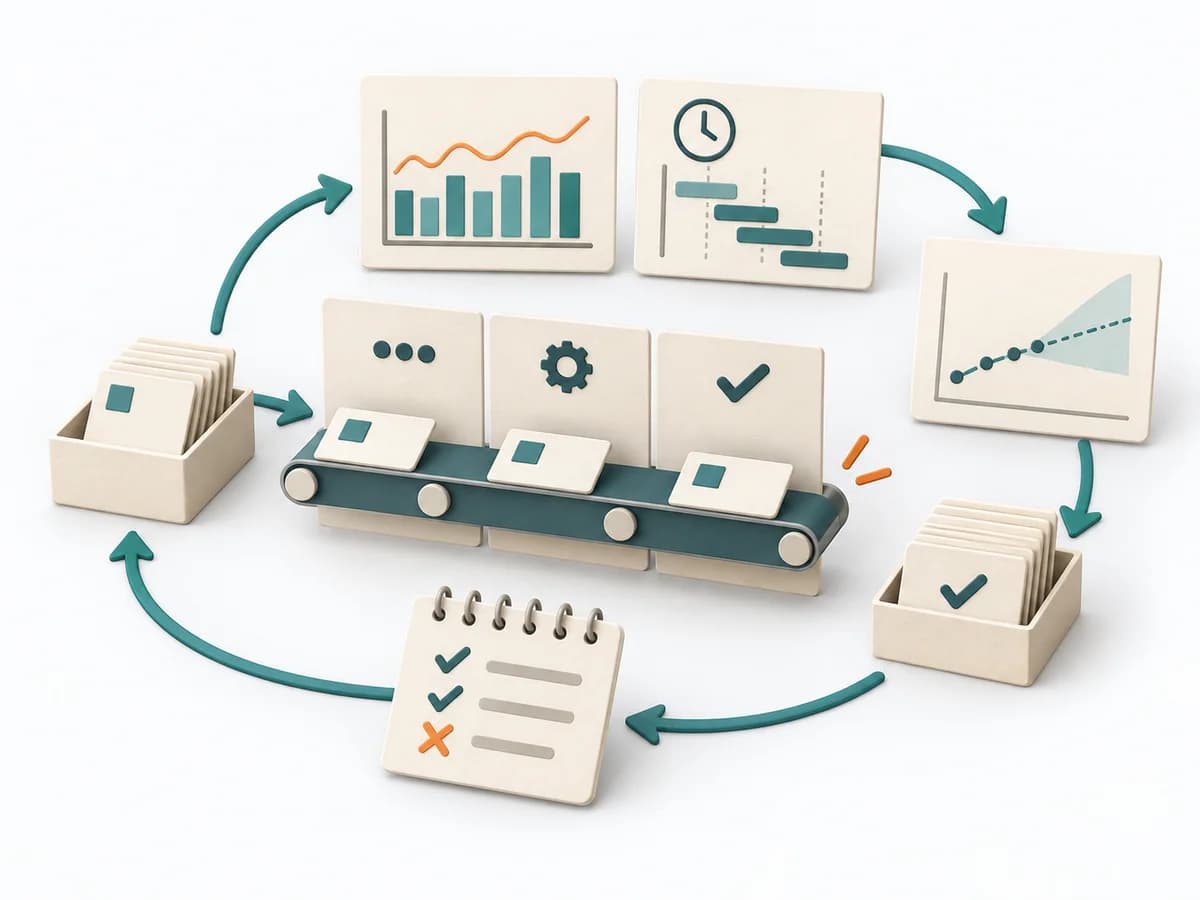 Agile NoEstimates |  Architecture ATAM (Architecture Tradeoff Analysis Method) |
|---|---|---|---|
Purposedifferent | A single estimate for effort, time, or risk often looks too smooth for the real uncertainty behind it. It separates options, evaluation criteria, and open risks. The result is captured as a Three-Point Estimate, Risk Range, and Assumption Notes. | When estimating slows a team down more than it helps, it shifts the focus to flow, small slices, and real lead time. It sorts work by value, risk, and delivery ability. The result is captured as Throughput Data, Flow Forecast, and Slicing Rules. | ATAM helps teams weigh architecture decisions when quality goals compete. The team considers business goals, stakeholder expectations, and technical decisions together. The evaluation shows which risks need further investigation. |
Complexitydifferent | Medium | Medium | High |
Timedifferent | 10-30 min je Item | laufend | Several meetings plus preparation and analysis; total effort depends on scope |
Participantsdifferent | 1-8 | 2-12 | Evaluation team, architects, and relevant stakeholders |
Formatsame | Workshop + async | Workshop + async | Workshop + async |
Outputdifferent | Three-Point Estimate, Risk Range, Assumption Notes | Throughput Data, Flow Forecast, Slicing Rules | Prioritized quality scenarios in a utility tree, Architecture risks with reasoning and assumptions, Sensitivity and trade-off points, Findings report with open investigations |
Tagsno overlap | EstimationUncertaintyForecasting | EstimationForecastingFlow | ArchitectureQualityRiskTradeoffsStakeholders |
Often compared together
Methods with strong topical overlap with the current selection, not yet in the comparison.